Watchtower Towers Try for 700 Brooklyn Apartments After Office Plan Falls Flat
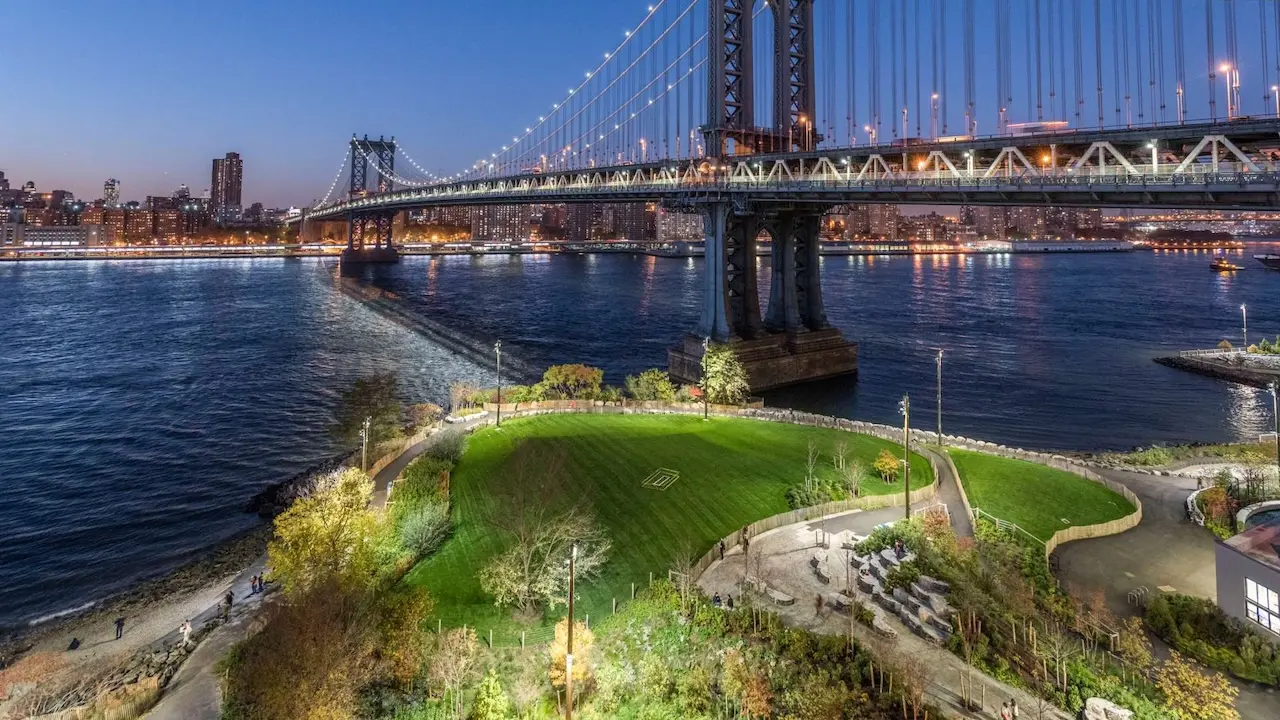
New York’s chronic housing shortage meets one of Brooklyn’s most iconic and awkward buildings in an ambitious redevelopment bid.
It once soared as the Watchtower, headquarters of Jehovah’s Witnesses and a mainstay of the Brooklyn waterfront, but today the hulking complex looms as an emblem of New York’s perennial pain: too few homes and too many dead-letter offices. Five years after paying over $340m for the 730,000-square-foot colossus, CIM Group finds itself grasping for reinvention. Having failed to attract tenants for a gleaming, tech-forward office hub euphemistically dubbed “Panorama,” the developer is dusting off an audacious fallback—almost 700 apartments atop the East River.
CIM’s about-face, revealed last week, signals the latest twist in the city’s slow-moving drama of office-to-residential conversion. Planners and pols long drooled over Brooklyn’s Watchtower complex for its skyline views and easy access to subway lines; now, with commercial vacancy rates at record highs, circumstances have conspired to push the residential play from pipe dream to necessity. The new proposal imagines a mix of market-rate and affordable units, medical offices, and even labs—a pastiche for the post-pandemic city.
The stakes for New York are formidable. The city’s housing stock lags far behind demand, with median rents recently topping $4,300 per month according to Douglas Elliman. Meanwhile, office landlords confront a funk: about 22% of workspace in Manhattan sits idle, a figure Brooklyn can sadly rival. Each failed office scheme portends further blight; each scrap of housing, a salve for surging homelessness and skyward rents.
If CIM’s plan prevails—requiring city sign-off and potentially a rewrite of 1980s-era zoning—the project could accommodate some 1,000 new residents in what locals once called “God’s Row.” Yet city officials and neighbours eye the move warily. Skeptics point to a paltry 70 permanently affordable units under the proposal, questioning whether this is transformation or a windfall disguised as social good. And, as ever in New York, the spectre of legal and bureaucratic wrangling looms large.
A broader reckoning stalks the sidelines. The city’s creaking infrastructure and threadbare transit groan under the post-Covid population jostle. Schools and hospitals, not to mention small businesses, will find themselves squeezed as new residents descend. Yet to do nothing is to aid the status quo: empty towers, shuttered storefronts, and a residential market in which only the affluent survive.
A tempest over adaptation
While New York pontificates, other cities are less bashful in recycling obsolete offices. San Francisco and Washington, stymied by similar hybrid-work woes, have begun sweetening incentives—lower taxes, prompter permits, and, crucially, loosened zoning—to coax owners into turning cubicles into condos. By contrast, New York’s conversion pipeline remains tepid: only a few hundred office units have morphed into dwellings in recent years, despite mayoral lip service.
The Watchtower could, if successful, mark a pivot: an icon reframed for the hybrid age and a precedent for other outdated commercial hulks. Yet the challenge is more structural than architectural. Developers must wrestle costs—such as windowless floorplates and outdated plumbing—and an ossified land-use code allergic to rapid adjustment. Nimby sentiment, always potent in Brownstone Brooklyn, has already begun to percolate in neighbourhood meetings and council chambers.
CIM’s revived plan tap-dances nimbly between the city’s imperatives and its inertia. The scheme—awaiting approval from the Department of City Planning and potentially the City Council—will test whether rhetoric on affordability and adaptive reuse can survive contact with electoral realities and aggrieved residents. Analysts, such as Nicole Gelinas of the Manhattan Institute, point out that absent meaningful fiscal carrots or regulatory overhauls, ambitious conversions often succumb to delays or, worse, whittling down of promised affordable stock.
Nationally, the Watchtower drama exemplifies how America’s commercial core is being reshuffled by remote work, demographic flux, and economic necessity. Globally, cities from Seoul to Toronto are experimenting with new typologies for urban regeneration, betting that attractive housing can rescue battered central business districts. New York’s pain is hardly unique, but its scale—over 200 million square feet of shrinkingly-useful office real estate—amplifies the challenge.
We reckon CIM’s pivot, while imperfect, is a harbinger of what is to come. Pragmatism, not nostalgia, is the order of the day; the city that once soared on Wall Street’s largesse will have to borrow once more from its old playbook of inventive reinvention. Yet let no one pretend the Watchtower’s resurrection, should it proceed, will move the needle greatly: hundreds of homes are but a drop in the city’s leaky housing bucket. What matters more is the signal—onerous as the process may be—that economic logic is, at last, getting the better of dogma and dithering.
This latest round of Brooklyn brinkmanship thus bodes both hope and caution for New York. Conversion, though fraught and unwieldy, proves preferable to paralysis. The future of the Watchtower cannot redeem the city’s whole property market nor fix its rent crisis overnight, but it gestures—modestly—toward a model in which adaptation trumps abandonment. To borrow a phrase: faith, with some evidence, may move mountains after all. ■
Based on reporting from Curbed; additional analysis and context by Borough Brief.