Trump Threatens Strikes on Iranian Infrastructure if Hormuz Blockade Persists, Sets Tuesday Deadline
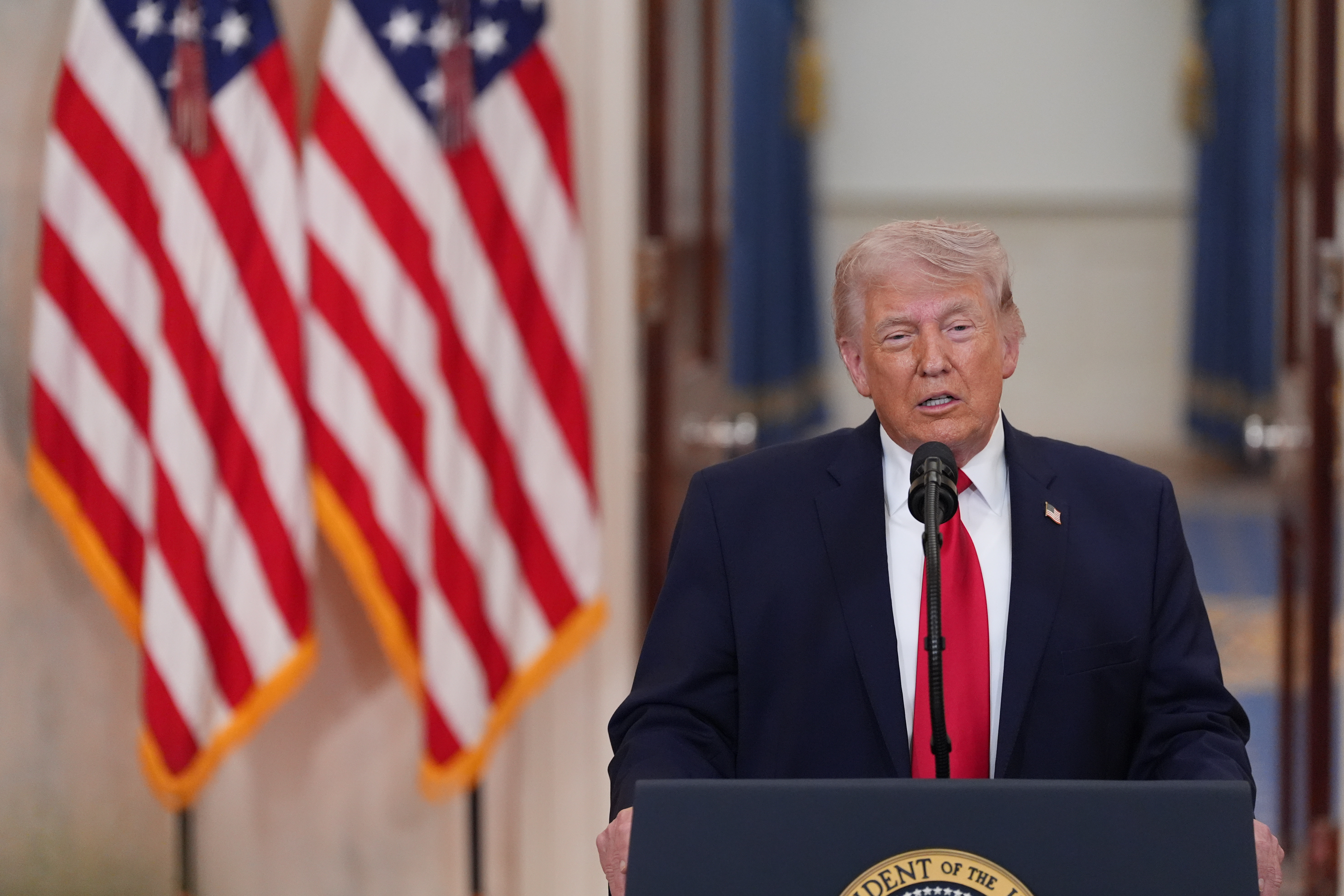
Donald Trump’s threats of military escalation over the Strait of Hormuz are reverberating in New York and beyond, highlighting the city’s exposure to global instability.
With characteristic bombast, President Donald Trump on Sunday promised that Tuesday would be “Power Plant Day and Bridge Day, all in one, in Iran.” The invective was directed at Tehran’s sudden closure of the Strait of Hormuz, a maritime artery through which roughly a fifth of the world’s traded oil flows. Mr Trump did not mince words, vowing to make Iran’s leaders “live in hell” if the key sea lane wasn’t reopened posthaste. To drive home the point, he warned that American forces stood ready to rain destruction on Iran’s critical infrastructure—its electricity grid and transport links—unless the strait were unblocked.
That salty pledge came only hours after a dramatic search-and-rescue mission that retrieved a downed American pilot from Iran’s mountainous terrain. As the president extolled the “daring” operation, the Pentagon confirmed that the rescued pilot was recovering from unspecified injuries. Tensions, already simmering, have since reached a rolling boil, with both sides sticking to uncompromising scripts.
Such saber-rattling may seem worlds away from New York City’s daily grind. Yet for the city’s trading floors, ports, and ordinary petrol consumers, the risks are anything but abstract. The Port of New York and New Jersey, the nation’s largest on the Atlantic seaboard, relies on global shipping continuity. If tankers from the Gulf cannot pass through Hormuz, crude oil and petrochemical supplies to East Coast refineries will be pinched. That bodes ill for New Yorkers already contending with inflation; in similar crises, wholesale oil prices have shot up by as much as 20% in a matter of days.
Ripples from such geopolitical shocks travel fast. Energy-intensive sectors—aviation, construction, manufacturing—face higher operating costs almost overnight. Wall Street, tuned to any tremor in global risk, habitually punishes uncertainty with sell-offs. A protracted spike in energy costs threatens to undercut the city’s post-pandemic recovery, which remains frailer than official cheer would suggest.
The political reverberations are no less acute. New York, less a city than a chorus of ethnic diasporas, counts tens of thousands of Iranian-Americans and myriad stakeholders with ties to the Middle East. The city’s Muslim and Jewish communities, already on edge after recent international conflicts, must now contend with still greater anxiety—and, in some precincts, a rise in hate incidents when tensions flare abroad. City Hall, often compelled to respond symbolically to world events, faces a familiar conundrum: how loudly to denounce distant rhetoric without stoking local polarization.
Nationally, Mr Trump’s pronouncements evoke the ghosts of American adventures in the region, from the 2003 Iraq war to the 1980s oil shocks. Congress long ago ceded much of its power over foreign policy, and both parties have been slow to insist on oversight. The president’s open threats, couched in language equal parts bellicose and theatrical, expose the fragility of deterrence-by-Twitter; Tehran has thus far called Washington’s bluff. For those convinced of American military omnipotence, recent Iranian successes—downing a US fighter jet and holding the strait—act as tonic, not salve.
The city that never sleeps, held hostage by faraway straits
From a global perspective, New York’s woes are mirrored in London, Shanghai, and Mumbai, all of them equally tethered to seaborne energy flows. Markets bridle at the merest whiff of Hormuz instability: insurers hike rates for tankers, shippers postpone deliveries, and hedge funds sniff opportunity in volatility. Multilateral institutions urge calm, but their influence appears puny in the face of algorithmic trading and viral presidential posts.
Still, it must be noted that threats alone rarely achieve enduring strategic aims. Previous American presidents, for all their hawkishness, found Iran’s calculus resistant to both charm and coercion. As for infrastructural attacks on bridges and power stations—such operations promise disruption but little clarity about ultimate US objectives. The notion, implicit in Mr Trump’s remarks, that a few missile strikes could cow Iran or open the strait is wishful. More likely is a messy, dangerous game of escalation in which New York, as the world’s financial metronome, is inevitably ensnared.
This spectacle also underlines an awkward truth about American politics: martial stances pay domestic dividends, especially in an election year. Mr Trump’s jawboning appeals to nationalist sentiment, even as it sows unease among business and diplomatic circles. The practice of tying complex global crises to vivid domestic events—a pilot rescued, a strait shut—suggests an administration chasing headlines as much as outcomes.
For New Yorkers, accustomed to being a fulcrum of commerce and culture, the lesson is sobering. In a city famed for its resilience, the fragility of global systems remains the governing reality. A dispute over a far-flung waterway can portend higher fuel bills in Midtown, layoffs in Long Island, and shriller headlines across all five boroughs.
Yet, we remain sceptically optimistic. Market economies, unlike politicians, eventually force adaptation. New York, with its storied ability to absorb shocks, may weather this tempest as it has many others. But the city would do well to heed the warning: when distant threats become local risks, bluster alone is a poor kind of insurance. ■
Based on reporting from El Diario NY; additional analysis and context by Borough Brief.