Trump Funding Freeze Stalls City Rail Projects as New York Waits on Promised Growth
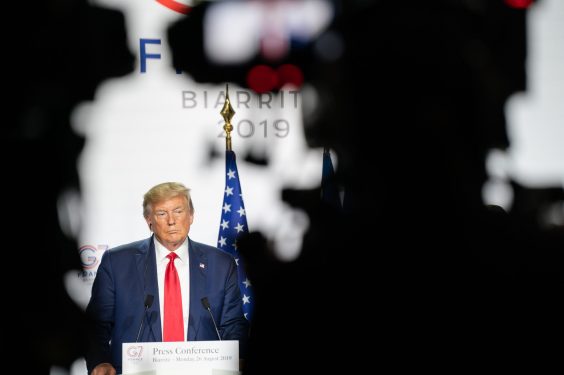
Donald Trump’s freeze on federal transit funding is hobbling New York City’s ambitions and signaling America’s waning commitment to urban mobility and sustainable growth.
No city in America depends more on rail than New York. The metal sinews of the subway alone carry over 3 million riders a day through tunnels so old that the tilework recalls the Jazz Age. But behind the rumble, financial gears have seized. The second Trump administration, since its return to power in 2025, has yet to greenlight a single new rail contract under a signature federal grant—depriving New York and other metropolises of the investment needed to repair, expand, or modernize their systems.
This is not merely bureaucratic sluggishness. The U.S. Department of Transportation, now firmly helmed by Trump appointees, has iced grantmaking via the Capital Investment Grant (CIG) program—the main tap for federal construction dollars for new subway and rail projects. New York’s biggest ambitions, from the Gateway Tunnel to future subway extensions, all hinge on these matching funds. In effect, the city and state cannot pick up the slack: the Urban Institute calculates that local and state backing for rail in 2025 was a paltry $7 billion, down from $16 billion just four years ago.
The numbers barely capture the scale of the setback. The Gateway Tunnel (recently rescued only after a drawn-out lawsuit against the U.S. government) was merely the highest-profile casualty. Underneath, dozens of projects languish—some since the first Trump term, others more recently—forsaken by a funding freeze that leaves transit agencies unable to sign contracts or break ground. The result is visible to any subway rider—creaky escalators, patchy signal upgrades, and “temporary” slow zones have all become entrenched features rather than fleeting annoyances.
The first-order effects are inconspicuous but profound. No other metropolis is so reliant on its subways, commuter rails, and busways to shuttle not only the affluent, but everyone from baristas to bond traders to their posts. As interest in congestion pricing mounts and New York strives to cut emissions, the dearth of federal rail investment undermines both mobility and environmental goals. New York’s economic buoyancy depends on seamless circulation; starve the rails, and the city’s vaunted productivity could begin to stutter.
Second-order consequences loom even larger. Faced with fiscal drought, city agencies are deferentially “flexing” federal dollars—shifting what could be transit funds into road projects that benefit drivers, not straphangers. This trend, permitted by loopholes in the 2021 Infrastructure Investment and Jobs Act (IIJA), reveals the law’s ambivalence: hailed as the “largest investment in public transportation ever,” the IIJA also funneled staggering sums to highway construction. Transit’s share has proved disappointingly tepid, a pittance in the face of New York’s $50 billion capital needs through 2029.
The Urban Institute’s assessment points to still grimmer news: overall public-sector spending on non-highway transportation has remained flat since 2021, even as investment in roads has climbed. Meanwhile, the national climate for transit investment has soured. Congress and the White House remain fixated on short-term repairs and road resurfacing, not the metropolitan reinvention demanded by the climate crisis or rising anti-urban sentiment. For working New Yorkers, this portends longer commutes and stratified access to jobs—an own goal against economic opportunity.
Globally, America’s standing in urban rail has slipped calamitously. In 1990, New York City, Chicago, and Washington, D.C. ranked among the globe’s per-capita leaders in urban rail provision. Today, the U.S. has 7% fewer kilometers of operating metro lines per capita than it did thirty-five years ago, while peer nations such as France, South Korea, and China have extended their rail networks at a blistering pace. Paris churns ahead with Grand Paris Express; Seoul’s web is ever-expanding; even London, for all its delays, dwarfs America’s recent capital commitment.
Other nations have done something America now seems disinclined to attempt: marry city-building to robust, centrally coordinated infrastructure spending, executed over decades and relatively insulated from partisan squabbling. Here, federal ambivalence—and now, outright antagonism in transit grantmaking—harms not just New York but the whole of urban America. The U.S has become an object lesson in how to lose, not leverage, the dynamism of complex cities.
A squandered chance for resurgence
This punkish approach to rail is especially puzzling for a president who brands himself as a “builder.” On the campaign trail and during stump speeches, Donald Trump routinely vowed to restore American greatness through big, bold infrastructure. Instead, the second Trump administration has presided over a contraction in public transit ambition, and a relapse into highway-fetishism more typical of the Eisenhower era than the 2020s.
The irony is palpable. Cities such as New York continue to drive American output, cultural cachet, and innovation. But Washington’s funding freeze is a direct challenge to their models of shared prosperity and high-density development. Projects that could lift every borough—new lines to transit deserts, modernized stations to shrink travel times, tunnels to preempt Amtrak bottlenecks—are simply not happening.
Nor is this solely a New York saga. Around the country, planners and mayors report canceled contracts, workforce reductions, and mounting project delays. The American Society of Civil Engineers gives U.S. transit a grade of D-minus. In this context, each missed grant window is not merely a bureaucratic tic, but a lost decade of mobility, prosperity, and climate preparedness.
We reckon Washington’s inertia does not reflect any rational economic calculus. The return on investment from subway and rail projects, especially in dense cities like New York, remains among the soundest bets for public dollars. Urban rail creates jobs, raises property values, trims carbon output, and—perhaps most crucially—binds disparate communities together. Pleas for “local control” ring hollow when the sums required outstrip any city’s capacity.
Dry statistics mask the toll: more crowded trains, choked highways, stagnant commutes, and ever-rising household costs for those forced to drive. In the contest between roads and rails, the scale is being unceremoniously tipped toward a form of mobility that undermines cities’ competitiveness. If the self-appointed builder president wishes to cement a legacy beyond pothole patching, he (and Congress) should recall that crumbling railways are not the hallmark of an ascendant nation.
For New Yorkers, the message is clear: in Washington, the calendar may read 2026, but the playbook still seems stuck in the last century. If America wishes to regain its footing as a builder of cities, the funding freeze must thaw. Until then, New York—and the nation—will remain off track. ■
Based on reporting from Streetsblog New York City; additional analysis and context by Borough Brief.