Trump Freezes Federal Transit Funds, Pushing New York Rail Ambitions Further Off Track
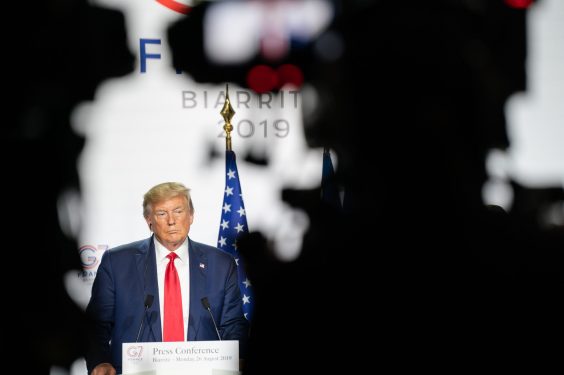
Donald Trump’s halting of federal funding for new urban rail threatens to derail New York’s transit ambitions and augurs broader economic stagnation.
For a metropolis that never sleeps, New York’s arteries are looking anaemic. Since early 2025, not a single new subway extension has broken ground in America’s largest city. Across the map, projects once deemed inevitable—Second Avenue’s northern reach, new interborough links, sundry platform upgrades—have been mothballed. The cause: a prompt, almost surgical, freeze in federal transit funding, a policy that has sent tremors far beyond Gotham’s clattering rails.
The trigger for this deceleration lies in Washington. The second Trump administration, now deep into its second year, has yet to sign any contracts under the Capital Investment Grant (CIG) scheme. Once a bulwark for ambitious transit builds, the CIG program matches state and city dollars, making feasible the sort of billion-dollar undertakings no local budget can shoulder alone. The federal Department of Transportation, helmed by Trump loyalists, has not only paused the flow—it has clawed back approvals and sowed uncertainty among ongoing undertakings.
New York City, dependent on federal largesse for major upgrades, finds itself in a precarious position. The Gateway Tunnel—a signature injection point for the region’s north-south rail—was left stranded mid-process, its federal share restored only after a courtroom skirmish. Three other local projects, each designed to relieve congestion or modernise weary infrastructure, have seen their grants delayed or threatened.
The consequences for New Yorkers are both routine and monumental. Train delays, chronic even in flush years, worsen in an era of deferred maintenance; swift links between boroughs essential for job access are indefinitely postponed. For working- and middle-class residents—those least equipped for expensive car commutes—the funding freeze translates not just to inconvenience, but to a real contraction in economic opportunity.
The Urban Institute’s recent analysis chronicles the broader, nationwide fallout. State and local investment in rail nosedived to $7 billion in 2025, from $16 billion in 2021—a paltry sum, the lowest recorded in at least a decade and a half. The virtuous cycle of federal-state partnership, essential to the gestation of sprawling subterranean lines and elevated corridors, now appears broken. Even the 2021 Infrastructure Investment and Jobs Act—a much-trumpeted $1.2 trillion package—has failed to offset this malaise. While the Act was hailed as historic, critics noted its ambiguity: dollars earmarked for “transportation” often migrated from rail to road, as state DOTs exploited their authority to “flex” funds.
This is no mere hiccup of annual budgeting. The impact radiates far more widely. Transit’s stagnation bodes ill for the city’s efforts to densify near stations, for its commercial corridors reeling from pandemic-era vacancy, and for climate hawks banking on fewer cars. The abrupt reduction in public sector support for non-highway projects has stymied not just construction firms and their workers, but renters and employers eyeing reliable access to talent. NYC stands as both bellwether and cautioned example for other American cities where urban rebirth is tied to transit’s expansion.
How America’s rails became also-rans
For New Yorkers, the pain is as psychological as it is practical. Once, the city’s outsized investments in heavy rail drew envy from abroad. By 1990, subway kilometres per New Yorker outstripped many global peers. Since then, the US has suffered a steady malaise: according to Yonah Freemark of the Urban Institute, the country now operates 7% fewer metro line kilometres per capita than it did that year, while rivals like Paris and Seoul have sprinted ahead.
The withering of federal engagement predates Trump’s current term. Sustained neglect and policy incoherence have eroded America’s status as a rail-builder. Other high-income countries—paragons of fiscal discipline such as Germany, cost-conscious South Korea, or wryly pragmatic Britain—have charted the opposite course. They funnel investment into urban rail even as their populations stabilise, grasping its role as both economic multiplier and environmental salve.
The US, meanwhile, clings to car infrastructure. Since 2021, road-building has blossomed, public money for highways outpacing the flatlining sums channelled to transit. Planners and lobbyists in New York make inevitable comparisons to London’s Elizabeth Line or Paris’s Grand Paris Express, projects that have reaped both international headlines and genuine transformation for their metropolises.
The underlying logic seems perverse but durable. In volatile budget years, roads garner bipartisan support while rail accrues detractors assailing “waste” or “elite” indulgence. The lopsided playing field is further tilted by the ability of states to divert transit dollars toward basic road resurfacing. The result? Not just personal inconvenience, but a material threat to the mobility—and thus the productivity—of the city.
Peering ahead, the outlook remains cloudy. A glimmer of hope rests in the legal and political tenacity shown by the Gateway Tunnel’s advocates, who succeeded in prying loose federal funds through litigation. Yet as projects languish, talent and capital migrate elsewhere, threatening to sap America’s urban dynamism for years.
As analysts love to point out, New York’s future hinges on moving people affordably. Rail is its circulatory system; block the arteries and oxygen ceases to flow. Even Donald Trump, erstwhile “builder president,” should appreciate the dangers of such self-harm.
In the end, transit’s fate is not a technocratic abstraction but a test of metropolitan will: does America wish to remain a country of bustling cities, or will it choose to wither on the gridded altar of car dependency? The answer will echo not only beneath Manhattan’s streets but in the fortunes of generations yet to come. ■
Based on reporting from Streetsblog New York City; additional analysis and context by Borough Brief.