Teamsters Urge Delivery Rules as Amazon Trucks Sidestep Most NYC Parking Fines
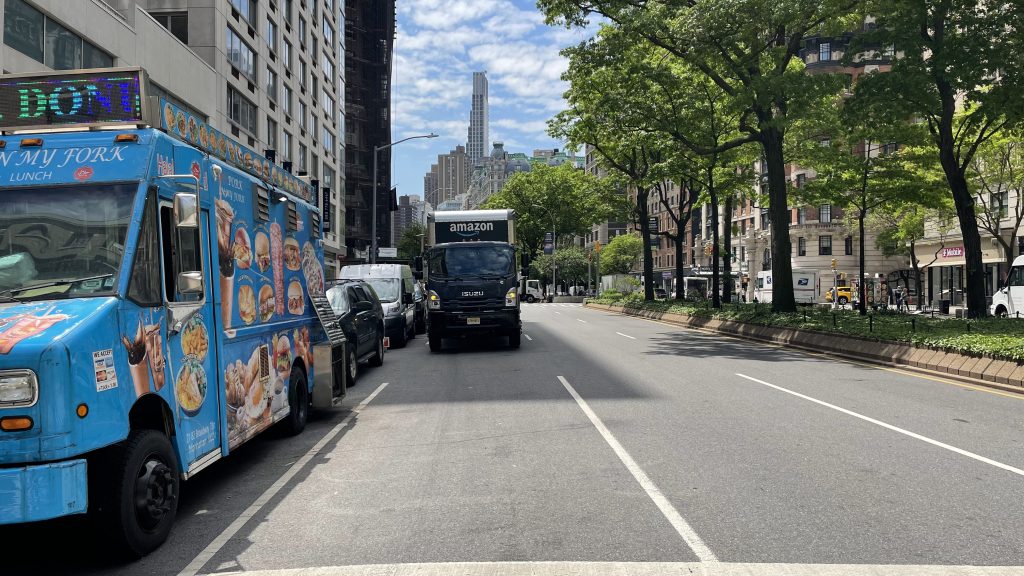
As Amazon’s delivery empire expands, New York grapples with the collision of commercial convenience and urban safety—raising uneasy questions about algorithmic work, city enforcement, and who really pays the price of modern logistics.
On a recent weekday morning, a tide of blue-vested drivers in unmarked vans flooded New York’s streets, wrestling the city’s ceaseless grid with urgent parcels and precarious U-turns. For many New Yorkers, the sight has become mundane: curb lanes blockaded, hydrants hidden, and bike paths punctuated by idling delivery trucks. The numbers lurking behind these scenes, however, are anything but trivial. According to a new analysis by Teamsters Local 804, some 1,553 Amazon-linked vehicles racked up more than 5,700 “No Standing,” bike lane, and hydrant violations from 2021 to 2025—a likely sliver of the problem, given that actual enforcement rates hover between 2.87% and 11.2%.
The Teamsters’ report, echoing concerns long harboured by transit advocates, underscores a bleak arithmetic: for every ticket issued, dozens more violations appear to slip through the cracks. By even the most charitable estimates, Amazon vehicles could be committing upwards of 90,000 infractions over four years—perhaps as many as 330,000 when applying the lowest enforcement rate. The city’s overstretched 2,155 Traffic Enforcement Agents handed out an average of 4,100 citations each last year, but they are plainly outnumbered by the torrent of delivery vans now crowding the city’s kerbs.
This is not merely about double-parked trucks. The real cost, the Teamsters argue, is paid in strained city infrastructure and compromised safety. Last-mile warehouses, often shoehorned into industrial zones in Brooklyn, Queens, and the Bronx, have brought with them a measurable spike in road injuries, as detailed in a parallel report by the city comptroller’s office. The connection is sobering: algorithms hungry for efficiency squeeze Delivery Service Partners—Amazon’s preferred, arms-length labour model—prompting high driver turnover and little incentive to prioritise safety over speed.
Advocacy groups have seized on these findings as proof that “ticketing our way out” of the problem is a mug’s game. With fewer than one in ten violations resulting in an actual ticket, the economics lean notably in favour of businesses for whom the paltry fines are simply a cost of doing business. The Teamsters, emboldened by data, recommend a more ambitious overhaul. Their preferred remedy is the Delivery Protection Act—a bid to reset the rules of engagement for both employers and workers in the city’s hyper-competitive last-mile sector.
Amazon, as expected, rejects much of the premise. The company’s spokesperson, Steve Kelly, has dismissed the report as “flawed” and “selective,” touting the autonomy and safety records of its 40-plus local Delivery Service Partners. These operations, the company insists, are in fact small businesses: they hire their own staff, set payroll, and determine whether to accept contracts from other firms. Amazon’s preferred task is framed as “helping partners and drivers stay safe”—though, critics might observe, help rarely comes at the expense of efficiency metrics.
Peering beneath the platitudes, New York’s policymakers must reckon with a new urban paradox. The city’s appetite for on-demand commerce shows no signs of abating: e-commerce now constitutes over 16% of U.S. retail sales, up from just over 10% five years ago, and Amazon’s warehouse footprint grows commensurately. As many as 80 last-mile depots now operate in the metro area, embedding themselves in communities not always equipped for the surge in commercial traffic.
The city’s fines for parking violations—typically between $115 for blocking a hydrant and $115 for bike lanes—are, in practice, a rounding error for logistics giants. Unsurprisingly, the prospect of accountability grows dimmer once a company outsources most liability to small contracted firms, whose slim margins and unstable employment encourage risk-taking behind the wheel. These trade-offs reverberate far beyond traffic disputes; they shape employment standards, public safety, and the lived experience of virtually anyone reliant on New York’s dense streets.
For city government, the dilemma is increasingly existential. The “gigification” of urban logistics—algorithmic scheduling, constant surveillance, and relentless efficiency quotas—trades one set of inefficiencies for another. Hoping for better compliance by ramping up ticket quotas is a Sisyphean project; the ratio of agents to violations has become risible. Meanwhile, ballooning road injuries near warehouse districts threaten to erase any productivity gains with real human costs.
Rethinking urban logistics, from New York to the world
Other metropolises face similar conundrums. London, Paris, and Berlin, each grappling with the e-commerce boom, have begun experimenting with consolidation hubs, low-emissions zones, and capped access for freight vehicles in dense areas. While such interventions offer tantalising examples, New York’s particular cocktail of street-level density and political fragmentation makes carbon-copy solutions unlikely to stick. European cities often benefit from tighter regulatory regimes, slower traffic speeds, and more robust public transit infrastructure—luxuries New York sometimes lacks, despite its cosmopolitan pretensions.
The broader lesson is that the architecture of e-commerce, unimpeded by local norms or enforcement capacities, tends to erode established urban compacts. In ceding so much of its “last mile” to gig-driven subcontractors, New York has swapped institutional control for permanent negotiation, with neighbourhood safety and public equity as collateral. It is little wonder, then, that pressure builds for more decisive regulatory teeth.
We remain sceptically optimistic about the city’s capacity to rebalance incentives—preferably by lifting standards for all last-mile operators, not merely Amazon’s green-branded peers. To avoid chasing diminishing returns through punitive fines alone, city and state lawmakers would do well to recalibrate liability upstream, where the largest firms could no longer insulate themselves with the thinnest layers of plausible deniability. Properly designed, reforms such as the Delivery Protection Act offer a route to saner streets, fairer labour standards, and a more durable social contract between commerce and community.
Reining in the chaos of the kerbside in the age of algorithmic logistics will not be easy. Yet as the city’s storied streets grow ever more crowded, New York has little choice but to ensure that the true costs of delivery are borne by those who profit most. ■
Based on reporting from Streetsblog New York City; additional analysis and context by Borough Brief.