Schumer Cites Surprising Progress in DHS Funding Talks as Trump Urges GOP to Dig In
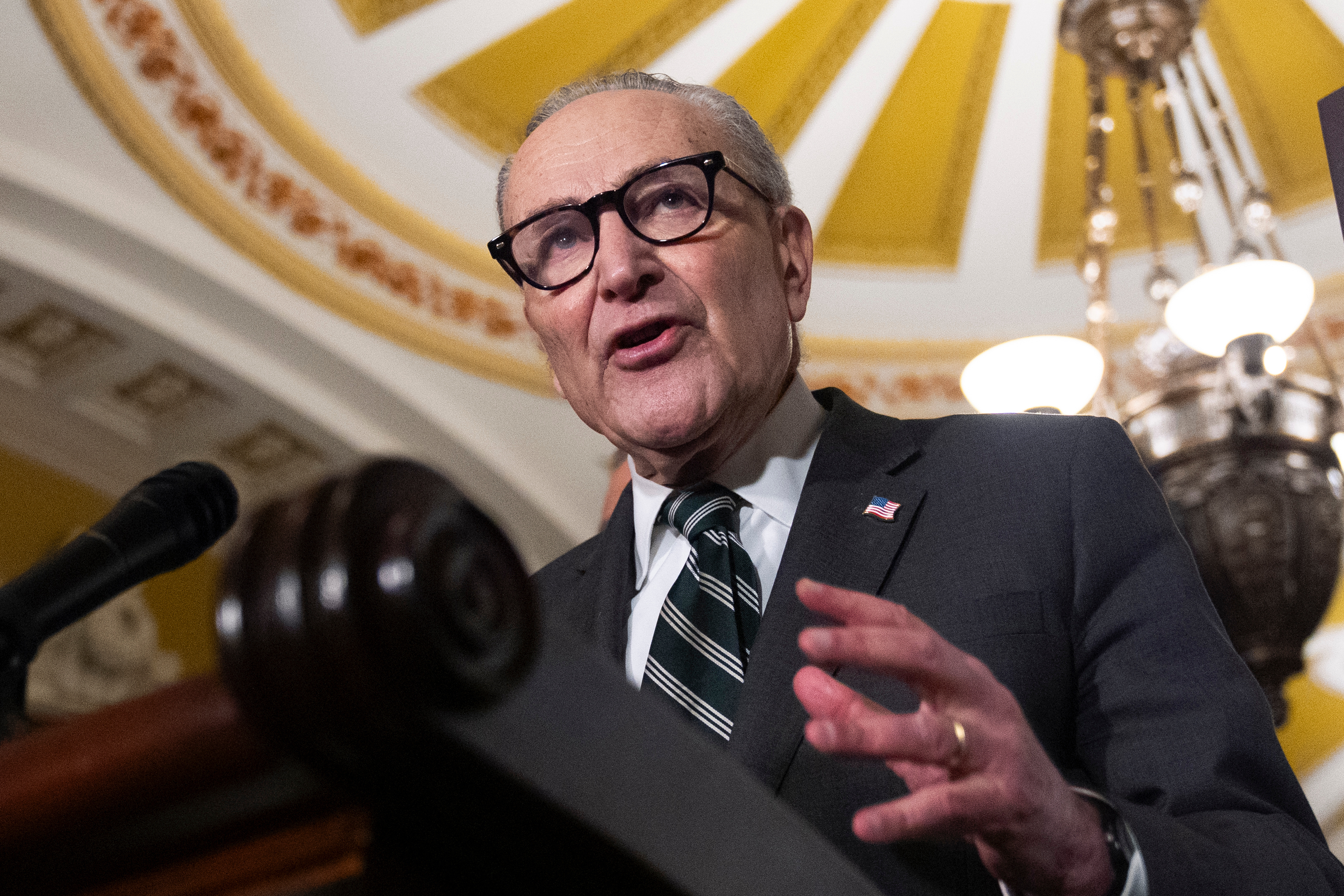
Protracted wrangling over federal security funding threatens New Yorkers’ pocketbooks and public safety, with ripples far beyond LaGuardia’s security lines.
When the first of some 15,000 New York-based TSA employees received pay stubs showing zeroed-out wages in late March, weary commuters at JFK and LaGuardia faced lengthening queues and the jittery hum of a city on edge. The partial shutdown of the Department of Homeland Security (DHS)—now drifting into its fourth week—has left New York City, America’s quintessential gateway, as much a bargaining chip as a bystander in Washington’s latest budget brawl.
On March 17th, Chuck Schumer, the Senate’s Democratic leader and Gothamite-in-chief, declared that talks to fund the DHS were “constructive” yet, in his view, hobbled by political gamesmanship. At stake is not just the pay for thousands of federal workers but the seamless functioning of everything from airport screening to immigration courts to local terrorism response. The immediate culprit, Mr Schumer claimed, is the House Republicans’ insistence that the controversial SAVE America Act—whose purview ranges from voting rights to gender-affirming care—be attached to any DHS deal, a linkage he dismissed as “irrelevant to security and indefensible to this workforce.”
Efforts to broker a deal hit a wall last week when a scheduled meeting between Senate negotiators and Tom Homan, the administration’s recently installed “border czar,” was abruptly canceled. Republican strategists, egged on by Donald Trump at a Memphis rally, now smell an opportunity to force Democrats’ hand on culture-war legislation. Mr Trump, hardly known for understatement, openly pressed Senate Republicans to “hold the line” and discard the hallowed 60-vote filibuster rule if need be.
For New Yorkers, the human and economic cost is palpable. As the shutdown drags on, unpaid TSA and Customs agents signal an escalating attrition risk—some already call in sick, others think about quitting altogether. Airports, already congested even on a good day, reverberate with frustration, and local businesses reliant on smooth air travel, from hotels to caterers, look on nervously. The city’s standing as the nation’s international crossroads is subtly, but inexorably, eroded with each missed connection.
The workforce most exposed is not the Capitol’s jousting power brokers but cash-strapped federal employees. Last shutdown, a 2019 report by the Urban Institute found 42% of furloughed government workers had less than two weeks’ savings. If the current incident persists, tens of thousands across the city will soon be staring down rent deadlines without paycheques—a chilling prospect amid New York’s merciless housing market.
Knock-on effects already ripple outward. Immigration court backlogs—already among the worst nationally—grow even longer; ICE deployments to local airports spark fear among undocumented New Yorkers, who eye transit hubs warily. With the city’s terror alert ever nontrivial, even the faintest whiff of degraded federal vigilance rattles nerves from Wall Street to Elmhurst.
The underlying dispute is less about nuts-and-bolts security than about annexing budget talks for unrelated ideological skirmishes. The SAVE America Act, roped into the debate by House Republicans and cheerily flogged by Mr Trump, links DHS’s purse strings to contentious battles over ballot access and medical care for transgender Americans. Mr Schumer, not unreasonably, calls the move a legislative hostage-taking. One would be hard-pressed to conceive a package with a thinner connection to the daily labours of New York’s federal gatekeepers.
Partisan jockeying in a city that cannot wait
Yet, this is scarcely novel in America’s eternally restive system. Similar standoffs have pockmarked the past decade—recall 2018, when DACA and immigration wall funding left New Yorkers bracing for train-wreck travel and delayed FEMA grants. But signs point to heightened volatility in 2026: keenly divided chambers, an election-year context, and a former president intent on wielding maximum leverage even as a private citizen.
Other cities bear the pain, but few have so much at stake as New York. Its unmatched reliance on the smooth churn of federal services—from ports to logistics, citizenship naturalisations to counterterrorism—makes every hiccup consequential. New York’s own congressional delegation, led by Mr Schumer, faces no great joy in relaying to constituents that their financial anxieties come courtesy of politicians grandstanding over provisions unrelated to Homeland Security’s remit.
The broader economic context is grimly unsentimental: travel booms falter fast when bottlenecks mount, and New York, nipping at its pre-pandemic visitation highs, can ill afford new turbulence. A long-running DHS shutdown portends billions lost in direct visitor spending and untold secondary effects on employment.
International observers, no strangers to their own coalition crises, might gaze with a measure of schadenfreude. Yet, they would note that most advanced democracies are quicker to firewall essential services from ideological budget fights. America’s federal shutdowns remain a peculiar, almost performative form of self-harm, where the citizen is too often a pawn.
We reckon that the cause of fiscal rectitude is poorly served by such standoffs. To leverage the livelihoods of TSA staff, law enforcement, and immigrant families for deeply partisan provisions is an odd way to “secure” anything—least of all, the public trust in government. While Democrats and Republicans alike gesture toward “public safety,” the true risks are frayed social contracts and eroded civic patience.
As negotiations meander, New Yorkers are left to count the cost. Delays at baggage claim may seem trivial, but as financial anxiety seeps through the city’s workforce and the spectre of degraded federal responsiveness looms, the damage accumulates quietly but inexorably. For the city that prizes resilience and reinvention, the true test may prove to be patience with faraway lawmakers locked in an interminable chess match over secondary causes.
A city of immigrants and strivers, New York has weathered far worse than partisan gridlock. Yet the spectacle of a metropolis brought to a halt by Beltway brinkmanship hardly evokes confidence in the national compact. Whether Congress stirs itself to compromise, or merely kicks the can past the next political deadline, will shape not only New Yorkers’ daily commute, but the American polity’s already threadbare sense of common purpose. ■
Based on reporting from El Diario NY; additional analysis and context by Borough Brief.