Record Heat Wave Hits NYC Next Week as a Cool Front Waits in the Wings
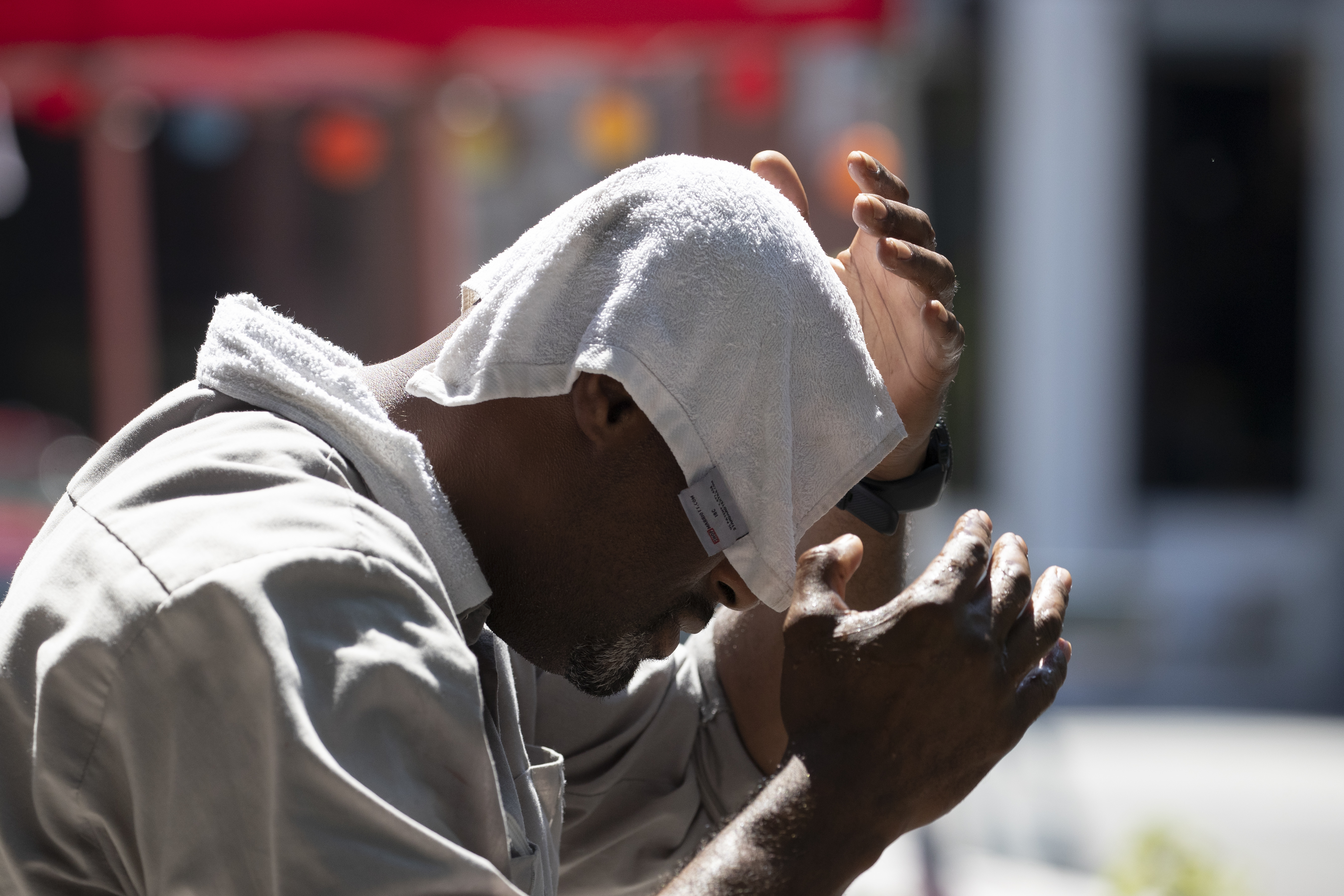
An early and intense heatwave puts New York City’s resilience, and its infrastructure, to the test.
As New Yorkers emerged from a paltry spring, the city is bracing for a rare meteorological jolt: May temperatures forecast to soar into the mid-90s Fahrenheit, threatening to topple decades-old records. On May 19th and 20th, the National Weather Service (NWS) expects readings of 95°F on Tuesday and 92°F on Wednesday. For a city more accustomed to gentle May breezes than to the stifling embrace of August, such heat this early bodes ill—not only in terms of sweaty commutes but also for public health and infrastructure.
The NWS has issued unambiguous warnings: an “intense heatwave” is poised to smother the eastern United States, anchored by a dome of high pressure that acts, metaphorically, as a gigantic atmospheric lid. The agency’s maps show New York squarely beneath this cap, which will suppress clouds, deflect rain, and allow solar energy to broil the pavement unimpeded. By midweek, heat indices in parts of the city may drift toward triple digits when humidity is factored in.
The implications for New York are immediate and practical. The city’s 8.5 million denizens—many with limited access to air conditioning—face serious risks. Emergency rooms, already strained by respiratory illnesses, stand ready for an uptick in heat exhaustion and dehydration cases. Transit authorities will need to monitor steel rails and power systems as they sag and strain against conditions more typical of midsummer.
Schools, which rarely possess full air-conditioning coverage, must weigh the risks to children—especially in older buildings with scant ventilation. Outdoor workers, from construction crews erecting gleaming towers in Hudson Yards to delivery drivers on Broadway, will endure punishing heat in a city not yet physiologically or administratively primed for such an ordeal. City agencies have begun publicizing the availability of cooling centers, a perennial but often underfunded remedy.
Second-order effects could ripple through the local economy. Productivity at outdoor worksites, as numerous studies remind us, dips sharply when temperatures exceed 90°F for even a few days. Deliveries—still buoyant after pandemic-era shifts—may stumble, and the city’s retail sector could see tepid foot traffic as locals seek shelter indoors. The demand for electricity, largely from the city’s millions of window units and aging central air systems, threatens to test the electrical grid. New York’s utility, Con Edison, has in past years insisted its system is robust, but as the demand curve spikes, rolling brownouts are hardly inconceivable.
Politically, intensifying temperatures strengthen calls for climate resiliency spending—always a contested budget line in City Hall. Mayor Eric Adams, who has placed public safety atop his agenda, may find that rising mercury brings new challenges, from managing cooling shelters to keeping subway delays at bay. Detractors in the city council could seize on any power outage or tragic fatality as evidence that heatwaves deserve as much attention as storms or snow.
The social implications also merit scrutiny. Access to air conditioning, like so many urban amenities, cleaves along lines of income, race, and age. Elderly residents in city-subsidised housing are perennially vulnerable, as are children playing on baking asphalt in logistics-poor neighborhoods. The city’s Health Department has for years documented higher heat stroke mortality in the Bronx and parts of Brooklyn—an inequality that an especially early, severe heatwave only deepens.
National comparisons are revealing. Cities across the mid-Atlantic, from Newark—where Teterboro Airport is eyeing a 93°F high—to Washington, D.C. will all contend with similar temperatures, some on track to eclipse records set in the 1960s. Since climate change has made such heat spikes less exceptional anywhere in America, New York’s plight is a microcosm for challenges facing cities globally.
Elsewhere on the planet, early-summer heatwaves have triggered disruptive adaptation. Paris and Berlin, both girded with 19th-century masonry and medieval streetscapes, now run elaborate public cooling campaigns each summer. In Tokyo, heat preparations begin weeks earlier than before, with local governments distributing cooling packs and messaging around heatstroke vigilance. New York has dabbled with these measures, but its frenetic administrative cycles typically leave it reacting, rather than anticipating.
The urgent need for adaptation
What does this portend for New York’s future? The city has long prided itself on resilience in the face of adversity—plagues, blackouts, hurricanes, even the vagaries of Wall Street. Yet resilience cannot be taken for granted. As heatwaves arrive earlier and hit harder, the patchwork approach—opening a few cooling centers, alerting clinics—looks increasingly puny against the scale of risk.
Prudent urban planning now demands a shift: not just to temporary fixes but to embedding heat mitigation in policy and infrastructure. This means modernising school buildings, revising zoning to encourage shade, and prioritising cooling system upgrades in public housing. Data from past summers make plain that such investment yields returns not just in comfort, but in lives saved and economic disruption averted.
Wryly, it is a New York tradition to meet weather—be it blizzard or swelter—with a certain bravado. But bravado offers modest protection from heatstroke, power failures, or the deep inequalities that extreme weather accentuates. A city more frequently battered by climate extremes must swap improvisation for data-driven preparedness.
This coming week’s heatwave gives New York a punishing dress rehearsal for a future that is already arriving. Whether the city’s pragmatic spirit will keep pace with atmospheric physics remains an open, sweat-soaked question. ■
Based on reporting from El Diario NY; additional analysis and context by Borough Brief.