Queens Hospital Earns Top Lung Cancer Screening Status, Eyes Fewer Late Diagnoses in Southeast Borough
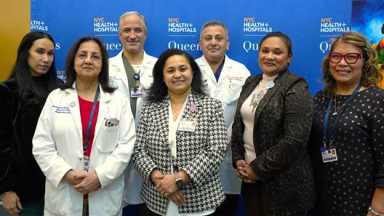
An overdue step toward equitable health care in New York’s most diverse borough signals hope for the city’s cancer-burdened communities.
A smoker in Southeast Queens is nearly twice as likely to die of lung cancer as someone in Manhattan, a sobering gap that has long scarred New York City’s health landscape. Into this chasm steps NYC Health + Hospitals/Queens, freshly anointed as a 2025 Center of Excellence in lung cancer screening by GO2 for Lung Cancer, a national advocacy and education body. The rarefied title is more than a vanity badge: it binds the hospital to rigorous protocols meant to catch cancer early, deploy evidence-driven care, and extend a lifeline to New Yorkers often left behind by the city’s vaunted medical system.
The announcement is both a recognition of progress and a clarion call. Chief Executive Neil Moore frames it as validation of a fierce local ambition: to blunt Southeast Queens’s disproportionately high cancer mortality by anchoring best-practice detection and outreach in the community. Low-dose CT scanning, patient navigation, aggressive follow-up, and focused smoking cessation—programmatic pillars of the Center’s model—are now promises baked into Health + Hospitals/Queens’ daily routines.
For the city, the implications extend far beyond one hospital campus near Jamaica. The Center’s approach to early screening has the potential to move the mortality needle, particularly in a borough whose patients—often low-income, immigrant, or Black—present with advanced disease at punishing rates. Pilot programs around early detection have historically faltered in neighborhoods distant from academic medical centers, but the public hospital’s focus on proximity and accountability portends a noteworthy shift.
Second-order effects are even more tantalising. The hospital’s access to GO2’s Global Knowledge Center, a trove of clinical algorithms and outreach materials, holds promise for standardising patient education and aftercare. Culturally tailored campaigns—brochures in Bengali, outreach via Black churches, or patient navigators fluent in Spanish—stand a decent chance of puncturing the fog of misinformation and inertia that too often impedes urban screening efforts. Effective community engagement could well ripple out, nudging competing hospitals and primary-care clinics to up their screening games.
Yet the road ahead will be neither brisk nor smooth. Health + Hospitals, the city’s underfunded public system, has seen first-hand how promising initiatives can bounce off entrenched barriers—distrust of the medical establishment, economic precarity, transient housing, and sheer logistical inertia. Queens’s population, the city’s most polyglot, brings additional complexity: language, modesty norms, and perceptions of cancer risk often colour attitudes to screening. Closing these gaps will demand grit, not just glossy pamphlets.
There are financial implications as well. Widespread screening can lower late-stage cancer care costs by shifting expenditures from heroic chemotherapy to earlier, more manageable interventions. But in a health economy warped by federal reimbursements and shifting Medicaid rules, cost-effectiveness is no sure bet. Should the program succeed, its model could reinforce the case for stable, maybe even enhanced, public health funding—perennially precarious in Albany budget battles.
In political terms, the accolade arrives at a fortuitous moment for both the mayor’s administration and the Health + Hospitals system, which marks its 90th anniversary this year. As City Hall fends off criticism over uneven pandemic recovery and fraying social services, early wins in public-health equity enable officials to tout tangible progress. There is, too, a whiff of bureaucratic competition: Mount Sinai and NewYork-Presbyterian, their expansionist instincts undimmed, must now contend with a public sector nimble enough to court national distinction.
New York’s struggle with cancer disparities mirrors, and in some respects magnifies, national malaise. Across America, lung cancer remains the deadliest malignancy, with five-year survival rates rising tepidly in most states. Rural hospitals and urban safety-net systems alike battle workforce shortages, erratic insurance cover, and patchy uptake of screening guidelines issued by outfits such as the U.S. Preventive Services Task Force. In this light, GO2’s designation signals a rare point of local pride.
Globally, the story is familiar. Cities from London to Lagos face the twinned challenges of late diagnosis and wobbly health accessibility. Where New York leads, others may follow, but only if the advances in Queens prove replicable rather than idiosyncratic. Scandinavia’s experience—universal screening, relentless follow-up, and powerful data registries—offers an aspirational, though far-off, model for American urban boroughs.
A model built on coordination, not luck
Whether Health + Hospitals/Queens can translate accreditation into population-wide shifts is uncertain. Screening programs can founder unless patients return for follow-up, and unless the system absorbs them into coordinated care. Dr. Daniel Contractor, the hospital’s chief of radiology, admits as much, emphasizing that the Center will lean on the Global Knowledge Center’s algorithms to shepherd patients through diagnosis, treatment, and survivorship—no small feat in a stressed public system.
Still, the possibility of breaking the “diagnosed too late” cycle matters greatly. By twinning tech—low-dose CT—and trust—neighbourhood-level outreach—the program could begin, however modestly, to whittle away at the city’s fatal inequities. The risk, of course, is that such efforts morph into one-off pilot projects, lauded in press releases but starved of continuing funds or institutional memory.
A salutary dose of scepticism is warranted. Success will be measured not by press clippings but by actuarial tables. Has mortality fallen among Black New Yorkers in southeast Queens? Do Bangladeshi immigrants show up for follow-up scans? Is the outreach team as diverse as the population it serves? We reckon that, over time, only relentless data collection and transparency—habits often foreign to sprawling city bureaucracies—will keep the Center honest and existentially useful.
In the meantime, the Center of Excellence designation puts Health + Hospitals/Queens in play as a symbolic and practical vanguard. Its success or stumbles may yet shape how the city—and perhaps other urban health agencies—balances the old health-care promise: to bring the best medicine to those who need it most, where they are, in the way they understand.
If the system can overcome its familiar foibles—funding instability, staff turnover, bureaucratic ossification—this recognition could portend more than temporary prestige. It might, finally, mean that a public hospital in the country’s most diverse borough is no longer an afterthought, but a model to emulate. ■
Based on reporting from QNS; additional analysis and context by Borough Brief.