Queens Democrats Rebuke Trump Over Iran Strikes as NYC Splits on Regime Change
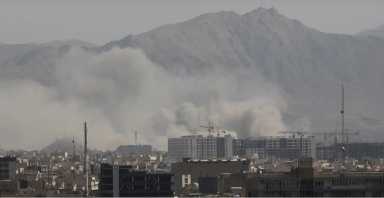
America’s assault on Iran’s regime has triggered fiery protests and deep anxieties in New York City, exposing the tangled costs—and parochial consequences—of presidential bravado abroad.
Most New Yorkers spent last weekend bracing for rain. Instead, they were battered by something both less predictable and more calamitous: the aftermath of Operation Epic Fury, the joint U.S.-Israeli air campaign that killed Iran’s Supreme Leader, Ayatollah Ali Khamenei, after nearly four decades in power. As news of the strikes flooded in, so too did thousands of city residents—both aggrieved and jubilant—who took to the streets in numbers rarely seen outside presidential elections or sports championships.
On the steps of Queens Borough Hall, local Democratic Congressional representatives wasted no time lambasting President Donald Trump. Grace Meng, Alexandria Ocasio-Cortez, Nydia Velázquez, and Gregory Meeks each decried the strikes as reckless, unnecessary, and woefully ill-prepared for the ensuing chaos. For the Iranian diaspora and their neighbors, the shockwaves were not abstract: the Iranian Red Crescent Society now puts the death toll within Iran at over 780.
Operation Epic Fury, orchestrated on a Saturday that New Yorkers might have preferred to spend at brunch, upended not only lives in Tehran’s streets but also the political climate of America’s largest city. Protests and counter-rallies in Queens, Manhattan, and Brooklyn illustrated the city’s characteristic diversity—and its sharp divides. Opposition groups to the Iranian regime openly celebrated Khamenei’s demise, while antiwar demonstrators castigated American interventionism, with Ocasio-Cortez and others echoing their outrage.
Beyond the headlines, New York faces real and immediate consequences. The city boasts the nation’s largest Iranian-American community as well as a significant Jewish population, both now deeply unsettled by events far from the FDR Drive. As one community leader in Astoria remarked, “We’ve been here before. But every time, it feels closer.” Stories of loved ones trapped by shuttered airports, or businesses scrambling to transfer funds as financial sanctions tighten, are likely to proliferate.
Political tremors will echo from Queens to Washington Heights, and back again. The U.S. State Department’s abrupt advisories for Americans to flee over a dozen Middle Eastern countries prompted Representative Meng to lambaste federal evacuation planning as “cruel and irresponsible”—particularly after 1,300 State Department staff disappeared from payrolls last year, a casualty of budgetary pruning. Unlike European nations, which have arranged chartered flights to extricate their citizens from the region, the U.S. government appeared to operate on little more than hope and a press release.
The economic effects may yet prove both tepid and costly. New York’s financial sector is acutely sensitive to geopolitical tremors: spikes in oil prices (now perilously close to $120 per barrel), growing uncertainty for airlines and logistics firms, and the spectre of cyberattacks aimed at critical urban infrastructure have all made previous conflicts look trivial by comparison. Wall Street does not take well to unpredictability, especially the sort that radiates from 5,700 miles away and then commandeers domestic politics by the Monday morning bell.
Those politics have turned particularly noxious. Ocasio-Cortez and her colleagues accuse Trump of discarding diplomatic progress for short-term optics—Geneva’s indirect nuclear talks with Iran, reportedly making “good progress” according to Foreign Minister Abbas Araghchi, now lie in ruins. Dragged back into the familiar rut of Middle East conflict, Congress once again appears more interested in triage than strategy. Secretary of State Marco Rubio’s public insistence that Americans simply “get out” of hot zones only underscored the gap between policy and reality—airports have closed, leaving Americans in Lebanon, the Gulf, and Israel to weigh risks with little governmental help.
On the city’s streets, polarization is now matched by anxiety. Iranian New Yorkers weigh fears of reprisal or profiling against unease over the regime’s legacy, while Jewish New Yorkers follow news of missile barrages on Tel Aviv and drone attacks in Saudi Arabia with mounting dread. The spectacle of civilian infrastructure targeted in the United Arab Emirates is a chilling sign that spillover may prove harder to contain than any military planner would wish.
The city that hosts the United Nations, it seems, is now especially alert to the failures of global order.
America’s entanglements in the Middle East have often felt distant to the average denizen of Queens or the Bronx. Not this time. As Empire State lawmakers pummel federal mismanagement, New York’s teeming global neighborhoods are themselves now proxies in the broader contest over what kind of nation America will choose to be—reliable arbitrator, isolationist, or unpredictable pugilist. And city institutions—from synagogues to immigrant-run groceries—must now bolster their defenses against both vitriol and price shocks.
Nationally, America’s rush to take high-profile action abroad feels oddly out of sync with partners across the Atlantic. European governments, who have hustled to extract their own citizens and maintain lines to Iranian moderates, may reckon that Washington’s strike was perhaps tactically clever but strategically shortsighted, portending more chaos than clarity. No other Western democracy has so enthusiastically embraced escalation, and few outside Benjamin Netanyahu’s orbit seem eager to join.
Globally, the episode is a cautionary tale about the perils of maximalist politics. Past attempts at regime change—think Iraq or Libya—should have lent Washington some humility. Instead, Trump’s administration appears to believe that a decapitated adversary will simply collapse, rather than metastasise into new forms of violence, chaos, or even nationalism. The ongoing missile strikes against Israel and U.S. embassies abroad hardly bode well for a speedy return to “normality.”
We see in this episode a familiar blind spot: America’s political leaders, seduced by the promise of quick solutions, too rarely reckon with the aftershocks among their own most cosmopolitan populations. New York, for all its resilience, is again thrust onto the front lines of policy folly: home to grieving diasporas, nervous investors, and the inexhaustibly opinionated. The city is, as ever, a bellwether—restless, resilient, and forced to live through the consequences of decisions made far above Union Square.
The lesson is neither new nor reassuring: in a world as interconnected and combustible as ours, the price of dramatic action abroad is often measured less in foreign capitals than on the streets of New York. ■
Based on reporting from QNS; additional analysis and context by Borough Brief.