Over 75 Groups Back Bipartisan Dignity Act, Congress Faces Familiar Immigration Stalemate
Bipartisan calls to overhaul America’s creaking immigration system gather steam, as a coalition presses Congress for pragmatic reform with implications beyond national borders.
On a muggy weekday morning in Lower Manhattan, a coalition of more than 75 organizations—a striking quilt of business, faith, and community leaders—declared their support for the Dignity Act, the latest attempt to yank America’s byzantine immigration regime into the broad daylight of reform. Arrayed before the press midway through June, these groups announced not just endorsements but a full-fledged national tour, the “Dignity Tour,” designed to nudge, coax, or shame Congress into action on a problem that has festered, seemingly untended, for four decades.
The Dignity Act, a rare bipartisan concoction with backers drawn from both Republican and Democratic ranks, proposes a legal lifeline for millions of undocumented immigrants who have quietly built lives across America. Unveiled by a cross-aisle alliance led by Republican María Elvira Salazar and Democrat Verónica Escobar, the law would provide renewable work permits and temporary protection from deportation for longstanding undocumented residents who undergo criminal background checks and pay fees. For certain groups, most notably “Dreamers” shielded by DACA, it dangles the promise of a path—if only a narrow one—to permanent residency.
The message in New York was clear: congressional inertia has overstayed its welcome. Representative Escobar drew a line under the urgency, framing the Dignity Act not merely as an immigration initiative, but as an economic and national-security necessity. Stagnant birth rates and an ageing workforce, she argued, portend chronic labour shortages that threaten national dynamism. “This is not just good politics,” she noted. “It’s good business.”
For New York City, the stakes are far from notional. More than 1.1 million undocumented immigrants call New York State home, with the lion’s share in the city. Their economic contributions—both formal and informal—are staggering, filling crucial roles from kitchens and construction sites to home health care and child services. According to city figures, immigrants (documented and otherwise) constitute nearly half of all working-age New Yorkers, making their inclusion in legal and economic life less a matter of charity than of existential fiscal logic. In a city perennially short of affordable childcare and restaurant staff, even modest regularisation could close labour-market gaps and swell tax coffers.
Beyond the ledger books, legalisation would allow thousands to step from the shadow economy into fuller civic participation. Teachers and health workers would be easier to recruit as schools and clinics strain under pandemic-era attrition. Others, newly shielded from deportation, could sign leases, start businesses, or pursue further education, loosening knots that keep entire families on the edge of destitution. The proposed requirement for both background checks and payment of fees suggests politicians are sensitive to perceptions of fairness, balancing leniency with accountability.
The second-order consequences already ripple outward. The initiative has the potential to stabilise precarious housing markets and abate illegal sub-tenancies. For city agencies, a regularised immigrant workforce presages easier planning for public health, education, and emergency responses. Business groups, always keen on reliable labour, have lent their imprimatur to the effort, hoping to mollify supply-chain headaches and reduce recruitment costs.
Politically, the Dignity Act’s bipartisan provenance is both its chief selling point and its heaviest anchor. Reform’s long drought is owed not to lack of ideas but to the surly polarisation that has paralysed Congress for decades, most recently in the failed efforts at comprehensive immigration overhaul during the George W. Bush and Obama years. New York’s senators, Chuck Schumer and Kirsten Gillibrand, have made noises supportive of reform but, like many peers, have seen legislative prospects routinely vaporised by election-year brinkmanship.
Nationally, the bill’s prospects are by no means assured. The American immigration debate remains veined with anxieties over border security, cultural change, and economic displacement—concerns politicians have mined for votes, if seldom for practical policy. Yet public opinion, at least by some measures, leans toward legalisation: in a 2023 Pew survey, two-thirds of Americans said undocumented immigrants who meet certain requirements should be permitted to stay in the country legally.
A city’s wager, and a test for Washington
Nor is New York alone in its aspirations. Cities from Miami to Phoenix, all wrestling with waves of arrivals and low unemployment, watch with interest as the legislation wends its way through committee hearings and Sunday talk shows. Internationally, America’s stasis is increasingly anomalous: Canada’s points-based model, and regularised pathways for “essential workers” in the EU, underscore how policy nimbleness can yield demographic and economic dividends. As other global cities absorb newcomers with bureaucratic efficiency, New York’s persistent limbo looks, at best, parochial.
There are, to be sure, reasons for caution. Critics fret that any legalisation measure could encourage further illegal entry or function as a stopgap, forestalling more durable solutions such as guest-worker schemes or visa modernisation. Others warn of bureaucratic bottlenecks: New York’s own municipal ID programme, IDNYC, was stalled for months by paperwork and technical hiccups—a small-scale glimpse of the challenges ahead if millions seek legal status at once.
For all that, the Dignity Act’s main provisions are paltry compared to the maximalist proposals of years past. It offers no grand amnesty, nor unconditional green cards. What it does extend is a legal vestibule: a liminal space where longstanding New Yorkers (and their equivalents across the country) may regularise their presence under terms designed to assuage both Main Street and Wall Street. Its sponsors style it as “common sense”—politician-speak for something likely to offend both the right’s guardians of the gate and the left’s apostles of open borders.
We reckon that, given the scale and complexity of the challenge, such measured steps are not only prudent but necessary. Cities like New York prosper when they harness the energies and ambitions of newcomers, and flounder when forced to tread water by waiting for Washington to rediscover its competence. Inertia, not legalisation, bodes ill for civic trust and economic vitality.
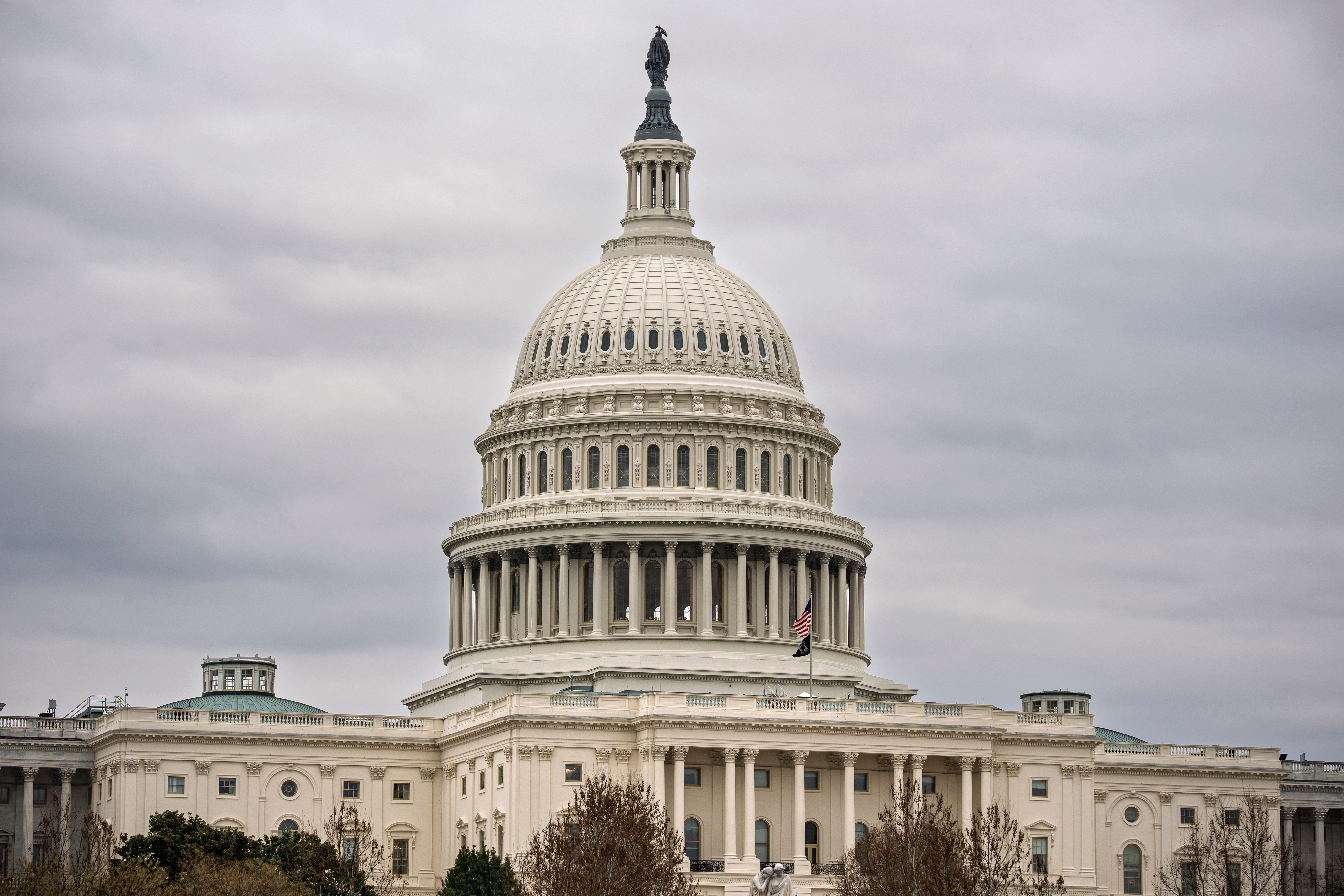
Whether Capitol Hill will budge remains an open question. But for now, New York’s wager on pragmatic, incremental inclusion might represent the finest of American traditions—a preference for imperfect progress over paralysing purism. Should Congress demur yet again, the city’s patchwork of policies will persist, less by grand design than by the inertia of necessity. The Dignity Act may not cure all that ails American immigration, but it would permit cities to do what they do best: absorb, adapt, and advance. ■
Based on reporting from El Diario NY; additional analysis and context by Borough Brief.