OneLIC Rezoning Promises 14,700 Long Island City Homes and $2 Billion in Public Upgrades
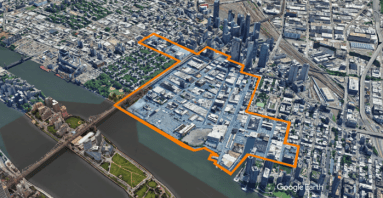
New York City’s largest rezoning in years portends a new era—and new risks—for a transforming waterfront.
On a windblown morning in January, city officials stood with neighborhood activists at Dutch Kills Green in Long Island City, flanked by the faded backs of old warehouses and the ever-encroaching silhouettes of glass towers. What they announced had not happened in Queens in a generation: a rezoning of 54 city blocks—an expanse once synonymous with industrial grime—for new homes, offices, and green spaces. The $2 billion plan, named OneLIC, is New York City’s boldest effort to wrest order and equity from the special chaos of its westernmost borough.
Approved unanimously by the City Council in November, OneLIC will “upzone” a wide swathe of Astoria and Long Island City. The scheme promises up to 14,700 dwellings, at least 4,300 of them subsidized—a rare concession in a city where luxury towers more often crowd out the mid-century walk-up. Developers, sensing opportunity, brought $100m of their own to the table to fund public amenities from arts spaces to riverfront parks. The city, for its part, has committed $1.97bn to infrastructure and schools.
Long Island City’s ability to absorb new arrivals is not in question: 40,000 people have settled there since 2010, dwarfing past forecasts. But growth’s fruits have seldom been spread evenly. The neighborhood has long operated with a puny share of green space—less than half the city average—and infrastructure reliant on pipes and power laid in decades past. From its inception, the OneLIC plan was pitched as both an answer to an acute housing shortage and a corrective for years of half-hearted city planning.
Ominously, four earlier attempts to rezone this area had failed, victims of local resistance or political horse-trading. Council Member Julie Won, who brokered this latest deal, credits an exhaustive public outreach campaign: over two years, her office orchestrated 21 forums and distributed 14,000 mailers, yielding a rare sense of consensus in a fractious city. It is telling that Ms. Won’s own skepticism at the process—she initially opposed the plan—manifested not as stonewalling, but as a negotiation to extract nearly $2bn in tangible city commitments.
First-order impacts for New Yorkers will be conspicuous. Schoolchildren, at least in theory, will find 1,300 new classroom seats awaiting them, while aging sewers receive long-overdue updates. Parks advocates have bet heavily on promises: 15 acres of new public realm, river walks along the Dutch Kills Loop, a renovated Newtown Creek, flood protections, and dog parks aplenty. With luck, such investments may spare future residents the inconvenience of being cut off by brownfields or squeezed into already-bursting playgrounds.
Yet the second-order effects are harder to calibrate and more combustible. The city’s housing market remains threadbare, with rents soaring and affordable stock stagnating. Four thousand subsidized apartments is no panacea in a district that routinely registers waiting lists in the tens of thousands. The upfront $2bn commitment may well be chewed up by cost overruns, bureaucratic friction, or developer wiles, as past city projects have been. Infrastructure upgrades are rarely as quick or complete as advertised. Civic space—so eagerly pledged—is often first on the chopping block when budgets tighten.
Politically, OneLIC is a fragile truce between City Hall’s growth agenda and locals’ zeal for affordability and community input. Ms. Won’s deal with the Eric Adams administration bucks a national trend: New York’s rezoning attempts often run aground on jawboning between activists and developers, or die in subcommittees starved of legislative will. It is not lost on observers that consensus for OneLIC came at the cost of nearly two years’ wrangling—a pace unlikely to satisfy those who fret over New York’s anaemic housing pipeline.
Nor does OneLIC stand alone. Nationally, cities from Seattle to Toronto have grappled with how to regenerate post-industrial outer boroughs without toppling long-time residents or summoning a deluge of luxury flats. Internationally, the tension between density and quality of life is a familiar one: Vancouver’s false creek, London’s Canary Wharf, and Beijing’s hutong redevelopments offer lessons in both optimism and hubris. Many have found that even well-financed urban renewal schemes tend, in the end, to privilege newcomers over locals and hype over substance.
Will OneLIC prove catalyst or cautionary tale?
The lessons of prior New York rezonings—Williamsburg, Hudson Yards, the ill-fated Amazon campus in Queens—suggest local activism can upend even the best-laid municipal plans. Winsome rhetoric about “mixed use vibrancy” means little without binding guarantees: As dust settles and construction cranes dot the skyline, it will be the slow work of regulatory enforcement, watchdog journalism, and public vigilance that decides whether OneLIC yields the promised amenities or leaves only expensive glass buildings and fraught tenants.
We view the city’s willingness to strike a hard bargain this time—with earmarked funds for unpopular, slow-moving improvements like sewers and flood protection—as a break from habit worth commending, if not praising unreservedly. Still, the risk remains that developers, facing their own rising costs and impatient investors, will lobby to water down affordability or delay public projects. The city’s affordable housing record bodes only modestly well: Some prior commitments required persistent litigation or outside intervention to deliver as planned.
There is an irony, not lost on the most jaded New Yorker, that a transformative housing package passes just as remote work, high interest rates, and fragile municipal finances threaten the viability of all such undertakings. Indeed, New York’s ability to draw globetrotters and ambitious strivers may itself hinge on whether such plans deliver livability, not just more units wedged between F-trains and clogged avenues.
In sum, OneLIC is neither a panacea nor a boondoggle—at least, not yet. It is a well-timed, if belated, experiment in what decisive local engagement and hard negotiation can produce in a city too often paralysed by shrill debate and delicate egos. For Queens’ future, the risk is not that nothing changes, but that too little does for those who need it most.
New Yorkers will watch as bulldozers, and perhaps a few overpromising politicians, move in; but the verdict on livability will be rendered by the families, commuters and seniors who call these rezoned blocks home. If the city’s resolve holds, and the checks clear, OneLIC may yet shift the metropolis toward something a little closer to both density and decency. ■
Based on reporting from QNS; additional analysis and context by Borough Brief.