NYC Council Moves to Counter Vaccine Misinformation as Washington Hesitates, Measles Cases Rise
As measles and misinformation creep back into American life, New York City’s lawmakers are moving to inoculate young minds—and public health policy—against a troubling epidemic of disbelief.
In a city that once boasted triumphant immunisation rates, New York now finds itself revisiting the ghosts of epidemics past. The latest figures from the Centers for Disease Control and Prevention (CDC) are sobering: coverage among kindergarten children for all standard vaccines dropped again in 2024, while the United States faces a resurgent measles outbreak. Nearly 1,800 cases have been confirmed across 37 states—numbers not seen in a generation.
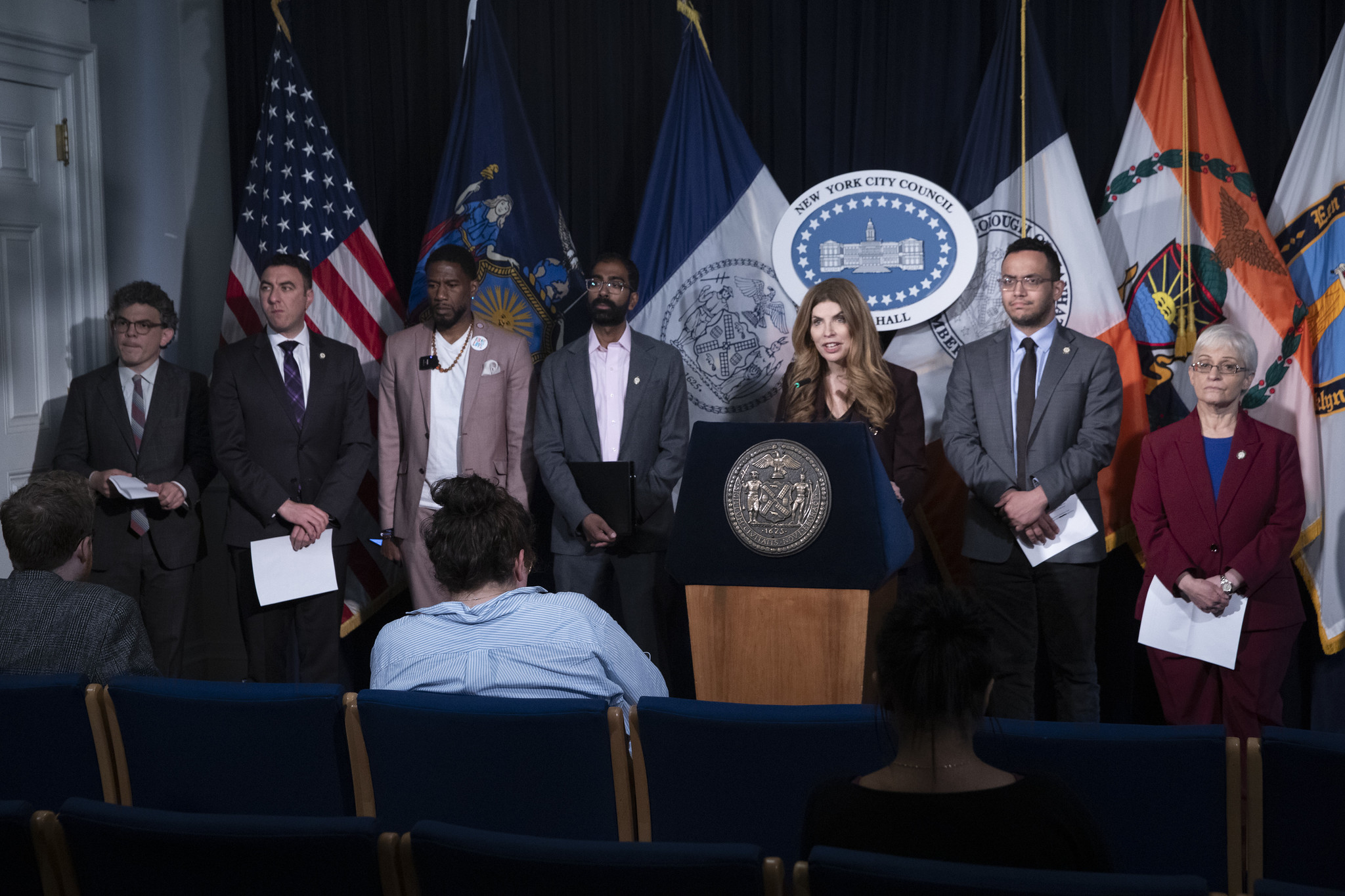
This public health stutter has prompted a characteristically muscular response from the New York City Council. On June 10th, with little fanfare but much exasperation, councillors passed a legislative package designed to counteract vaccine misinformation and stanch the slide in childhood immunisations. At its heart are new requirements for the Department of Health to distribute clear, science-based information about vaccines to all public-school families, spanning the city’s extensive early childhood programmes from 3-K up through high school.
The law demands no less than a wholesale educational campaign, to be unveiled prior to 2027, that will educate students and parents alike about how immunisations work and why evidence—rather than social media speculation—ought to shape family health decisions. Backing the effort are the likes of Eric Dinowitz, a Bronx councilmember and former educator, who put it acidly: “We will not allow politics or certain personalities to replace medical evidence.” The city’s Council Speaker, Julie Menin, took aim further afield, lambasting federal dithering. “When Washington retreats, New York steps forward,” she declared before the vote—punctuating a growing divergence between local and national responses to a now-global distrust of health authorities.
On paper, the mechanics are straightforward. The Department of Health must craft and circulate explanatory leaflets (in multiple languages, one presumes), and a multi-pronged media push will strive to counter anti-vaccine myths. Pressing the state government, the Council also called for wider access to vaccines and insurance coverage, while proposing that trained dentists (not just physicians or nurses) be permitted to administer jabs. In effect, New York would make it a little harder to avoid the truth—and a lot harder to avoid a shot.
The city’s initiative bodes well for its roughly 1.1 million public-school children, in the near term. Vaccine scepticism, long a fringe concern, now flares routinely across social media—with consequences that bleed swiftly from digital echo chambers into real-world hospital wards. Disproportionately, it is children in poorer or under-served boroughs, such as the Bronx or sections of Brooklyn, who face the gravest risks when herd immunity falters.
For New Yorkers, the stakes are more than statistical; they are tangible. In 2019, the city endured the largest measles outbreak in nearly thirty years—a flare-up linked to pockets of hesitancy and amplified by online rumour-mongering. The financial toll of managing that incident ran into the millions, from quarantines to public health advertising. A renewed commitment to evidence-based outreach may portend lower rates of absenteeism, fewer school closures, and—more broadly—a reset in public trust.
Politically, the city’s move is unlikely to go unchallenged. New York already fields regular suits from opponents of vaccine mandates, some of whom style these efforts as overreach or parental intrusions. Yet polling suggests a stubborn majority of the city’s residents still favour widespread childhood inoculation, and many appear fatigued by the conspiracy-theory industrial complex that mushroomed during the pandemic. In stepping into the breach, the Council exploits both local patience with science and exasperation with national drift.
Looking beyond Gotham, the uneasy trend is national—and far from unique
American immunisation rates, though high by global standards, show signs of erosion. The CDC attributes some of this decline to disruptions caused by Covid-19. But the deeper malaise is informational. Misinformation campaigns—often orchestrated via Facebook or YouTube—outpace efforts by state health agencies many times over, reaching parents across the ideological spectrum. The World Health Organization classified “vaccine hesitancy” as a top global health threat even before the pandemic.
Other American cities and states are waking up, if somewhat fitfully, to the same challenge. California, home to more than 6 million school children, has pursued strict exclusion policies for unvaccinated students, occasionally stoking parental backlash. Across the Atlantic, France and Italy have both ratcheted up vaccine requirements in response to falling coverage rates—a tacit recognition that persuasion alone may not suffice.
New York’s approach, though muscular, is not draconian. Rather than strict mandates or penalties, the emphasis falls on education, transparency, and lowering practical barriers. Allowing dentists to offer vaccines may seem banal, but in a metropolis where residents endure long waits for paediatric appointments, the move could prove quietly consequential. Insurance coverage expansions, too, target one of the few remaining cost-related obstacles.
Will these reforms stem the tide? We remain guardedly optimistic. Local governments, with their lack of filibusters and, often, their greater intimacy with voters, can experiment with pragmatic outreach lost in Beltway gridlock. While social media platforms remain fertile soil for crankery, targeted, repeated messaging—especially when yoked to authoritative community figures—still wins converts, as both data and experience from previous vaccination drives suggest.
Above all, the city’s effort is a modest but clear signal: retreat is not inevitable. By recentering the conversation on evidence, New York is betting not only on its immune system, but also on its civic antibodies—those threads of trust, science, and plain talk that, when bolstered, shield whole communities better than any miracle drug. The city’s leaders wager that facts, patiently repeated, can still trump fearmongering. It is a gamble that deserves to pay off.
■
Based on reporting from El Diario NY; additional analysis and context by Borough Brief.