Nurses Mark Four Weeks on Strike, Hochul’s Office the Latest Stop on Their Rounds
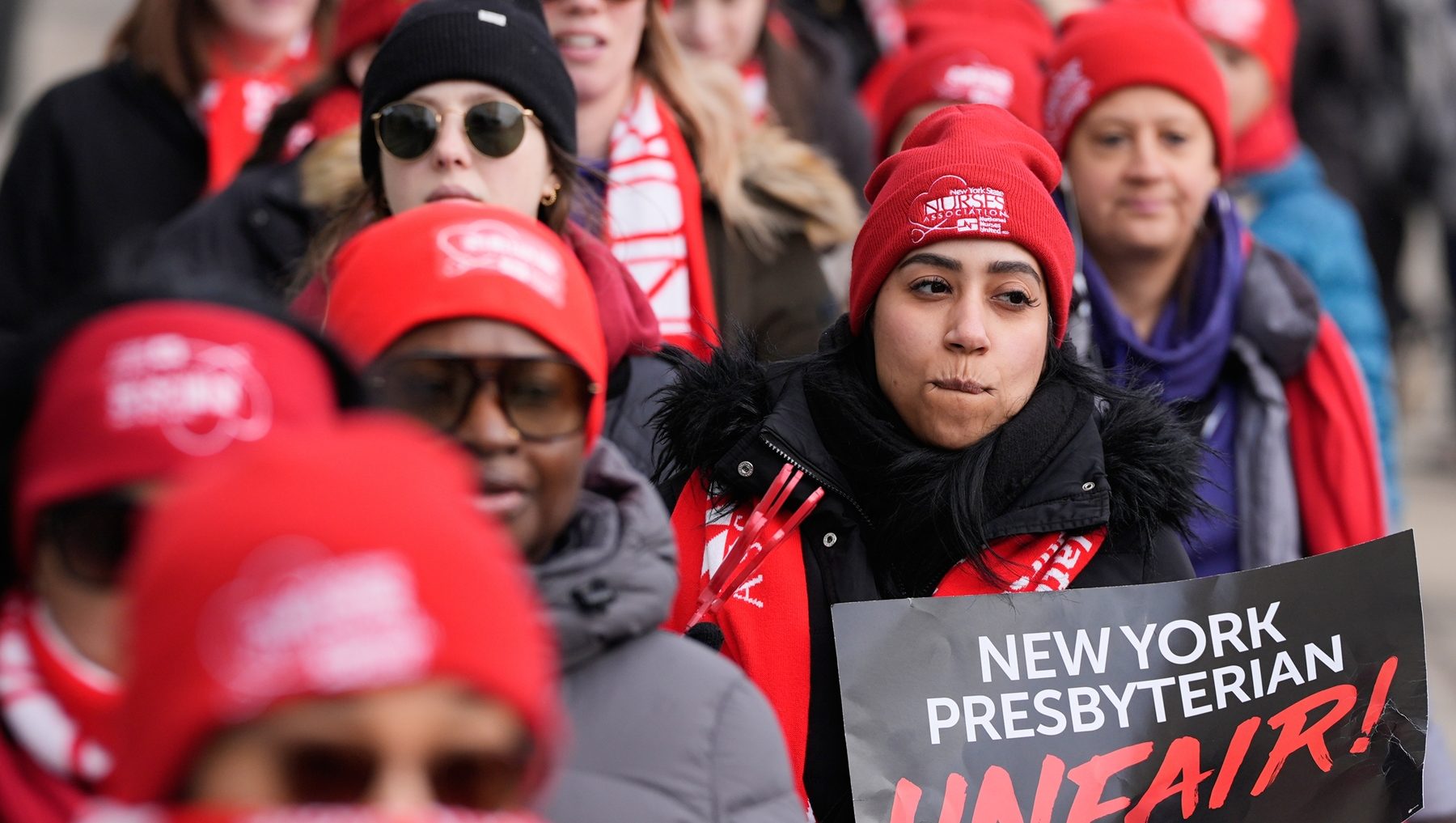
As New York nurses press into a fourth week on strike, the standoff exposes cracks in the city’s healthcare bedrock and the limits of political intervention.
Red-clad figures cut a striking silhouette through Manhattan’s steel canyons on Monday morning, their chants echoing over the perpetual hum of the city. Hundreds of nurses, some with careers spanning half a century, began their fourth week of industrial action by marching from Grand Central Terminal to Governor Kathy Hochul’s Midtown office. It was less parade, more cri de coeur: a demand for state leadership amid a standoff that has left New York’s top hospitals adrift and patient safety a matter of negotiation.
The dispute, affecting Mount Sinai, Montefiore, and NewYork-Presbyterian, is the city’s largest nurses’ strike in a generation. Nearly 15,000 nurses have vacated their posts since walkouts began last month, pressing for higher staffing ratios, improved safety, and wage hikes. Frontline staff allege that, even before the action, overstuffed corridors, converted consult clinics, and fraying tempers were the norm—not the exception.
Governor Hochul, for her part, has opted for containment. Days before the strike commenced, she invoked an executive order permitting hospitals to pad staffing gaps with temporary “travel” nurses. This legal device, intended as a circuit breaker, has instead facilitated the status quo: hospitals have so far spent more than $100m accommodating the itinerant replacements. For strikers, this inflow of outsiders—backed by executive muscle—feels less a solution than a provocation.
For New Yorkers, the immediate implications are palpable. Clinics already operating near or beyond capacity now rely heavily on temporary hands, whose familiarity with patients and procedures is necessarily threadbare. A wry observer might note that the city’s famed resilience now includes enduring out-of-towners administering morphine. Meanwhile, management and union leaders sound notes of resolve but offer no clear timetable for reconciliation.
Yet beneath the swirl of slogans and stump speeches lies a more systemic malaise. The dispute pits two imperatives—cost containment for sprawling hospital conglomerates and the professional dignity of overworked nurses—against one another. Mount Sinai’s Brendan Carr argues the current offer—annual raises and continued benefits—balances financial prudence with fairness. Union officials, unimpressed, counter that paltry staff-to-patient ratios and meagre support risk endangering lives as well as livelihoods.
The stakes are not simply monetary, but existential. New York City’s 8.5 million residents depend on a hospital network that, for all its prestige, suffers from chronic shortfalls. The pandemic, which once cast nurses as heroic linchpins, has left the system more brittle than buoyant; burnout and early departures from the profession are up, while applications to local nursing programmes remain tepid. Hospitals, despite jaw-dropping executive pay, often plead poverty when it comes to support staff.
If there is a silver lining, it is that this high-profile walkout has drawn rare political attention. The absence of Governor Hochul on the picket lines, critics argue, hints at a risk-averse executive unwilling to wade into a fraught industrial conflict. By contrast, figures such as Senator Bernie Sanders and New York Assembly member Zohran Mamdani have found ample media oxygen rallying to labour’s side. Even so, leadership by press release is unlikely either to bolster morale on the wards or close substantive gaps at the negotiating table.
The broader context offers a mix of caution and precedent. Labour unrest among health workers is hardly unique to New York. In the past year, cities from Minneapolis to Los Angeles have faced similar strikes—symptoms of deeper unease with a national healthcare model that asks much of its workforce while offering little institutional ballast. Abroad, the scenario diverges: many European states, for all their own fiscal headaches, employ centralised standards for staff ratios and nurse remuneration, preventing precisely this sort of rolling crisis.
The fight’s aftershocks ripple beyond the wards
New York’s nurses, emboldened and media-savvy, wager that persistence will yield not only better contracts but system-wide reform. Hospitals gamble that the financial bleeding from travel nurse fees is more manageable than caving on fundamental staffing provisions—a calculation with uncertain long-term consequences. The question is whether New Yorkers will tolerate protracted impasse or eventually find their patience as depleted as hospital budgets.
From an economic perspective, every week of discord costs: hospitals leak cash, the city’s famed healthcare sector risks reputational bruising, and patients face uncertainty about their care. For the thousands of nurses walking picket lines without pay, the gamble is personal as well as political. Yet the risk of doing nothing seems even starker: already, nurses warn of “hallway medicine” as a norm, all but guaranteeing subpar outcomes for the city’s poorest patients.
In classical-liberal terms, a robust labour market and meaningful negotiation are to be lauded; yet neither party appears especially nimble. The state’s intervention, couched as pragmatic crisis management, has instead entrenched both camps and racked up costs. Far from clarifying public priorities, the standoff risks reinforcing the impression of a vast, well-financed machine incapable of essential self-correction.
Globally, some perspective is in order. New York remains, by many metrics, well-served compared to peer megacities from São Paulo to Lagos. But the spectacle of striking nurses in a city that prides itself on medical superiority exposes a vulnerability as glaring as it is avoidable. If neither governor nor hospital directors can broker peace, the answer may yet come from an electorate increasingly frustrated with pious platitudes and scant progress.
As the negotiations stagger on, New Yorkers must reckon with hard questions about their health system’s priorities and limits. For the moment, the city’s nurses are betting that tenacity—rather than executive orders or outside contractors—will move the needle. Our wager is that this further exposes the fissures in a system overdue for reform, while reminding the city’s leaders that, sometimes, simply treading water is not enough. ■
Based on reporting from El Diario NY; additional analysis and context by Borough Brief.