Nueva Jersey Abre Vía del Nuevo Portal North Bridge, Prometiendo Fewer Delays to Penn
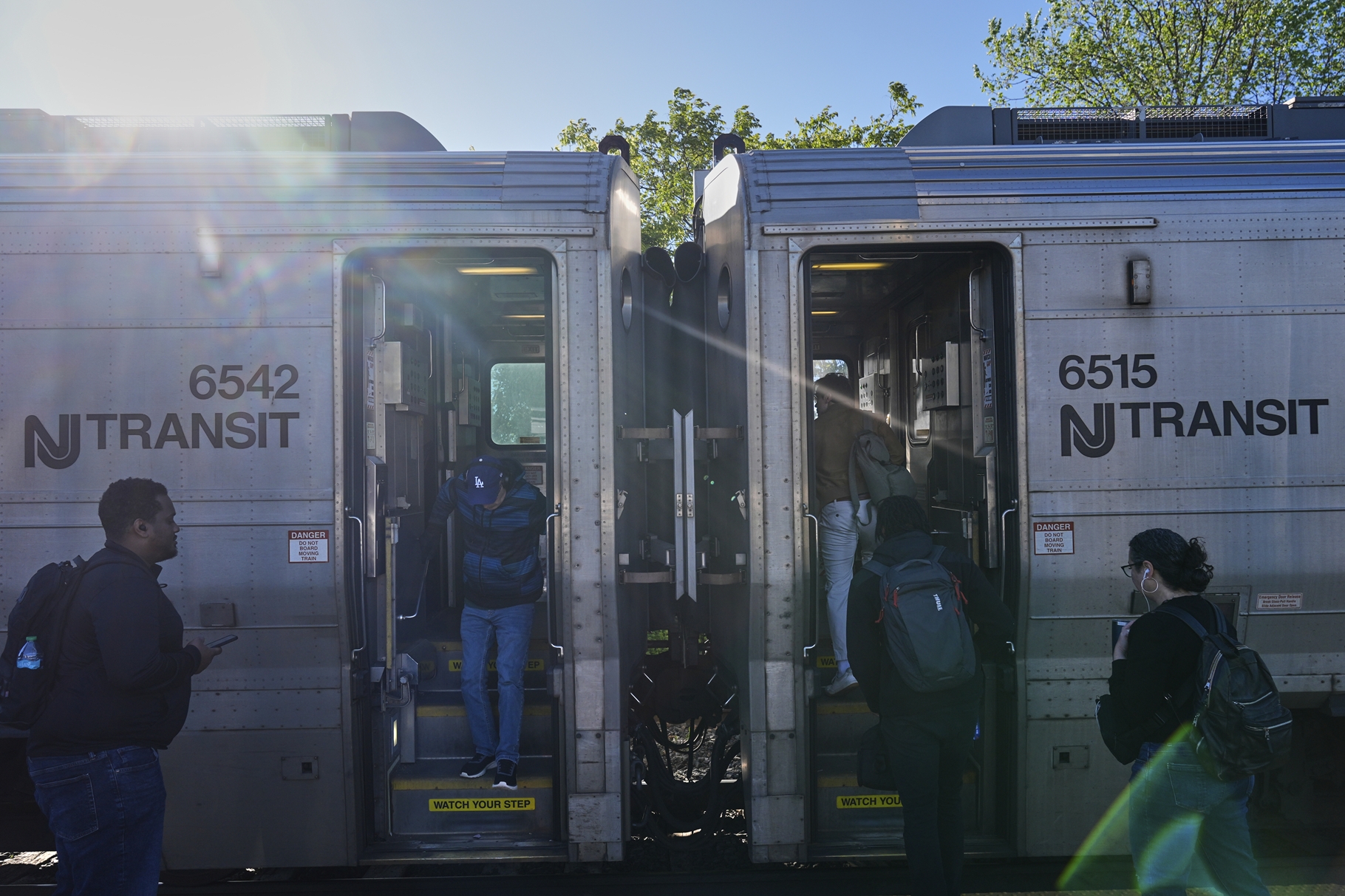
The replacement of the century-old Portal North Bridge in New Jersey promises to unclog America’s busiest rail artery and bodes well for the economic lifeblood of the New York metropolitan area.
On a grey morning in March, a sleek NJ Transit commuter train crept ceremoniously across a fresh span of steel arcing over the Hackensack River in Kearny, New Jersey. This was no ordinary inaugural: the first trip over the new Portal North Bridge marked the end of one of the region’s most notorious bottlenecks—a notorious drawbridge, built 116 years ago, that routinely plagued the 200,000 daily passengers travelling between Newark and Manhattan with delays, breakdowns and, not infrequently, baffling signal malfunctions.
The Portal North Bridge forms part of the Northeast Corridor (NEC), a railway so vital it verges on prosaic: more than 400 trains lumber along its tracks on any given weekday, making it the nation’s most-trafficked passenger rail line. With the launch of the first of two tracks on the new fixed, high-clearance bridge on March 16th, NJ Transit, Amtrak and a roster of political officials marked their progress in wresting the metropolitan rail system from the clutches of century-old infrastructure failure.
For decades, the old swing-bridge’s design forced rail operators to halt traffic whenever a ship passed beneath. Its age did not help—misalignments and mechanical hiccups were commonplace. The recent symbolic crossing, led by Governor Mikie Sherrill and attended by officials from NJ Transit, Amtrak and the federal government, signals the beginning of the bridge’s active service. The second track is due to open this autumn, completing the $1.8bn project.
Implications for New York, as ever, are immediate. The Portal North Bridge is the capillaries leading to the city’s economic heart; it is hard to overstate the costs—both human and fiscal—of its malaise. Delays cascade through Penn Station and on into the commercial core of Manhattan, reducing productivity and chipping away at the region’s famously robust economic output. By eliminating conflicts between river traffic and trains, the new bridge could bring some much-needed dependability to a network too often stymied by antiquation and neglect.
Beyond punctuality, the project signals larger ambitions for New York’s commuter ecosystem. Improved reliability is the lodestar for long-suffering riders, but the wider Gateway Program, of which the Portal North is but a chapter, also envisions raised capacity, new tunnels under the Hudson, and resiliency against what the region’s planners gingerly call “future climate events.” In other words, this is infrastructure for 21st-century vagaries as much as for 20th-century congestion.
The economic benefits could prove considerable. According to the Regional Plan Association, every minute saved on rail commutes in the corridor translates to millions in recouped productivity annually. Job access across the region should improve, potentially boosting labour-market participation in both New Jersey and New York. Amtrak’s president, Roger Harris, has hailed the new bridge as “transformative”—a rare, if carefully chosen, note of hyperbole in a sector defined by underinvestment.
It also bodes well for New York’s attempts to maintain its pull as America’s prodigious talent magnet. As white-collar workers weigh the merits of hybrid routines, time lost to unreliable commutes is as likely as unaffordable rents to repel the kind of global workforce on which the metro area has long relied. Upgrades like Portal North serve as reminders that cities willing to invest can, at the margins, retain their gravitational force.
Lessons from elsewhere and the long shadow of delay
To be sure, New York is not alone in wrestling with the legacy of a prior century’s largesse. London’s Elizabeth Line, Paris’s Grand Paris Express, and even Tokyo’s steady reinvestment in suburban connectivity all reflect a global consensus: economic dynamism follows efficient infrastructure. But America’s efforts, compared to those of Europe or East Asia, remain halting and prone to fits of piecemeal funding, political bickering and, too often, inertia.
The costs of waiting are plain. Projects like the Gateway tunnels—meant to supplement the now bridge—have been delayed by more than a decade due to funding gaps and shifting federal priorities. In that time, construction costs have ballooned while geopolitical shocks and pandemic disruptions placed further strain on public finances. One is left to marvel at how a country that once poured concrete with abandon now celebrates a single bridge’s ribbon-cutting as a generational milestone.
That said, the completion of the new Portal North is a glimmer of forward movement, at least by America’s glacial standards. It is funded by a mix of federal, state and Amtrak dollars, and stands as an example of what consensus and dogged local advocacy can accomplish, even within a fragmented political order. The hope is that this sort of momentum can be parlayed into the considerably more complex investments still needed—Hudson River tunnels among them—to future-proof the region’s transit.
There are sensible reasons for scepticism. The pace is still puny, and further delays seem a certainty as costs rise and real federal infrastructure ambition remains fitful. Yet economic logic—along with the lived misery of rail commuters—suggests the political calculus may be shifting. As the region’s dependency on public transit is laid bare by gridlocked highways and rising emissions, infrastructure upgrades become less a luxury and more a necessity.
We reckon that, though decades late, the opening of the new bridge is a salutary omen for New York’s wider prospects. It cannot alone reverse the decades of atrophy that have imperiled the Northeast Corridor, nor will it banish the region’s penchant for stutter-step progress. But it demonstrates, if in modest measure, how infrastructure that is not just repaired but renewed can enable urban resilience and competitive strength.
For all the habit of American boosterism, the story of the Portal North Bridge is one of catch-up rather than leapfrogging. Still, with every on-time arrival it brings, the city inches closer to an ideal more common abroad: a metropolitan region fit for the demands—and surprises—of this century. ■
Based on reporting from El Diario NY; additional analysis and context by Borough Brief.