New York Commits $1.9 Billion for Homeless Hotel Shelter, Tourism Wonders Where to Check In
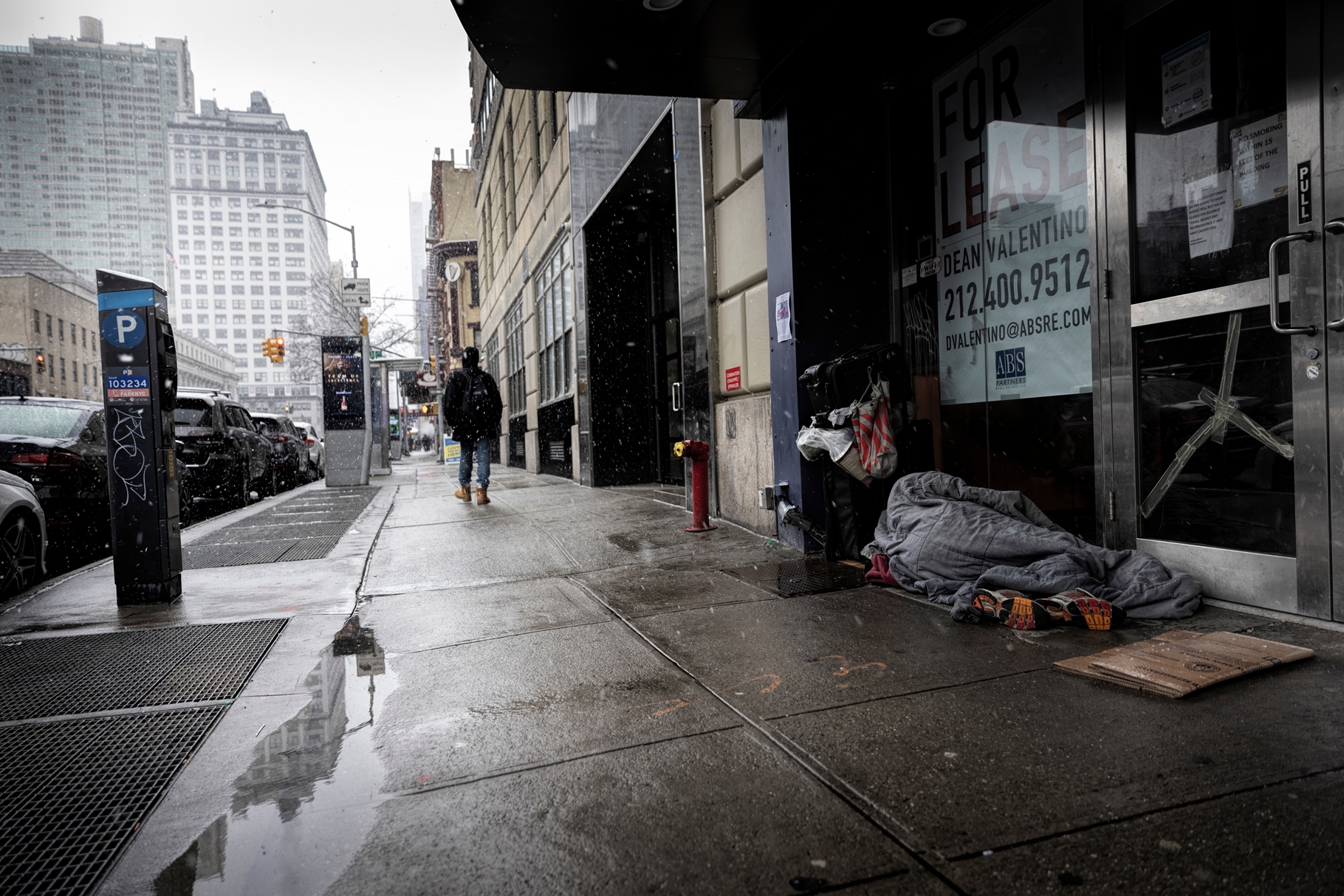
New York’s $1.86bn pact with hotels to house families signals how the city addresses the ongoing challenge of sheltering tens of thousands while weighing cost, competition, and its hotel industry’s wider role.
Numbers tell their own story in New York. More than 85,000 individuals seek refuge in the city’s shelters nightly—roughly the population of Albany secreted away in an archipelago of cots and converted rooms. Last week, City Hall signaled its intent to address the issue with fiscal theatre: a three-year, $1.86bn contract with the city’s hotel sector, cementing hotels as a mainstay of the emergency shelter infrastructure.
Negotiated by Mayor Eric Adams’s administration (not, as some sources misreported, Council Member Zohran Mamdani), the deal formalises the ad hoc arrangements of recent years into a lasting protocol. The new contract, signed with the Hotel Association of New York City Foundation (HANYC), covers up to 10,651 rooms earmarked for families at need, allowing “flexible” access should emergencies—weather, pandemics, or migration surges—once again drive numbers upward. With this, the city renews its reliance on private accommodation stock to absorb the chronic overflow from public shelters.
Although the pressure of the recent migrant influx has declined from the fever-pitch of 2022-23, the truce is uneasy. According to the Department of Homeless Services (DHS), the nightly shelter rolls remain stubbornly high—higher, in fact, than during much of the pandemic. The city’s last major hotel contract, set to expire mid-2025, has already seen $626m in payments against a $929m cap, illustrating both the scale of current need and the speed with which allocated dollars disappear.
This is hardly a new stratagem. Since the 1981 Callahan v. Carey consent decree made New York unique among American cities in guaranteeing shelter for all, a portfolio of quick fixes, stopgaps, and stuttering reforms has attempted to blunt the problem. Earlier efforts—ranging from the hasty repurposing of cluster sites to turning unused hotels into “family shelters”—have provided some relief, at notable cost to the city’s overstretched purse.
The latest deal deepens this entanglement with the hotel industry. Critics, like Nicole Gelinas of the Manhattan Institute, complain that negotiating as one block with HANYC, rather than soliciting competitive bids from individual hotels, “sets a bad precedent” and risks institutionalising high costs. Public procurement norms—namely, competitive tendering—are meant to shield taxpayers from precisely this kind of closed-shop arrangement.
Indeed, for the hospitality sector, the crisis represents not just risk but brisk custom. Hotel occupancy for city-funded shelters has removed thousands of rooms from the leisure and business travel market, at a moment when New York’s already sky-high hotel rates threaten its competitive edge as a tourist destination. As summer approaches, fewer rooms for visitors may bode ill for the city’s recently rebounding $47bn tourism sector.
Yet neither counterpart in the shelter contract pretends that this is a palatable solution. For public officials, the stopgap is an admission: permanent, genuinely affordable housing has failed to keep pace with need, particularly for immigrant families and those forced out by pandemic shocks or soaring rents. For hotel operators, the arrangement is an uncertain hedge, buoyed by continued government payments but complicated by longer-term brand and staffing concerns.
When shelter becomes a business
Set beside other American cities facing homeless crises, New York’s approach is both generous and fraught. Few cities elsewhere—Los Angeles, San Francisco—have legal obligations so expansive, nor anything like the $1.86bn contracts keeping roofs over heads that might otherwise find none. Yet absent a commensurate investment in new-build rental housing, social services, or genuine mental health interventions, policy risks becoming what it already resembles: an endless shell game with dwindling options.
Internationally, the contrast is just as instructive. In many European capitals, hospitality contracts like New York’s remain the nuclear option, deployed only for transitory crises. Long-term answers typically combine rental assistance, landlord incentives, and municipal housebuilding—policies politically unpalatable or administratively fumbled in New York’s fractious landscape of community boards and budget brawls.
Can New York’s hotel shelter bonanza endure? The answer lies as much with politics as with economics. Migrant arrivals wax and wane with global geopolitics, and the city’s balance sheet faces competing claims in areas from transit to policing. Meanwhile, the tourism lobby and hotel giants have little reason to relinquish these lucrative, if unglamorous, contracts without sustained pressure.
There is a grim efficiency to the current arrangement. In an era when turnaround solutions are prized over lasting ones, public officials appear keener to “create capacity” on a spreadsheet than to overhaul housing finance or zoning. Bureaucratic fixity, more than market dynamics, keeps the system ticking: a situation redolent of other American cities where the provision of shelter has itself become a distinct sub-industry—responsive to public emergencies, but resistant to broader reimagining.
To be sure, the contract’s flexibility clause allows City Hall some capacity to dial service up or down—useful if the city’s shelter population ever ebbs. Its scale, however, risks crowding out more imaginative (and possibly thriftier) methods, such as partnerships with house-builders, support for accessory dwellings, or incentives for landlords to rent vacant flats.
Seen from the classical-liberal angle, the deal is both a necessity and a symptom. It ensures the city discharges its legal and humane duty to shield the vulnerable from the elements. Yet it also underlines a collective aversion to unsettling the status quo in ways that might—just might—enable more effective, less stopgotch provision of shelter in an expensive city of shifting fortunes.
For New York, an overreliance on hotels smacks of timidity: the policy equivalent of warming one’s hands by burning the family furniture. As each year’s outlay grows, and as permanent answers remain elusive, such improvisations look less like dynamism and more like drift.
■
Based on reporting from El Diario NY; additional analysis and context by Borough Brief.