MTA Shops Crown Heights Rail Lot and Air Rights, Developers Sense Opportunity
As the Metropolitan Transportation Authority solicits bids to redevelop a long-vacant Crown Heights site and its air rights, New York inches toward reconciling transit woes with its acute housing and budgetary pressures.
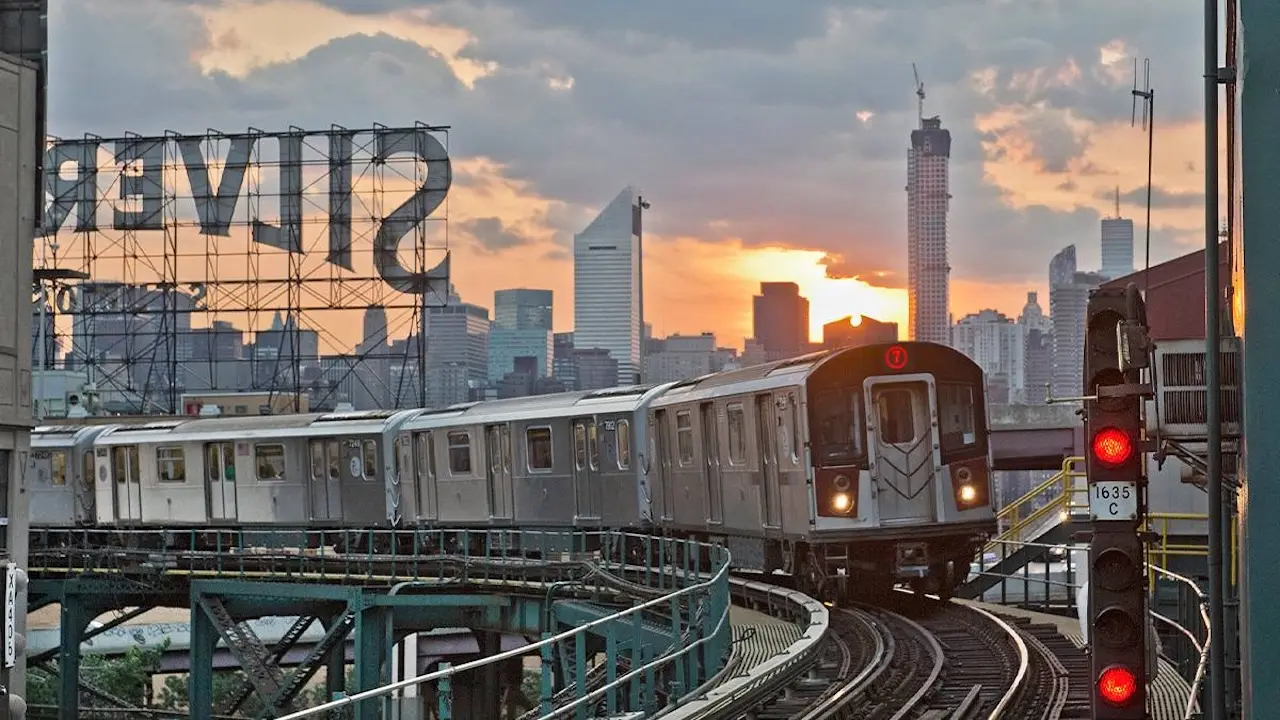
There are few things left idle in New York for long. Yet the corner of Atlantic Avenue and Franklin Avenue in Crown Heights has remained conspicuously sterile—a patch of untapped potential fenced off and gathering debris, flanked by the rumble of the Franklin Avenue Shuttle. Now, with the weariness of a landlord too long left without tenants, the Metropolitan Transportation Authority (MTA) is inviting would-be developers to reimagine 1119 Pacific Street and, with it, the air rights above the train line’s low-slung path.
The news is, on its face, unremarkable: government sets land up for bids; real estate interests circle; plans are drawn and redrawn. But this offering comes laden with subtext. Billions in post-pandemic deficits dog the MTA’s every move, ridership recovery is tepid, and the city’s housing shortage has become impossible for lawmakers to ignore. Every square foot, even one currently occupied by nothing more than windblown trash, is policed for its potential to solve several crises at once.
The particular parcel—just east of Atlantic Avenue and at the threshold between brownstone Brooklyn and its industrial remains—offers opportunity. The MTA is touting not only the lot, but also the air rights hovering above the Franklin Avenue Shuttle’s sunlit tracks, a sliver of density potential unattainable in most New York neighborhoods. The hope is that the right suitor will stack value: apartments atop active rails, shops at street-level, money flowing to a transit operator habitually caught between Scylla and Charybdis.
Should the deal go as planned, there are several first-order benefits for New Yorkers. Fresh housing supply may arrive in a city that added just 14,227 new residential units in 2023—woefully insufficient given a population nudging up against 8.8 million. Even a modest mid-rise could, by New York metrics, make a difference, especially in Crown Heights, where market-rate rents have soared above $2,700 per month and waiting lists for affordable apartments stretch into the hundreds.
Equally, the MTA stands to gain a boost to its battered finances. The agency projects gaps exceeding $600 million a year starting in 2027 despite Albany’s recent cash infusions. Each deal for real estate air rights brings a one-off windfall; more importantly, it plants taxable property next to an irreplaceable piece of public infrastructure. A recurring headache for planners—how to fund mass transit—may thus be eased, in part, not by fare hikes or service cuts but by maximizing what lies above and beside the rails.
Yet second-order effects merit scrutiny. Commercial tenants, small businesses, and indeed the entire local economy may benefit from increased foot traffic and neighborhood investment. In a borough where storefronts have flickered in and out of business since 2020, the prospect of new retail at grade offers a feeble but welcome tonic. Jobs (some temporary, some lasting) would follow, as would tax receipts sorely needed by the city’s coffers.
But development rarely arrives without friction. Crown Heights, a microcosm of New York’s robust demographic churn, has been a testing ground for debates over displacement and gentrification. Local activists and wary longtimers may scrutinize the MTA’s Request for Proposals for guarantees—either of affordable housing, community-oriented space, or both. Past efforts, such as the redevelopment of the Atlantic Yards further west, have been marred by broken promises and cost overruns; skepticism is, if not justified, then at least well-practiced.
For the MTA, the gambit is about more than one lot. Across both city and nation, transit agencies are courting so-called “value capture”—the extraction of planning profit from property adjacent to publicly funded mobility networks. Tokyo’s railway operators have perfected this. London’s Crossrail has seen billions of pounds materialise from slim ribbons of developable land. New York, by contrast, still leaves many of its prime parcels—sometimes even entire blocks—underused, hemmed in by zoning squabbles and political inertia.
The scale, admittedly, is not gargantuan. Air rights here may allow for something moderately tall, but this is no Hudson Yards; local context and block-level politics retain veto power. That may be just as well. Mega-projects bloat budgets and incite opposition. Bite-sized deals, if transparent and fairly structured, could provide inspiration—not just for the MTA but for public agencies wrestling with similar constraints from San Francisco to Chicago.
A test of political will and planning savvy
The road will not be frictionless. The fate of 1119 Pacific Street will likely turn less on architectural ambition than on the city’s appetite for compromise: balancing density with sunlight, commerce with continuity, fiscal needs with social equity. Since Mayor Adams took over in 2022, rhetoric on housing has grown more urgent, but concrete action on rezoning has lagged behind. Here, the unusually high stakes—a cash-strapped transit leviathan, a housing crunch now entering its second decade—offer a modest spur.
Done well, this process could illuminate what nimble, pragmatic city-building looks like in tight corners. The MTA, not famed for its nimbleness, will need deft legal work and community engagement. Developers, in turn, must weigh the finite profit from building atop a running subway—complete with engineering headaches and regulatory delay—against the reputational and economic gain of working with the city’s largest landowner.
National observers will be watching whether New York’s attempts at “transit-oriented development” finally graduate from talking point to scalable practice. Federal policy is inclined, at least rhetorically, toward just such outcomes: the Biden administration’s infrastructure bill encourages linking housing to transit, while HUD quietly studies the results of “air rights” pilots in other cities.
Ultimately, the wisdom of this modest Crown Heights transaction will rest not merely on square footage or quick revenue, but on the city’s capacity for patient, layered urbanism. The talent, and the need, are plainly present; execution, as always, is another matter entirely.
If New York manages to turn dead air into liveable space and future-proof revenue for its trains, it will have pulled off something both quietly radical and deeply pragmatic—cementing, in bricks and rents, the principle that no corner should remain fallow for long. ■
Based on reporting from Brooklyn Eagle; additional analysis and context by Borough Brief.