MTA Eyes State Solutions for $5.5B Brooklyn-Queens IBX as Federal Funds Waver Again
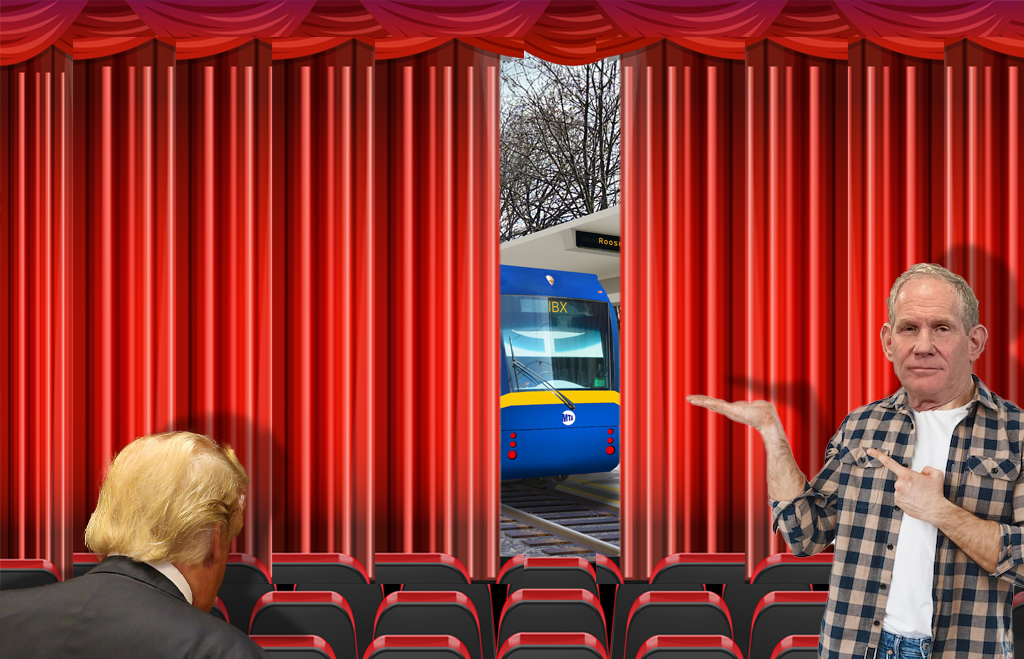
Faced with political obstruction, New York’s bid to fund its own interborough railway may signal a new era for urban infrastructure financing across America.
If miracles are to be had in American transit, they are unlikely to descend from Washington any time soon. In New York City, once the darling of federal infrastructure largesse, the Metropolitan Transportation Authority (MTA) is now planning the $5.5bn Interborough Express (IBX) — a light rail line linking Brooklyn to Queens — with a funding model that explicitly sidesteps Uncle Sam. The cause? A recalcitrant Trump administration intent on stalling New York’s infrastructure ambitions.
The backdrop is both novel and jarring. Historically, federal funding has underpinned nearly every major transit improvement in the metropolis. MTA Chairman Janno Lieber captured the moment’s strangeness when he told colleagues, “Normally a project of this magnitude would be federally funded — that’s the way it works in the United States of America.” No longer. The politics of discretionary grants, Lieber noted, have grown capricious.
The IBX, while technically a new line, traces its bones across a lightly used freight corridor spanning from Sunset Park in Brooklyn to Jackson Heights in Queens. On completion, it promises to whisk as many as 200,000 daily riders through 17 subway interchanges and 50-odd bus links — a connectivity upgrade that could unglue neighbourhoods from transit isolation. Riders Alliance, a commuter advocacy group, captures the zeitgeist with a pinch of sacrilege: likening the federal grant process to waiting for “good, old St. Nick, or even Christ as the president has fashioned himself.” Miraculous intervention, needless to say, is seldom a winning strategy in municipal planning.
For New Yorkers, the news lands in bittersweet fashion. The city’s east-west travel conundrum — interminable crosstown journeys, snaking bus routes and improbable subway transfers — would be distinctly ameliorated. With the IBX, jobs, libraries, and art galleries in outer-borough heartlands would nudge closer to hand. Analysts reckon the project could catalyse economic development along its arc, from Brooklyn’s industrial reaches to Queens’ bustling immigrant enclaves.
But this silver lining is rimmed with considerable risk. The MTA’s contemplation of going it alone on funding, whether via bonds, state appropriations or a mixture of creative finance, flouts decades of fiscal orthodoxy. The dangers are not trivial: New York’s own purse is perpetually threadbare. Annual deficits, ballooning pension liabilities and unresolved fallout from pandemic-era ridership dips have drained the coffers. Committing billions without outside support bodes trouble for other priorities, from school repairs to affordable housing.
More subtly, what began as a local funding question portends wider shifts in how American megacities build. The New Deal ethos — federal support as a lever for urban transit and growth — is eroding. If high-profile transit projects in the country’s largest city are shut out of federal patronage, what fate awaits rust belt metros or upstart boomtowns with ambitions of their own? City governments, once hopeful suitors for Washington’s affection, may be compelled to look inwards, raising taxes or courting private capital (with its own strings attached).
The IBX saga also exposes the hazard of partisan selectivity. While Joe Biden’s administration had scattered some seed funding for environmental studies, President Trump’s return to the White House has brought with it a palpable “not in my backyard” attitude toward blue-state projects. Discretionary grantmaking has become more a political cudgel than a conveyor of critical infrastructure. Officials now game out strategies to bypass, or at least hurry along, the Machiavellian red tape in D.C.
Comparisons from abroad underscore how parochial America’s model has become. European and Asian cities, unfazed by changes in ruling party or government, routinely marshal national state support for rail or metro expansion. A London, Tokyo or Paris line would not wait on the whims of a single leader; statebacks are considered a public utility, not a reward for electoral fidelity. Even across the United States, a coast-to-coast examination reveals a gulf: Texas’ flirtation with innovative (if unproven) private rail, LA’s staggered ballot measures for sales-tax funded rail, Midwestern cities retreating from ambitious transit altogether.
Forging ahead without Santa Claus
The MTA’s decision to advance the IBX to shovel-ready status — design and environmental review are expected to wrap next year — reflects a mixture of weary realism and managerial pluck. “It’s a strategy of optimistic realism,” Lieber told reporters. “We’re going to be ready to do construction in a couple of years. We want to make sure that we could move quickly into construction rather than waiting around for Santa Claus.” There is virtue in readiness. But there is also financial bravado that, without vigilant oversight, courts spectacular overruns and cost-bloat.
For city denizens and leaders, the principle at stake is larger than the IBX itself. It is about the credibility (and sustainability) of major urban infrastructure without the stabilising effect of federal partnership. The symbolism is not lost on advocates, either. To many, the fact that “New York must vault over D.C.’s notorious red tape,” as transit advocates put it, captures a perilous new reality: the nation’s economic engine is now expected to fuel itself.
For property owners and businesses bordering the proposed line, prospects are predictably uneven. Some bank on surging values; others, wary of gentrification and construction headaches, brace for disruption. Transit officials, sounding a cautiously optimistic note, insist that the line can be delivered on time and on budget, provided political winds (and municipal wallets) hold.
Nationally, however, this episode should worry far more than a coterie of Brooklyn commuters or Queens merchants. As the federal spigot tightens, the sclerosis in national transport modernisation may well deepen. The IBX case could set a precedent — or warning — for any American city with its own rail aspirations.
Whether New York’s experiment with self-funding is judged bold or merely desperate may depend on future passengers’ verdicts as much as this season’s political theatre. For now, the MTA has wagered it can outrun both red tape and the winds of Washington by trusting its own hands — and pockets. That is both a sign of bureaucratic ingenuity and a rebuke of a system whose funding fickleness now undermines its biggest cities.
If the IBX does appear on time and on budget, others will surely follow suit, rewriting the nation’s unwritten social contract on infrastructure. But if costs or delays spiral — and federal whims persist — America may find itself trip-wired by its own parsimony, left standing curbside as other nations’ trains whistle by. ■
Based on reporting from Streetsblog New York City; additional analysis and context by Borough Brief.