MIT Says NYC Family Needs Over $130K to Manage Basics by 2026, Brooklyn Not Exempt
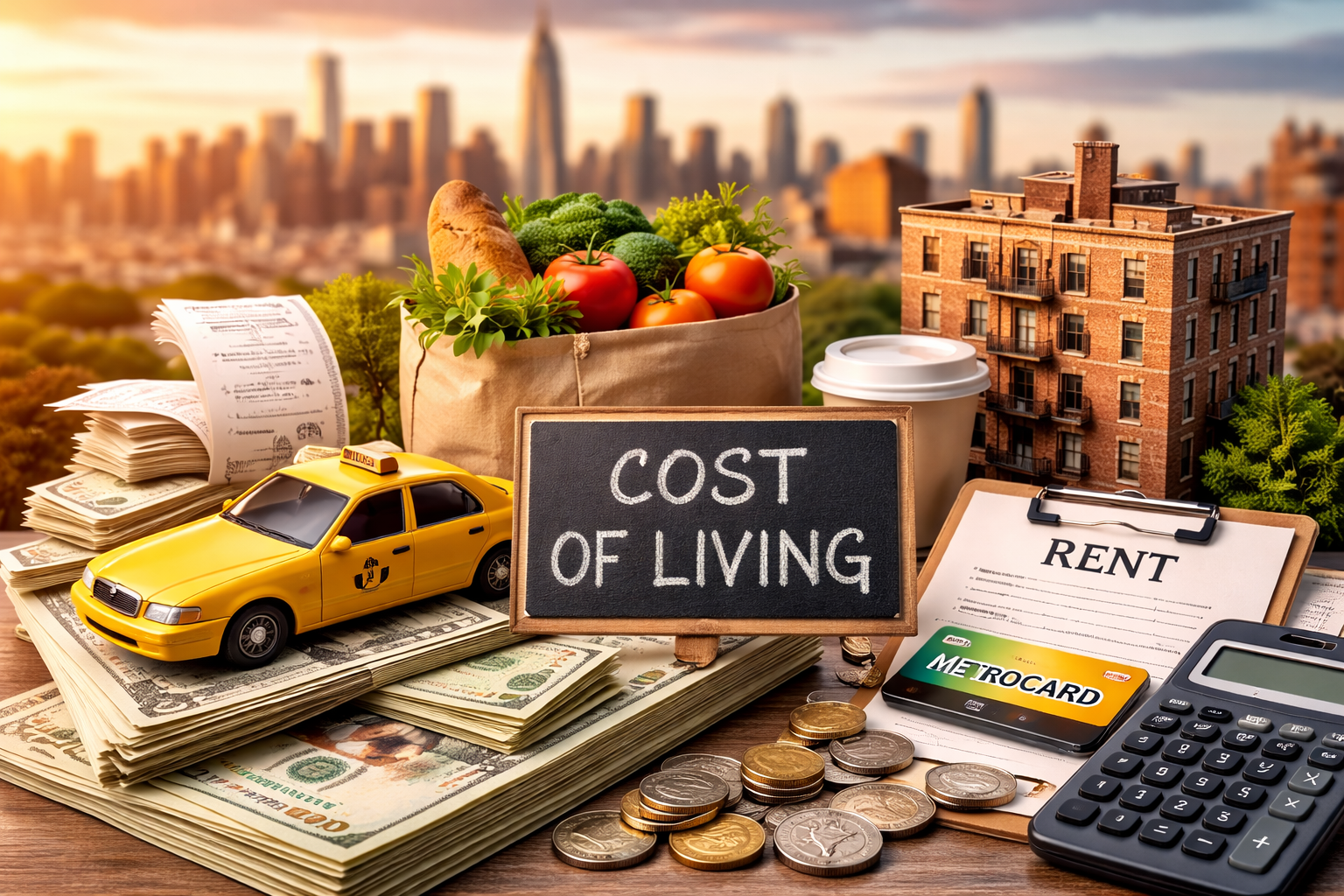
As the cost of living in New York heads skyward, the city faces hard questions about affordability, inclusion, and the future shape of its communities.
New York’s ambition is measured not only in skyscrapers but in price tags. By 2026, the income a family needs merely to squeak by in the city—covering housing, food, transportation, and health care—will approach a figure that shocks even jaded New Yorkers. According to the MIT Living Wage Calculator, a family must amass a far higher annual income than most places in America just to secure the basics. For millions, this tallies not to aspirational living but to existential concern.
Reports released in recent weeks relit the city’s perennial argument over affordability. An intensifying debate, stoked by policy makers and advocates alike, focuses on the implications of relentless rent rises, a stubbornly expensive transport system, and ballooning grocery bills. These are familiar refrains for longtime residents—and growing sources of anxiety for those just arriving. In 2026, the city seems set to maintain its dubious distinction as one of America’s least affordable urban centres.
The numbers, while variable by borough, tell a consistent tale. Data collated by Zillow peg the average apartment rent in New York near the top of any national ranking. Median rents in the city hover north of $3,500 a month, while even in less fashionable districts, tenants struggle to find anything below $2,700. Add to this the statutory 30% income threshold set by the Department of Housing and Urban Development for defining “affordable” housing, and it becomes clear why more than half of New York renters, per the NYU Furman Center, are “rent burdened,” devoting a disproportionate chunk of their earnings to keep a roof overhead.
For the immigrant families and working-class residents who constitute much of the city’s social fabric, the situation feels especially acute. Public programmes, lottery housing, and vouchers help some bridge the gap, but not nearly enough. The bulk of new supply targets luxury or market-rate tenants, leaving those of more modest means perpetually priced out—or forced into ever smaller, more crowded flats.
Beyond rent, core costs present further hurdles. A monthly MetroCard sets a commuter back $132, according to the MTA, and grocery bills outpace national averages by a considerable margin. For many New Yorkers, the shame of skipping medical appointments is rivalled only by the guilt over packing school lunches on a shoestring. These cumulative pressures place upward mobility ever further from reach for broad swathes of the city’s population.
What does this portend for New York? One immediate outcome is demographic churn: families that strain to pay the bills seek cheaper digs farther out or leave altogether. The working poor contend not just with deprivation but displacement, as the city’s famed dynamism is sapped by stagnating wages and rising living expenses. Employers, too, find it harder to attract and retain key workers willing to stomach the city’s punishing costs.
The economic implications extend well beyond individual bank accounts. As service and creative workers decamp, the city risks hollowing out its distinctive middle—leaving enclaves of both high-net-worth professionals and deeper poverty. Small businesses, already battered by inflation and uneven pandemic recovery, face thinning customer bases as disposable incomes shrink. New York’s tax base, though robust for now, stands threatened by an exodus of both wallets and talent.
Politically, the question of affordability is becoming too gargantuan to ignore. Lawmakers float—often with more heat than light—proposals for rent controls, expanded vouchers, or inclusionary zoning. Governor Kathy Hochul and Mayor Eric Adams profess commitment to affordable housing, but progress can be measured in inches rather than miles. Federal action seems remote: the spectre of Washington gridlock does not bode well for fresh subsidies or tax credits. Meanwhile, local campaigns for “good cause” eviction laws or more aggressive housing mandates proceed haltingly through Albany and City Hall, with entrenched interests quick to resist.
Comparisons and lessons from other global cities
Across the Atlantic or up the Eastern seaboard, New York’s predicament finds rough analogues, though its scale remains distinctive. London, Paris, and San Francisco all grapple with spiralling rents, stagnant wages, and shifting demographics. But where continental capitals respond with a mix of social housing, stringent controls, or direct subsidies, New York’s patchwork of supports feels paltry by comparison. Cities from Vienna to Singapore provide data-heavy evidence that unglamorous interventions—hard targets for social housing, serious investments in transit, and density-friendly zoning—can temper the harshest edges of urban unaffordability.
The city’s defenders contend that some prosperity is the price of global status. Its critics counter that when even median earners are priced out, vibrancy gives way to sterility. Policymakers’ attachment to trickle-down optimism—that supply alone will one day right the balance—looks increasingly threadbare. Recent years offer scant evidence that the invisible hand will deliver affordable flats to those earning median wages, let alone minimum-wage families.
We reckon the city must adopt a premise both old and radical: that New York is a place for people of all incomes, not merely the well-heeled. This implies policy choices that are neither easy nor cheap—cutting through regulatory red tape, shifting zoning incentives, and, above all, expanding public investment. Failure to grapple with costs risks not only depopulating the middle but corroding the cosmopolitan openness that once made the city unique.
New Yorkers, famously tenacious, can stomach a good deal of adversity. But even their appetite for hustle has limits, and the path ahead will require leadership that values data over dogma. The price of ignoring affordability is not simply higher rents, but a city that, by degrees, ceases to be itself. ■
Based on reporting from El Diario NY; additional analysis and context by Borough Brief.