Mayor Mamdani Eyes 15 mph Citywide School Zones—Safety Data Drives, Not “Cash Grabs”
New York City’s proposed speed limit reductions around schools reveal the tensions—statistical and cultural—at the heart of urban road safety.
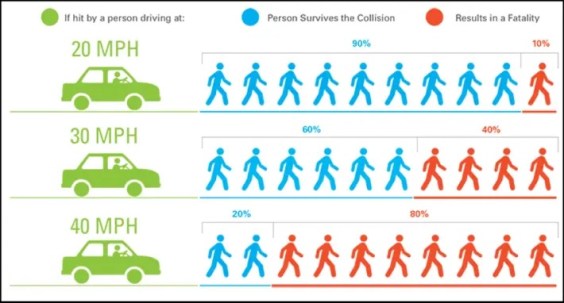
In the hurly-burly of New York City, where jaywalking remains a contact sport and delivery drivers ride on a razor’s edge, speed kills with dreary regularity. The city’s own Department of Transportation reports that pedestrian fatality rates triple when struck by cars traveling 30 miles per hour versus 20. Yet, the latest executive action—to trim the legal limit to 15mph in all school zones—has provoked a particularly acerbic round of headlines and hand-wringing.
On March 17th, Mayor Zohran Mamdani proposed what would be one of the most extensive speed limit reductions in any American metropolis. By 2029, every school zone, regardless of time of day, would see its limit cut from 25mph to 15. The measure, pending City Council approval, would also enable a further, citywide drop to 20mph. Enforcement, the mayor says, would be around the clock—13,000 public and private schools blanketed by the change.
The first-order implications for the city are plain: in the realm of traffic safety, slower almost always means safer. A 2025 Department of Transportation (DOT) study found that speeding at camera-enforced locations plummeted by 95% after the technology’s introduction. If every collision is a test of physics, then cutting kinetic energy bodes well for the plausibility of survival.
Critics, however, have grown hoarse invoking the spectre of “left-wing” overreach and “cash grabs.” The New York Post pilloried the plan, poking fun at its supposed pointlessness, while conveniently omitting the empirical gains tied to automated enforcement. Nonetheless, the data remain stubbornly unsympathetic to defenders of speed: as the number of speed cameras mushroomed across the five boroughs since 2014, the number of tickets per camera has fallen—a sure sign that drivers, after grumbling, adapt, and speed less.
Proponents counter that arguments about fiscal motivation are unpersuasive. Indeed, the mechanism is perversely aligned—speed cameras generate the most revenue when drivers ignore the law, not when they obey it. From a strictly utilitarian perspective, money is best made when the public is least safe, a situation the DOT would rather avoid.
Second-order effects are harder to quantify, yet no less important. City authorities tout falling traffic deaths as a vindication of incremental, data-driven policy. But public opinion, as ever, lags behind. Nationally, a 2023 analysis by Streetsblog USA found that just 60.5% of Americans regard driving 10mph over the limit in residential areas as “very” or “extremely” dangerous. In other words, as many as two in five see a five-second gain as worth the risk.
There is a political current beneath the city’s traffic policy moves—one with national correspondence. Opposition to “intolerably slow” streets is less about seconds shaved off a commute, more about the symbolic battles over personal mobility, urban space, and government restraint. New York’s plan, much as it invites parochial grousing, is simply the latest skirmish in a global contest over who owns the roads.
Cities from Helsinki to Hoboken have embraced “Vision Zero”—the proposition that no loss of life is acceptable, and policy must align accordingly. London has already imposed a 20mph blanket limit across central boroughs; Oslo posted zero pedestrian deaths in 2019 after a decade of relentless focus on speed reduction and pedestrian priority. By global standards, New York’s proposed rules are more catch-up than cutting-edge.
A question of pace, and priorities
Still, the naysayers’ frustration is not without roots. The city’s pace can test the patience of saints, and many New Yorkers, stuck behind crawling school buses or unpredictable double-parkers, view lower limits as another drag on daily life. Opponents fret about the proliferation of rules where inconsistent enforcement and infrastructure—a pothole-filled street here, a blocked bike lane there—often undermine good intentions.
Yet, it is precisely cities as complex as New York that need disciplined, enforceable standards. The alternative—a piecemeal approach, with variable limits and ad hoc signage—typically breeds confusion rather than compliance. State legislators, for their part, remain wary of home rule for New York City alone, fearing a patchwork that invites both evasion and litigation.
As elsewhere, the city’s move portends that road safety is increasingly a contest over credible data versus entrenched beliefs. The DOT’s statistics are unsurprising to road safety experts: every mile per hour less translates to a measurable gain in human survivability. That evidence, plus dwindling returns from enforcement (as more motorists slow down), suggests that progress is less a product of mass compliance than of slow, sometimes adversarial, cultural change.
We reckon New York’s proposal, while sure to frustrate the lead-footed set, is not a radical experiment but a belated recalibration. If the numbers are any guide, efforts to make streets “intolerably slow” may instead render them tolerably safe. A city of walkers, cyclists, and van-driving parents—all genres of urban pedestrian—stands to benefit.
The clash between nostalgia for a swifter, more mobile metropolis and the hard arithmetic of urban casualties will outlast Mayor Mamdani’s term. But the brute facts remain: on New York’s crowded streets, less speed means more life. The city is merely catching up to what evidence from safer cities has long suggested.
■
Based on reporting from Streetsblog New York City; additional analysis and context by Borough Brief.