Mamdani’s Streets Plan Promises Faster Buses, But New Yorkers Eye Delivery on the Details
New York’s ambitious overhaul of its beleaguered bus system portends a make-or-break test for urban mobility—and the city’s own promise of equal opportunity.
A city that never sleeps moves with relentless energy—unless, of course, one is riding a New York City bus. A trip from Inwood to Riverdale, a mere eight miles roundtrip on the Bx7 bus, can swallow two hours and test the patience of even the hardiest commuter. Such delays are no anomaly: the city’s buses remain, by every metric, among the slowest in America—a dubious distinction in a metropolis that styles itself as a beacon of modernity.
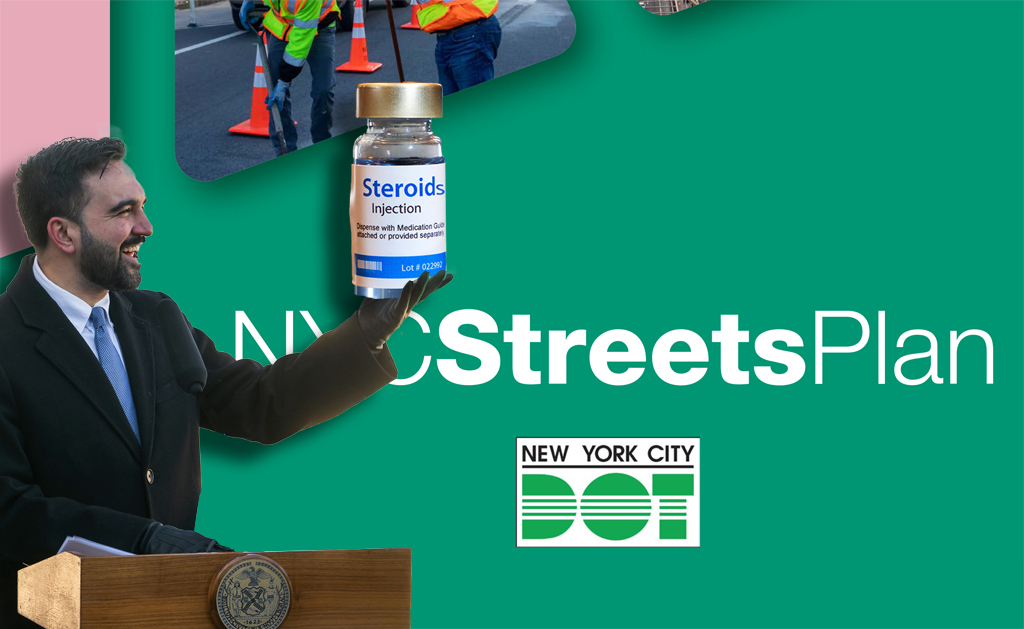
Into this gridlocked morass steps Mayor Zohran Mamdani, the city’s first avowedly transit-mad chief executive in a generation, with a bold new “Streets Plan” due later this year. In February, Mamdani pitched a future of buses “at least 20 percent faster.” By April, reality had crept in; now he promised “up to 20 percent”—a telling shift. Still, Mamdani’s personal familiarity with New Yorkers’ cold, interminable waits—and the wry candour with which he acknowledges the challenge—have given hope to beleaguered riders that this time might, indeed, be different.
The urgency is hard to overstate. New York City’s post-pandemic geography is changing: surging rents and stagnant wages have pushed working families to the city’s harder-to-reach edges—far past the reach of subway tunnels and express trains. Census data suggest that fully half a million New Yorkers now live farther than half a mile from a subway or rail stop. For these commuters, buses are not a convenience but an economic lifeline.
Yet that lifeline sags under the weight of paltry infrastructure and competing interests. Select Bus Service (SBS) exists on certain corridors, with modest results, but most of the system remains slow, unreliable, and often-menacingly overstuffed. According to advocacy group People-Oriented Cities, converting flagship SBS routes on Fordham Road and Utica Avenue to genuine bus rapid transit (BRT)—with physically separated lanes and priority at intersections—could cut typical trip times by 10 to 17 minutes. That amounts to hours saved over a week, and real money in the pockets of working-class New Yorkers.
The mayor appears to grasp what his predecessor, Eric Adams, did not: that the geometry of streets is destiny. The last iteration of the Streets Plan was rich in aspirational targets for added bus lanes, and equally rich in subsequent excuses as those markers went unmet. The new plan, city sources suggest, will favour quality—truly useful lanes, properly enforced—over a scattershot focus on quantity. Riders, one suspects, will take bus lanes that actually work over grandiose maps and ribbon-cuttings.
Such talk, however, risks derailing in the face of vested interests. Double-parked cars, ride-hailing pick-ups, and delivery vans clog bus corridors nearly everywhere, turning public space into private fiefdoms. The city’s creation of an Office of Curb Management—heralded more for delivery logistics than transit—nonetheless offers a window for improvement. If Mayor Mamdani succeeds in reclaiming curb lanes for transit, he will have struck a rare, genuinely progressive blow in New York’s war for scarce street space.
The stakes reach beyond mere minutes on a schedule. In New York, time does not simply equal money; it is dignity. Every unnecessary hour spent in traffic saps the city’s foundational promise—of mobility, and the chance to get ahead. For those with childcare or two jobs, the opportunity cost is not abstract; it is painfully quantifiable. A faster, more reliable bus system could serve not just as a symbol of inclusion, but as a generator of economic vitality.
Nor is this merely a matter of city pride. The economic logic is as clear as it is compelling. If buses can shave even 15 percent off daily commute times for the half-million on the system’s periphery, that translates to millions of productive hours reclaimed each year—and tens of millions of dollars in aggregate wage gains for families perched precariously above the poverty line. Businesses benefit from a larger pool of punctual workers; schools from well-rested students. The absence of efficient transit extracts its own, invisible tax.
How New York’s experiment compares to other megacities
New York’s experiment with a holistic, whole-of-government bus improvement plan echoes efforts from London to Bogotá, where radical prioritisation of buses has delivered both economic and political dividends. In those cities, dedicated lanes, smart traffic lights, and strict curb enforcement are standard—not rare ambitions couched in political hedging. The Colombian capital’s TransMilenio system, for all its faults, moves more riders each day than many U.S. subways. London’s bus network, revived after decades of neglect, is now a model for integration and reliability. New York’s planners, we reckon, would do well to examine where those cities flourished—and where they stumbled.
Yet what counts, invariably, is the capacity to deliver. The city’s last foray was heavy on “mileage markers” and light on actual tarmac. Enforcement remains patchy. Entrusted to agencies long used to inertia and the delicate work of not upsetting car-owning voters, the Street Plan’s fate will depend on whether Mamdani can corral such bodies—and withstand the inevitable backlash from motorists, business owners, and delivery barons.
Of course, the devil will reside in the governance. Sceptics wonder whether the mayor’s pivot to emphasising “quality” over “quantity” bodes ingenuity or mere hedging. Measured against their own lofty promises, New York’s city governments have displayed a persistent, almost endearing talent for inertia. Yet there is evidence the mayor grasps the formidable politics at work—hence the push for clarity, measurable outcomes, and transparent reporting.
What becomes clear is that any true improvement for bus riders will require cajoling not only agencies but also the broader electorate into accepting a changed city: one where private automobile convenience plays second fiddle to collective mobility. If Mamdani’s administration can keep its nerve, New Yorkers might at last enjoy a bus system befitting the scale (and dignity) of the city it serves.
Cynicism is tempting, given the city’s record, but not compulsory. New York’s ability to reinvent its streets will, as always, serve as a bellwether for the American city. In a place obsessed with the cost of time, making buses fast—and reliably so—amounts to something close to social alchemy. If the mayor succeeds, the city’s peripheries may—finally—stop feeling so remote. ■
Based on reporting from Streetsblog New York City; additional analysis and context by Borough Brief.