Mamdani’s Budget Steers $200 Million to DOT Bus and Bike Upgrades, Finally Staffed Properly
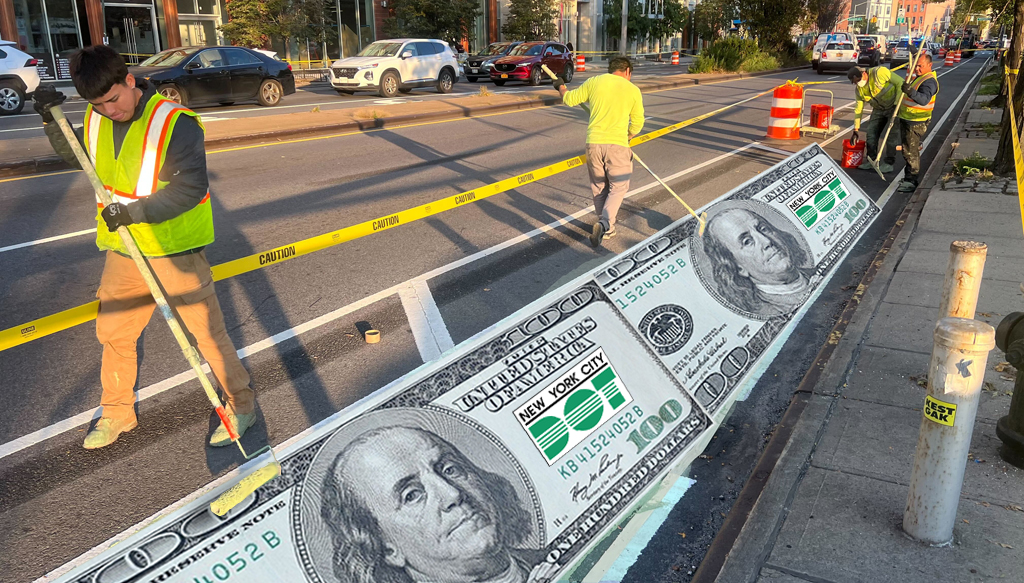
New York’s largest-ever outlay for bus and bike infrastructure hints at broader ambitions for a city reinventing the rules of urban mobility.
On a grey Thursday morning, when most New Yorkers were either dodging puddles or gridlock, Mayor Zohran Mamdani announced that his executive budget would send the city’s transportation planners on a spree. More than $200m in new funding for bus lanes, bike infrastructure and “public realm” improvements is now formally locked in through 2030—an eye-catching surge in a city famous for transit shortfalls and the chronic neglect of its streets.
From the next fiscal year, which begins on July 1st, the Department of Transportation (DOT) will see annual cash injections ramping up each year: $16.8m initially for the Bus Action Plan, $11.2m for cycling and micromobility—each rising to $35m and $22.8m respectively by 2030. An additional $6.4m a year will go to sprucing up the public realm. Altogether, city investment for these redesigns will leap from $39.5m in fiscal 2027 to a not inconsiderable $69.2m by 2030.
That sum, while dwarfed by the city’s titanic overall budget (around $110bn), is nonetheless historic for the DOT. Its headcount is set to rise from 2,862 today to over 3,100 by 2030, reversing years of attrition and patchy staffing. Bureaucrats, often better known for paper shuffling, are suddenly being feverishly hired: 115 new engineers and planners in fiscal 2027, ballooning to 158 by 2030, all tasked with physically remaking the streetscape.
What compelled this windfall? Some credit campaign rhetoric—Mamandi, fresh from an electoral win, had waxed lyrical about making New York’s boulevards “the envy of the world.” Defenders argue the sums barely cover the ambitious Streets Master Plan, legislated in 2019, which by statute demands 50 miles of new protected bike lanes and 30 miles of bus lanes every twelve months. Previously, previous mayors’ grandiose promises faded into the city’s notorious quagmire of process, union constraints and NIMBY intransigence.
The immediate upshot for New Yorkers will be more conspicuous orange vests: construction of new bus lanes to unclog transit arteries, protected bike corridors to stem fatalities, and spruced-up plazas. If the schedule holds (far from a certainty), the effects should reach commuters, cyclists and sidewalk-dwellers alike by mid-decade.
But the second-order effects matter as much. In a city where the average bus travels a ponderous 8mph—a speed more befitting a plodding dairy cow than a metropolis in motion—bus lane upgrades could shave precious minutes off daily commutes, particularly in transit-starved outer boroughs. Expansion of bike lanes may finally slow the city’s perennial traffic carnage, which last year claimed over two hundred lives. The budget nod to “public realm” improvements multiplayer: safer crossings, cleaner sidewalks, and perhaps—dare we dream—functional public toilets.
Politically, such largesse is not without risk. The economic clouds hanging over Albany and Washington could shift suddenly, exposing the city budget’s famous fragility. Agencies have, as ever, trimmed fat elsewhere (49 vacant posts axed at the DOT; further cuts possible). And a vocal coterie of shopkeepers and car owners—never reticent—already decry the threatened loss of parking or traffic lanes. The political cost, if rollouts falter or if pedestrianised plazas portend traffic jams in swing districts, could yet be significant.
Yet New York’s gambit fits a larger urban story. Paris, London, and Milan have all courted international envy with bold expansions of bike and bus infrastructure—frequently in half the time, and at twice the speed of American efforts. Paris squeezed 1,000km of bike lanes into its labyrinthine avenues in just a few years under Anne Hidalgo; London’s “superhighways” have, even amid grumbling, become a commuter backbone. New York, for all its size and swagger, has historically lagged—hobbled by jurisdictional fragmentation, stingy federal funding, and a uniquely combustible political culture.
Can New York keep pace as global models shift from gridlock to green streets?
The Mamdani budget, we reckon, offers a tepid but genuine shift. The sums, while the largest in city history, remain puny beside the scale of the city’s infrastructure needs. Much depends, as ever, on execution: Building 50 miles of protected bike lanes a year has so far proven to be an aspirational exercise, more cited in agency reports than mapped in asphalt. The new funding improves the odds, but does not guarantee success. Cost overruns, legal wrangles, and the city’s Byzantine procurement rules have a habit of quickening scepticism and sapping ambition.
If successful, the investments could catalyse private markets as well. Expansion of safe urban cycling bodes well for the rising tide of e-bike vendors and cargo firms, who have had little reason for optimism in a city where deaths from delivery-cyclist accidents remain all too common. Local property values, too, may yet benefit: studies from Copenhagen and Amsterdam suggest homes near improved public transport nodes and pedestrian amenities command a buoyant price premium. For the city’s long-ailing retail corridors, cleaned-up, more accessible streets could portend a timid revival.
The broader challenge remains: can New York translate cash infusions into street-level change? International examples show that with political will and streamlined bureaucracy, urban space can be redistributed at speed, to the broad benefit of residents. Yet parochial interest groups and the city’s fractious council remain trenchant obstacles. Mamdani will need more than cheques and rhetorical flourishes to outpace both cynicism and inertia.
For now, the city’s “envy of the world” boasts are, as ever, aspirational rather than realised. But the intent, at least, is discernible in the numbers. If New York manages to untangle its own red tape and nimbly direct this unprecedented budget towards actual infrastructure—and not just consultants and endless “visioning” studies—the city may finally start to resemble its grander rhetoric. We remain soberly hopeful.
As any seasoned New Yorker would mutter: we’ll believe it when we can actually pedal or ride the difference. ■
Based on reporting from Streetsblog New York City; additional analysis and context by Borough Brief.