Mamdani and FIFA Plot MetLife Stadium World Cup Finale as Local Stakes Rise
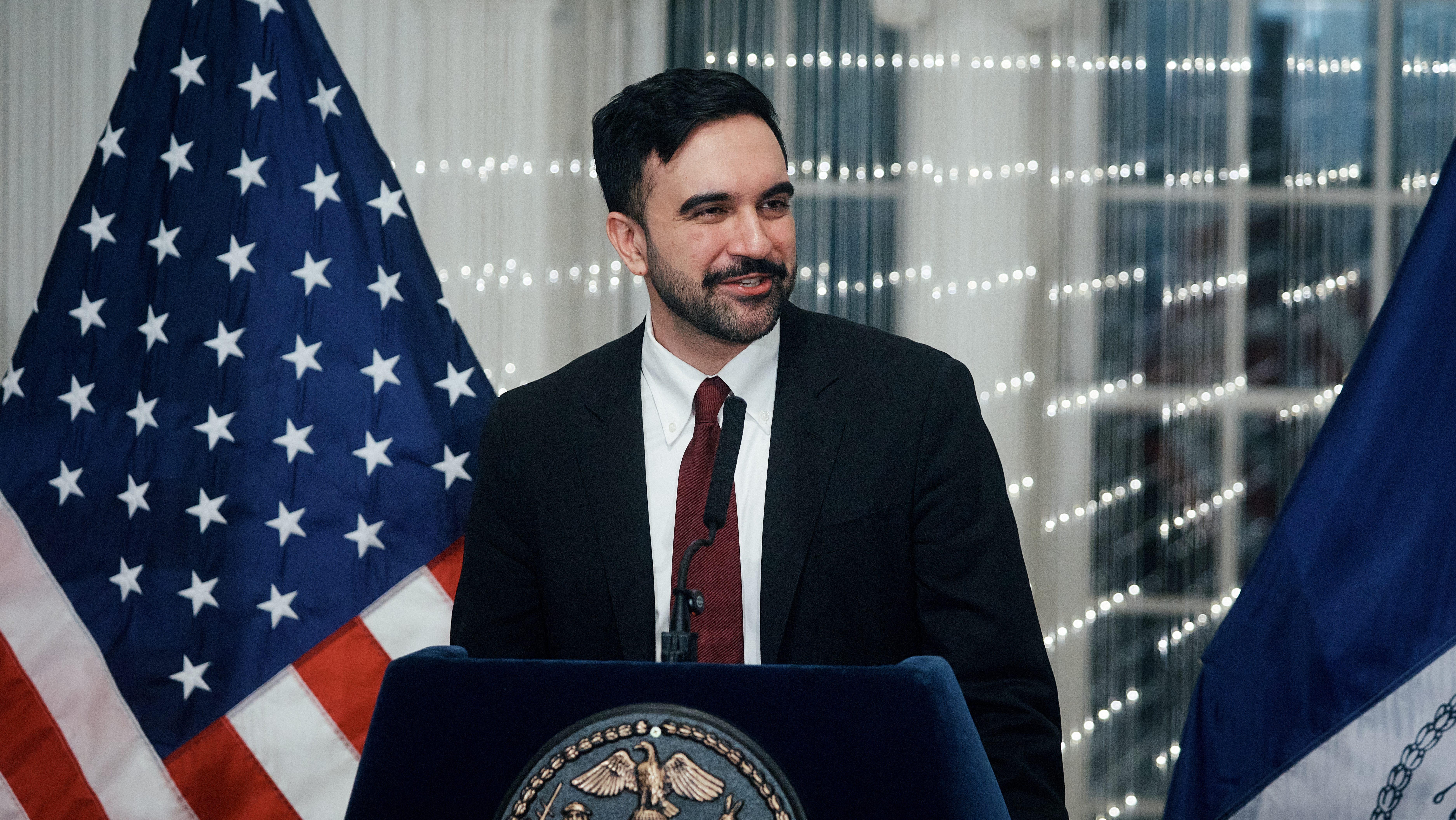
The World Cup final will bring billions in economic impact and a global spotlight to New York, but challenges abound on and off the pitch.
By some estimates, over 4,000 million pairs of eyes will be fixed on the MetLife Stadium this July, as New York’s binational footballing cathedral hosts the 2026 FIFA World Cup final. For a city grown notorious for its parochial attachment to sports with sticks and bats, this is no minor affair. It is a bracing collision of global spectacle, anxious logistics, and megapolitan ambition.
The event was cemented after Zohran Mamdani, New York’s freshly minted mayor and the city’s 112th, met privately with FIFA president Gianni Infantino last week. The pair emerged from closed doors with carefully calibrated enthusiasm. “The magic of the World Cup” is coming, Mamdani declared: five group-stage blockbusters, plus knockout slugfests, culminating in the world’s most watched single sporting event.
The immediate implications for New York are colossal. Local hospitality and tourism stand to cash in on the influx. Not only will matches attract feverish fans from powerhouses like Brazil, France, Germany, and England, but the region is set to serve as the main media hub, swelling hotel bookings and bracing public services for a deluge of journalists and officials. Early projections peg the direct economic windfall at several billion dollars—a windfall that City Hall hopes might outlast the last echoing whistle.
Beyond the obvious boon to restaurants and ride-hailers, a project of this scale is likely to strain the city’s arteries. Metropolitan transport agencies, ever deficit-plagued, must now coordinate seamless connections between airports, the stadium, and central Manhattan, under international scrutiny. Security concerns loom: the U.S. Secret Service, NYPD, and Port Authority face the daunting task of safeguarding both ordinary New Yorkers and an unprecedented promenade of global VIPs.
Longer-term, the World Cup’s arrival portends a reordering of New York’s civic priorities. The city has invested in infrastructure fixes—notably, the MetLife Stadium’s swift conversion to high-tech natural grass. Will these upgrades, hastily justified in FIFA’s name, prove wise capital spending or classic white elephants? The answer, as with so much else in Gotham, depends on execution and legacy.
Then there is the perennial dance with gentrification. Local businesses and communities abutting the stadium fret about rising rents and displacement as new investors eye the area’s “World Cup dividend.” City Hall promises equitable sharing of benefits, but precedent bodes poorly—in past mega-events from Brazil to Russia, turbo-charged property speculation often left locals on the sidelines.
Diplomacy offside, but the match continues
This edition of the tournament is shaped not just by economic and logistical trials, but by politics on the grandest stage. In a wryly predictable twist, diplomatic clouds gathered after U.S. President Donald Trump’s public commentary on Iran’s qualification (“welcome, but…”) stoked international frissons. Iran, fresh from a valorous campaign, finds its status precarious in Group G alongside Belgium, Egypt, and New Zealand. Though Infantino insists sport transcends politics, practical arrangements tell a murkier tale.
New York’s efforts echo broader global trends. In France, Germany, South Africa, and Brazil, the past three decades have seen World Cups deployed as nation-branding exercises—with results as patchy as a suburban pitch after a rainstorm. Moscow rebuilt swathes of its skyline before 2018; Rio de Janeiro, despite initial exuberance, still counts the cost of abandoned facilities and unravelled promises. The local economic bounce is real but often fleeting; tourists and television soon depart, while permanent fixes to social divides prove elusive.
Yet if any city has the capacity for staged reinvention, it is New York. The city’s blend of infrastructure, ethnic diversity, and outsized self-confidence uniquely qualifies it to absorb and even benefit from this biennial football bacchanal. If managed cannily, the legacy may be more tolerant policing, better mass transit, and a renewed sense of cosmopolitan unity. If not, memories of traffic snarl and wasteful spending will linger longer than any highlight reel.
For now, the pageantry of back-to-back power lunches—Mamdani and Infantino huddling far from public eyes—plays as a familiar prelude. The real work will happen in the invisible trenches: at JFK baggage carousels, in overstuffed subway cars, in hastily retrofitted wireless networks. The world’s gaze is punishing, as much in its fleetingness as in its intensity.
The city’s history, after all, is one of squeezing advantage from chaos. A well-run event could reburnish New York’s post-pandemic image as a city of open arms—at considerable cost, but with dividends potentially far greater than a few tourist dollars. On the other hand, to mismanage the opportunity would be a thoroughly New York outcome too: grandiosity, unkept promises, and memories sold for a lump sum.
Global tournaments are never just about goals and trophies. They refract and magnify myriad urban challenges: the wages of investment, the costs of security, and the fractious politics of globalisation. New York, confidently or not, now finds itself a living test case—but at least it cannot be accused of thinking small.
The spectacle will pass; what remains, for better or worse, will be the city’s new normal. ■
Based on reporting from El Diario NY; additional analysis and context by Borough Brief.