Long Island Bust Nets Enough Fentanyl for Millions, Suffolk DA Sizes Up Deadly Supply
The seizure of a drug cache capable of devastating millions spotlights the unrelenting evolution of New York’s synthetic narcotics crisis and the challenges it poses to authorities.
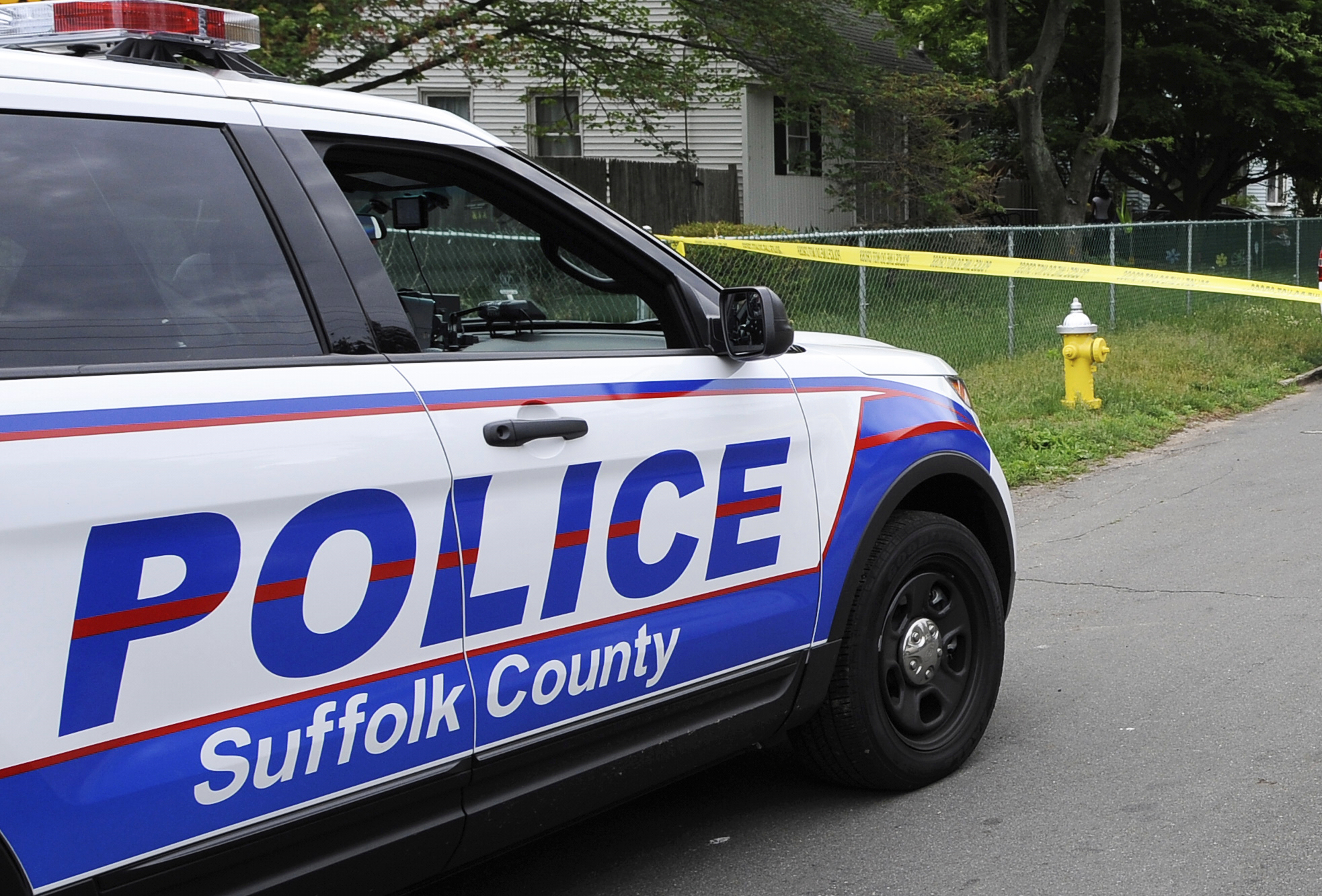
The tranquillity of East Patchogue was shattered not by the blare of sirens or media fanfare, but by a pair of glass jars and the silence of two unconscious bodies. On a chilly morning in February, Suffolk County police responded to a routine overdose call—one which yielded neither novelty nor hope. Paramedics pronounced one victim dead, and ferried another to NYU Langone’s local hospital. But what seemed another tragic footnote in the opioid era would, within days, morph into an operation involving seven kilograms of potent drugs and a conspiracy stretching across Long Island.
Investigators determined that the substances responsible—fentanyl, cocaine, ketamine, and MDMA—could, by the district attorney’s reckoning, have killed “millions of people.” The scale, said prosecutor Raymond A. Tierney, “underscores the danger” lurking in plain sight. The man behind the alleged operation, Phillip González, faces a raft of charges as a supposed “large-scale drug dealer.” It is, a local law enforcement source grimly notes, an archetype with no apparent shortage of applicants.
The forensic trail began at the scene: two distinctive glass jars filled with powder and a pair of mobile phones. By rifling through a deceased man’s call logs, Suffolk police traced the seller’s number. An undercover detective made contact, arranging a cash-for-cocaine rendezvous in nearby Selden on February 20. The sting proved fruitful enough to warrant a search warrant; within days, police stormed González’s rented home—located conveniently close to the sites of these covert exchanges.
Inside, authorities found a veritable pharmacopeia. Four-and-a-half kilograms of fentanyl offer a particularly chilling metric: as per the Drug Enforcement Administration, even two milligrams can be fatal. González’s cache, police claim, contained enough of the synthetic opioid to theoretically end over 2.2 million lives. The haul also included over 2.5 kilograms laced with xylazine—a veterinary tranquilizer known on the street as “tranq,” increasingly exploited as a cheap filler despite being legal in New York (unless mixed, as here, with illicit drugs). One-and-a-half kilograms of crystal meth and an additional 223 grams of a potent mixture completed the inventory.
For New York City and its suburbs, this bust epitomizes both continuity and escalation in drug-related threats. Fentanyl and its analogues are not new marauders; their migration through the city’s supply chains since 2013 has proven exponentially deadlier than previous opioid waves. What distinguishes this episode is not just the volume, but the composition. The presence of xylazine marks the mutation of the criminal toolkit. Unlike heroin or cocaine, synthetic adulterants can be concocted in labs, require no foreign fields, and are easily masked. Their toxicity, meanwhile, is depressingly efficient: xylazine not only knocks users unconscious, but also frustrates medical interventions—standard opioid antidotes, including naloxone, may provide scant benefit.
The human consequences in Suffolk mirror those of the five boroughs. According to New York’s Department of Health, fatal overdoses surged to a record 3,026 in the city in 2022, more than double pre-pandemic levels. Fentanyl laced with xylazine is a growing culprit, responsible for an estimated 28% of citywide overdose deaths last year, up from 2% just three years ago. For first responders already stretched thin, the synthetic era portends harder rescues, costlier interventions, and uncertain legal frameworks.
There are further ripples through the regional economy and society. The narcotics trade—buoyed by its shift from cash-and-carry heroin to hyper-potent synthetics—now yields ever-fatter margins with less visible infrastructure. New York’s treatment clinics face mounting waves of more unstable, sometimes psychotic, patients. Public safety officials must divert scarce resources to housing, emergency care, and law enforcement, while local communities contend with falling property values and rising insurance costs. At a higher level, the continued legality of xylazine in New York highlights the lag between the realities of street pharmacology and the pace of state regulation.
All this occurs as national and global supply chains morph and multiply their hazards. America’s overdose crisis has by now overwhelmed standard policy responses. Despite billions in opioid settlements and bi-partisan congressional lament, federal interdiction rates remain tepid. Mexican cartels source fentanyl precursors from China and India; even aggressive border policing merely nudges the flow from older to newer routes. European cities, from Barcelona to Warsaw, now confront their own synthetic emergencies, often foreshadowed by American experience. If Long Island’s suburbs seem an unlikely front line, the same could once be said for small-town Ohio or the suburbs of Vancouver.
The limits of interdiction
Local police and district attorneys, armed with wiretaps, informants, and occasional undercover luck, may trumpet victories over kingpins. Yet seizures of spectacular volume may offer little more than a temporary pause: the economics of synthetics, unlike those of agrarian narcotics, are startlingly robust. Where one pipeline falters, another springs up within weeks. Regulators play whack-a-mole with fresh chemical variants, each just different enough to skirt scheduled drug lists.
There are, however, nascent policy responses. Senator Chuck Schumer has called for expedited federal scheduling of xylazine, a move endorsed by both public safety unions and addiction medicine specialists. New York’s health department has begun issuing public alerts and equipping shelters with rapid xylazine test strips. Still, the state’s legislative inertia—borne of wariness about unintended criminalization—lags behind the nimbleness shown by traffickers such as González.
If there is cause for optimism, it is in incremental adaptation. Harm reduction methods—such as mobile clinics offering supervised consumption or on-the-spot drug testing—have gained traction in parts of Manhattan and Brooklyn, though suburban buy-in remains patchy. Cities elsewhere have piloted automated overdose notification systems and community paramedic teams, with some early successes. The challenge is to match the agility of illicit actors with the same zeal and data acumen.
In the end, the spectacle of millions of lives notionally at risk from a single dealer’s supply is less a statistical curiosity than a warning. As the physiology of synthetic narcotics races ahead of the law, New York will need not just relentless police work, but smarter policy, nimbler health care, and a legal code that keeps pace with chemical ingenuity. There is no silver bullet, but there is little doubt that complacency is lethal. ■
Based on reporting from El Diario NY; additional analysis and context by Borough Brief.