LIRR Strike Sparks Calls to Waive Congestion Pricing, But Driving Remains Cheaper Than a Train
New York’s uneasy truce between city streets and commuters is tested anew by tragedy and transport turmoil, with implications that extend well beyond asphalt and rail.
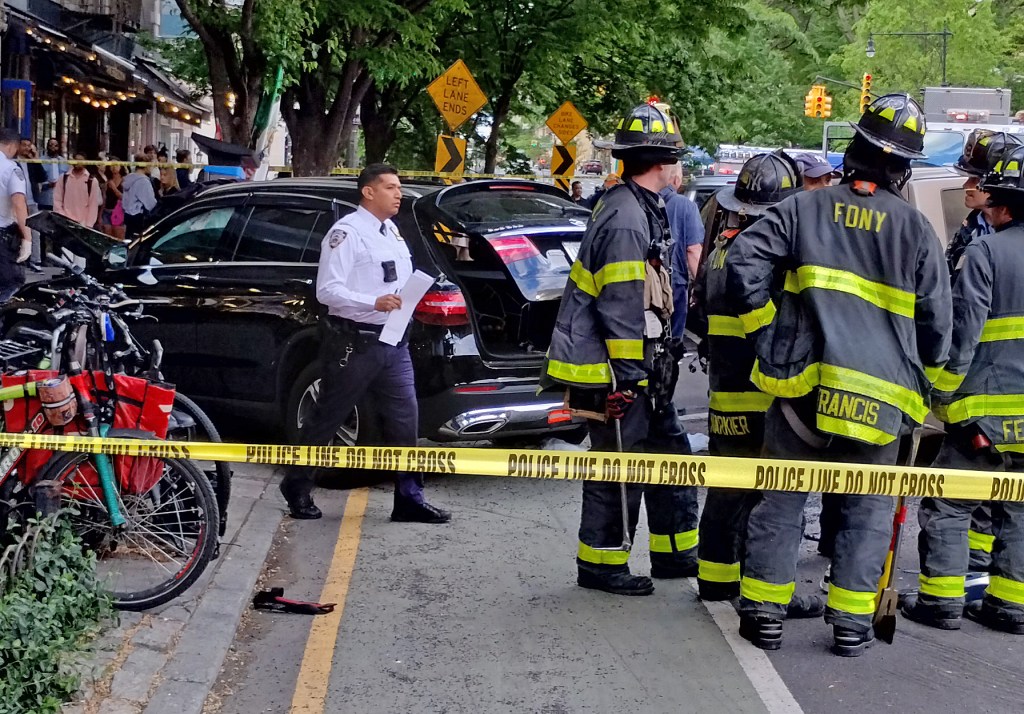
On a humid Friday night in Manhattan, catastrophe arrived not as a fluke, but as a careening Mercedes driven by Elvin Suarez. Ignoring a red light and all sense of moderation, he mounted a sidewalk and left two dead amid the city’s pre-weekend bustle. For a city that prides itself on vitality and resilience, the event was grimly familiar, yet all too avoidable.
This latest collision—described in police reports as the result of drunk and reckless driving—sparked immediate waves of speculation and accusation. Most local media defaulted, as is their wont, to language that subtly absolved the driver: the car, they wrote, “slammed into the crowd.” The nuances of agency were obscured, even as surveillance footage showed a man, not a machine, at the wheel. Such phrasing is far from accidental; it reflects a persistent cultural blindness to the agency behind automotive mayhem and a tolerance for vehicular violence that seems peculiarly American.
Meanwhile, a parallel crisis unfurled to the east. On Saturday, Long Island Rail Road (LIRR) workers left their posts, paralyzing the rails of the nation’s busiest commuter network and suddenly marooning tens of thousands. The city’s haphazard response—emergency buses, frantic Uber searches, and mounting commuter exasperation—was matched by a flood of opportunistic commentary. Media critics, especially those with a penchant for highway nostalgia, used the moment to demand a pause on the city’s impending congestion pricing scheme. Drivers, they argued, should be spared the allegedly punitive charges as public transit faltered.
At first blush, these two episodes may seem unlinked: a fatal crash and a labor stoppage. Yet beneath the surface, both incidents illuminate the fault lines of a city in transit. New York has sought for a generation to reimagine its streets—a project that entails not merely infrastructure but values. Planted medians and bike lanes, once dismissed as Europhile frippery, now line avenues where once only traffic reigned. Outdoor dining, pandemic-born but now mainstream, invites people to inhabit the city’s public realm. Each new design, however, reliably awakens a fevered resistance.
Critics claim that such street “redesigns” endanger, rather than protect, the lives they purport to shield. In Friday’s aftermath, detractors took to social media to blame the very infrastructure that may have limited casualties—conveniently bypassing both the lawbreaker at the wheel and the data: studies by the New York City Department of Transportation (NYC DOT) consistently associate raised medians and bike lanes with double-digit percentage drops in pedestrian injuries. Yet when tragedy strikes, reformers face the accusation that their interventions prompt chaos.
The LIRR strike, for its part, revives another perennial debate: to whom should the city’s streets belong? Transit workers, seeking better pay and conditions, confront a system that habitually squeezes them even as it lavishes indirect subsidies on drivers. Here the numbers bear emphasis: a peak round-trip LIRR fare from Roslyn to Midtown costs a hefty $30.50, surpassing the total outlay for a drive into Manhattan, even after factoring in congestion and tunnel tolls. Urbanites, who subsidise driving through city budgets and police attention, are lectured about fare justice—or, more cynically, fare avoidance—while commuters in cars escape the opprobrium (and often the outlays) meted out to transit users.
A muddled future for urban mobility
All this bodes poorly, not just for New Yorkers, but for urban centres everywhere attempting the Sisyphean task of balancing efficient mobility with public safety, environmental sanity, and economic equity. From London’s ULEZ to Stockholm’s congestion charges, the world’s great metropolises are moving—erratically, but purposefully—toward streets that serve people first and steel second. That New York, facing both grief and gridlock, finds itself at war over sidewalks and rail fares is both predictable and instructive.
At root, the city’s dilemmas are fiscal as much as philosophical. Congestion pricing, delayed by litigious suburbs and political timidity, promises vital new funding for transit maintenance and expansion—a necessity for a system that, per the MTA’s latest capital plan, requires tens of billions to remain solvent. Yet whenever adversity arises, the temptation is strong to shelve progress for expedience. Calls to suspend the nascent toll scheme betray not only fiscal shortsightedness but a deeper allergy to questioning car privilege.
Braced against fiscal headwinds and political crosswinds, city leaders must grapple with constituencies vested in opposing outcomes. Restaurant lobbyists, pedestrian advocates, and cycling campaigners jostle with business interests and car owners, each trumpeting their vision of a functional city. Yet in the enduring words of transportation economists, “You get what you pay for”—and for too long, New Yorkers have paid dearly for auto-centric policies, not least in lives lost.
Nationally, New York is hardly an outlier. America’s cities logged nearly 7,500 pedestrian deaths in 2022, the highest tally in four decades, according to the Governors Highway Safety Association. Around the world, cities from Paris to Seoul are experimenting with car-light or car-free zones, often to the enthusiastic applause of residents once the initial uproar fades. The trend suggests that the city’s path toward denser, safer streets is more eventuality than aberration, though the journey may be circuitous.
For policymakers, the lesson is as stubborn as Midtown traffic: progress in urban mobility is incremental, fiercely contested, and—on the balance of evidence—worth the discomfort. Each New York tragedy that catalyses a backlash against reform is a reminder: inertia, bolstered by the familiar or the convenient, has costs measured not just in money but in routine peril.
Scepticism toward both overheated rhetoric and technocratic optimism is wise. But the arc of sensible urban transport, even slowed by recalcitrance and revisionism, bends toward more humane streets. To equivocate in moments of crisis—to deny the math or mistake correlation for cause—serves neither driver nor pedestrian well. In the end, decisions about mobility and access are also decisions about what kind of city New Yorkers wish to inhabit.
In sum, New York’s latest weekend of tragedy and stoppage signals neither inevitable decline nor utopian transformation. Rather, it highlights the necessity—and difficulty—of moving beyond reflex to reason, from car dominance to civic balance. The city’s future, like its streets, is up for negotiation; the stakes, as ever, are uncommonly real. ■
Based on reporting from Streetsblog New York City; additional analysis and context by Borough Brief.