Inflation Tops Latino Family Concerns in New York as Energy Costs Outpace Income Gains
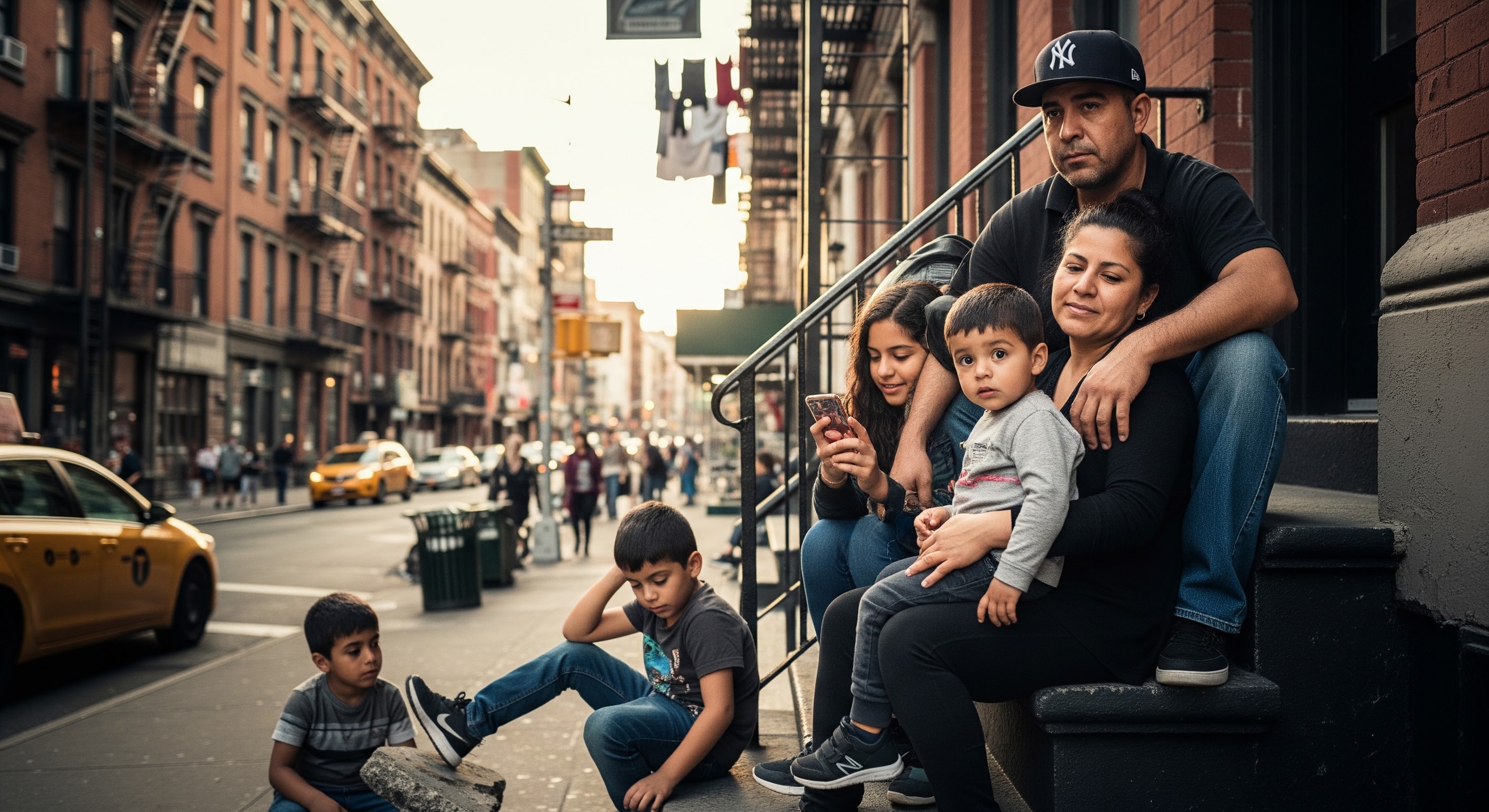
As inflation and rising costs erode the economic resilience of Latino families in New York, a patchwork of policy tweaks threaten to exacerbate their precarity—underscoring the city’s deepening disparities.
If there is a constant in New York City, it is the unending squeeze on household budgets. Survey after survey confirms that economic anxiety outpaces even concerns about safety or education among Latino households. This unease is not unfounded. While the city’s skyline may whisper tales of prosperity, its tenants—especially those from Hispanic backgrounds—navigate a far harsher ledger.
The Hispanic Federation, an advocacy group with a penchant for sober number-crunching, recently released its annual “State of the Latino Family” report, focusing on the economic terrain minorities must now traverse. The latest figures, drawn from the most recent (albeit incomplete) federal data available, detail an urban landscape rife with rising costs. Consumer prices in 2025 climbed a middling 2.7%, but this statistic understates the tribulations faced by many. Housing costs swelled by 3.2%. Energy—particularly electricity—was notably unkind, rising over 13% in New York last year.
For those perched atop the city’s economic pyramid, such increases may be little more than background noise. Yet for many Latino families, whose median incomes lag their white, non-Hispanic counterparts by $20,000 (at $40,000 versus $60,000 annually), these upticks represent existential threats. When the price of basic utilities outpaces any meagre wage gains, the daily calculus becomes punishingly simple: heat or eat.
The plight is neither transient nor isolated. Yesmín Vega, director of economic empowerment at the Federation, underscores that national averages mask the disparities: while most Americans stared down high-single-digit increases in utility bills, certain Latino enclaves—such as El Paso, where electricity jumped 23%—felt a particularly sharp sting. New York’s own 13% jump in electrical costs is hardly a rounding error for those living on the margins.
Bureaucratic tinkering has only compounded these stresses. A recent change to the federal Low Income Home Energy Assistance Program (LIHEAP) altered how energy aid is recorded—now more often counted as “income.” Ostensibly a minor accounting shift, it carries outsized consequences. As Vega explains, this tweak means some families now exceed the eligibility thresholds for vital safety-net programs, losing access to food assistance or subsidised health schemes. Thus, a nominal helping hand can paradoxically become a bureaucratic trapdoor.
Beyond the household, reverberations are felt in the city’s latticework of small businesses. Many of these ventures—grocers, bodegas, repair shops—are helmed by Latino immigrants or their children. The sector’s fortunes are especially sensitive to small shifts in cost or regulation. A new federal rule, which bars non-citizens from accessing certain relief and support schemes, further chills entrepreneurial gusto. Anecdotally, local business groups report an uptick in shuttered storefronts in areas like Corona and Sunset Park—unmistakable symptoms of mounting financial strain.
These immediate anxieties portend deeper, longer-term fissures. For New York, a city that trades on its mythos of opportunity, prolonging such hardships bodes ill. Reduced household consumption means flagging foot traffic and weaker neighbourhood commerce. Food insecurity rates among Latino families have spiked, straining food pantries and local charities. School attendance and performance, closely tied to economic stability, risk further decline where home life grows chaotic.
The knock-on effects ripple outward. When entire swathes of the populace remain on a fiscal knife-edge, civic optimism wanes. Political engagement, often fragile within immigrant communities, may recede as trust in institutions atrophies. A particularly galling feature is the dearth of reliable data: changes in federal agency reporting standards now obscure trends in maternal health, crime victimization, and even food security among Latino New Yorkers. That information deficit hampers efforts to calibrate policy or tailor interventions.
Lessons from elsewhere: hard-earned and half-learned
New York’s simmering tensions are not unique. Across California, too, Latinos outnumber most other minority cohorts struggling with rising rents and sporadic wages. Nationwide, real-wage growth for Hispanic workers remains tepid, overshadowed by faster inflation in metropolitan hubs. In Europe, cities with high proportions of migrant families have faced eerily similar patterns—spiraling costs at the bottom, robust asset appreciation at the top—though most maintain a somewhat more robust welfare net.
Some policy engineers suggest that finetuning eligibility thresholds for aid programs, or indexing them more aggressively to local living costs, could mitigate abrupt losses of support. Others look to New York’s patchwork of public-private partnerships, from legal aid to micro-loans, as a stopgap rather than a systemic correction. Chastened by the city’s history of boom-bust cycles, advocates warn that failing to shore up Latino families now will exact a democratic as well as economic price down the line.
To be sure, New York’s immigrant energy remains buoyant, and the city’s cultural economy derives much from the very communities now under fiscal siege. But the notion that hard work alone suffices—the dream that drew millions here—feels increasingly threadbare in the face of relentless cost pressures and policy missteps.
Data’s power lies in its clarity. As federal disclosures become more opaque, policymakers and civil society will need to supplement official figures with grassroots data gathering. The city’s resilience, after all, has never been an accident of geography but a product of constantly refreshed information and the willingness to act upon it.
The essence of New York’s appeal—social mobility, pluralism, can-do spirit—will ring hollow if large segments are left perennially scrambling to make ends meet. Economic precarity among Latino families is not merely a statistical curiosity but a bellwether of broader urban health. If City Hall and Washington fail to take heed, the price will not just be paid at grocery tills, but in the future civic health of America’s busiest metropolis. ■
Based on reporting from El Diario NY; additional analysis and context by Borough Brief.