ICE Stays at JFK and LaGuardia as TSA Staff Shortfall Drags On, for Now
The prolonged federal shutdown has thrust New York’s airports—and the city’s travel lifeblood—into an experiment in emergency staffing, with implications well beyond the terminals.
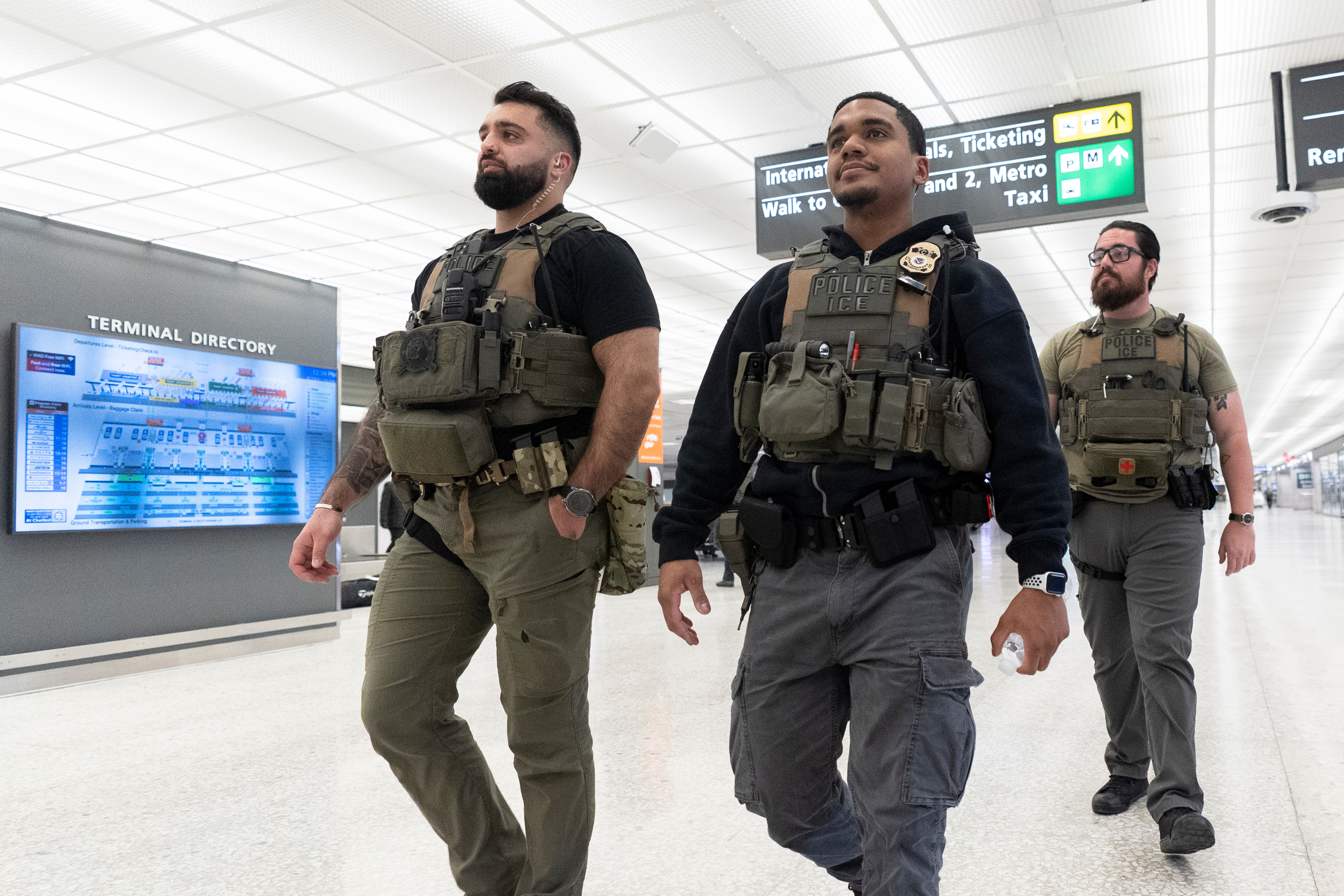
On a recent chilly Monday morning, the customary lines at John F. Kennedy International snaked beyond the main security area, but passengers encountered an unusual sight: instead of the familiar blue uniforms of Transportation Security Administration (TSA) agents, federal immigration officers patrolled security checkpoints, checking IDs with an unfamiliar air of formality. New York City’s airports—arteries in the city’s global circulatory system—have been swept into the turbulence resulting from the now 44-day closure of the Department of Homeland Security (DHS), the longest such shutdown in American history.
The immediate precipitant is a political standoff in Washington that has left TSA staff unpaid for over six weeks. Beleaguered by missed paychecks, at least 460 local TSA employees, by Congress’s own reckoning, have resigned, and daily absenteeism has reportedly exceeded 11%, peaking at over 50% in certain critical terminals. Amid mounting delays and rising traveller frustration, the federal government has dispatched agents from Immigration and Customs Enforcement (ICE)—usually more at home overseeing deportations than metal detectors—to fill the staffing breach. Now, as confirmed by Tom Homan, Washington’s border security czar, ICE will remain stationed at airports until “100% operational normalcy” returns.
New Yorkers—sceptical as ever of sudden changes to their routines—have responded with a mix of annoyance and unease. For international students, business travellers, and the city’s million-strong undocumented population, the doubled ICE presence evokes more than a little trepidation. Airport authorities, caught between flight schedules and protests, have issued reassurances: ICE agents, they claim, are limited to badge-checking and the safeguarding of physical perimeters, not impromptu status enforcement. Whether such guarantees will suffice to allay citywide nerves remains to be seen.
The city’s economic machinery, closely hitched to its airports, now judders with discomfort. Local airlines, juggling cancelled bookings and tetchy passengers, are losing an estimated $4 million per day in missed connections and schedule disruptions. Hospitality and taxi sectors, similarly entwined in air traffic, report a marked softening in arrivals. If absentee rates among federal workers persist, the drag on New York’s $80 billion tourism sector will only intensify.
The implications barrel well beyond immediate inconvenience. For federal agencies, the abrupt reassignment of ICE from border crossings to baggage lines risks exacerbating backlogs in other corners: immigration courts, asylum interviews, and detention oversight may all suffer. The optics, too, bode awkwardly for a city that regards itself as the doorstep of America. While ICE officers scan photo IDs at LaGuardia and JFK, some worry the spectacle chills international confidence at a time when global travel, still in recovery from past shocks, can ill afford further spooks.
Nor do the politics portend easy fixes. The shutdown’s endurance, fuelled by impasse over border appropriations, has become a spectacle of federal haplessness. President Trump’s recent executive order to resume TSA pay—hurriedly signed in coordination with DHS Secretary Markwayne Mullin—offers a short-term salve, but the structural question lingers: how resilient is the system if such brinkmanship can so readily upend it?
When federal gridlock ripples through global cities
New York is not alone in its discomfort, but it is perhaps the most heavily exposed. The city’s airports routinely handle 140 million passengers per year, outpacing Chicago and Los Angeles by a considerable margin. While major airports elsewhere—such as Atlanta Hartsfield or LAX—have reported similar disruptions, the symbolic weight of ICE agents in the city’s terminals carries greater punch. In European hubs, by contrast, airport security remains a stable, unglamorous function of national police, largely immune from political wrangling of this sort.
If there is a silver lining in the chaos, it is that pressure sometimes breeds innovation. Some New York lawmakers, noting the frailty exposed by the federal hiatus, suggest devolving at least some airport security authority to local control—as is done in Canada and parts of Europe. Others call for a “rainy day” fund at the Port Authority, ready to triage staffing shortfalls independent of Washington’s caprices.
We reckon that, while the image of ICE badges at security lines may soon recede, the episode has irreversibly coloured perceptions of federal reliability in the city’s vital infrastructure. Seldom framed as a matter of emergency management, airport staffing now emerges as a canary in the coalmine for a city whose economic reach depends on seamless transit. The cost of operational paralysis here is not measured only in inconvenienced Instagrammers, but in talent, trade, and the city’s continued gravitational pull on global movers.
With travel season approaching and no long-term political compromise in sight, New Yorkers are left to reckon with the limits of resilience. The sight of ICE agents greeting summer tourists may strike some as merely Kafkaesque; business-minded realists will see the episode for what it is: a tepid warning that the sinews of city life are only as strong as Washington’s ability to pay its staff.
More than an operational footnote, the airport crisis offers a brisk lesson in the fragility of interconnected systems. New York’s airports may soon return to bustling, blue-coated normalcy. The question for city and country alike is whether a deeper reckoning—and a more robust contingency plan—will follow. ■
Based on reporting from El Diario NY; additional analysis and context by Borough Brief.