Hochul Touts $268 Billion State Budget Deal as Albany Debates Key Omissions
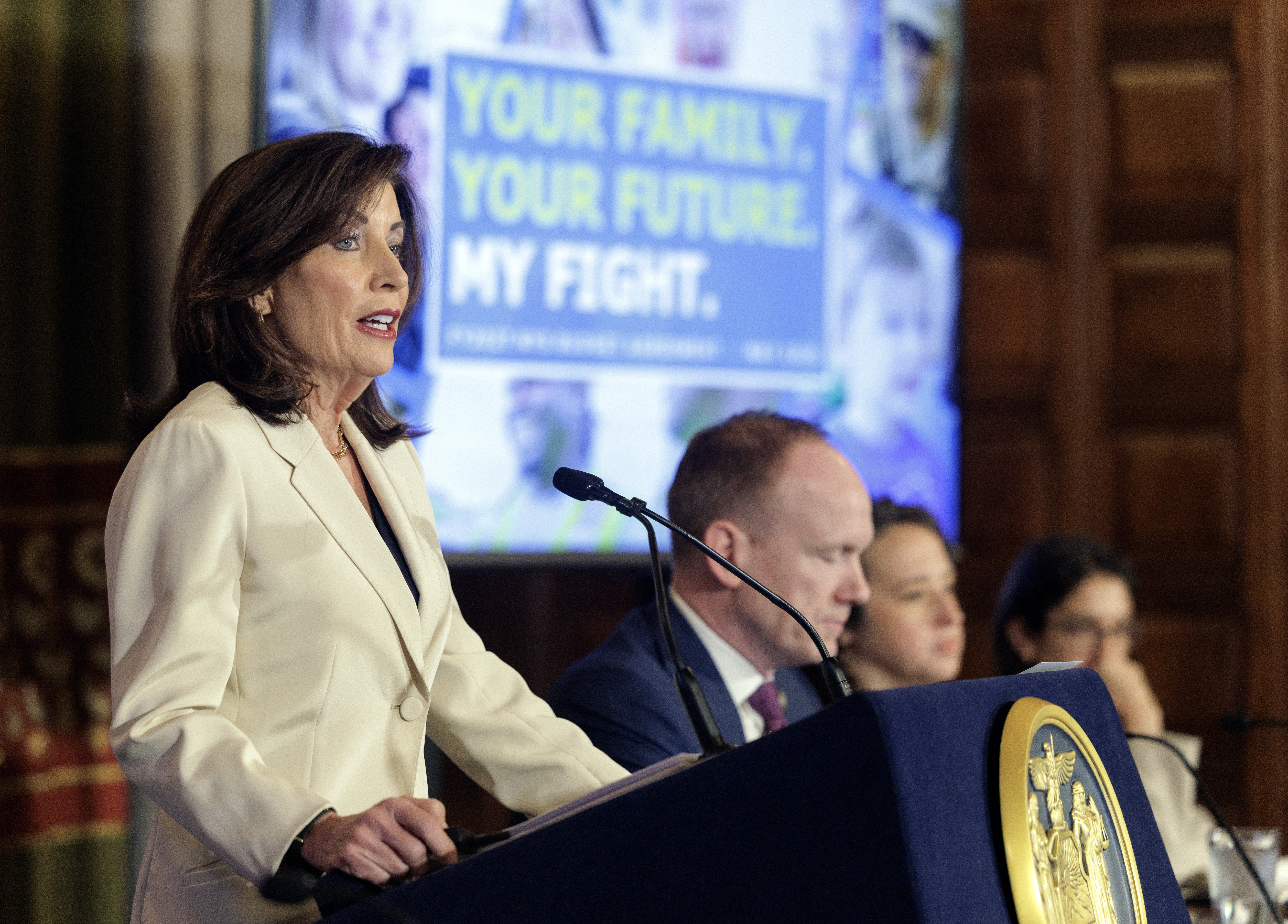
New York’s precarious fiscal ballet offers partial relief for working families, but leaves vital gaps in health coverage and urban solvency.
New Yorkers accustomed to fiscal brinkmanship could be forgiven for déjà vu. With the state’s $268bn budget nearly five weeks past deadline, Governor Kathy Hochul announced an “agreement” at last, touting protections for immigrants and working families. Yet the fanfare belies persistent wrangling in Albany’s corridors and an uneasy peace that provides some palliatives, but little comfort to the city facing both a $5.4bn deficit and the spectre of missing health coverage for half a million residents.
Governor Hochul, buoyant in her remarks, declared the compromise a triumph for affordability and public safety. The new package, which lawmakers have yet to formally ratify, promises an eclectic medley: a one-time tax on millionaires with multiple homes intended to net $500m, tip-tax relief for service employees, revised auto insurance statutes, and rebates for beleaguered families with high utility bills. Also woven in are bolstered legal shields for immigrants—most notably circumscribing local law enforcement’s cooperation with ICE.
The largesse stops short, however, of fully meeting the city’s fiscal demands or plugging yawning gaps in health access. Investments needed to secure coverage for nearly 500,000 New Yorkers are ominously absent. Similarly, the plan’s support for housing, childcare, and other pocketbook-busters is judged modest by advocates and fiscal analysts alike.
The general contours reflect the hallmarks of late-cycle budgets: ambitious rhetoric, half-measures, and a keen eye toward electoral optics. Hochul’s administration maintains her executive latitude to adjust spending in the event of further federal sleight-of-hand—an allusion to Washington’s fitful generosity and partisan gridlock. Notably, state-level income and business taxes remain untouched, signaling caution toward the wealthy and a recognition of the flight risk posed by higher tax burdens.
For New York City, the state’s tepid beneficence portends another year of improvisation. The proposed $500m “mansion tax” on secondary property owners yields a paltry sum relative to the city’s $5.4bn budget gap—a ratio that would hardly impress municipal accountants. While Albany’s gesture toward family utility rebates is welcome, it is a pittance in the face of high utility bills and the Big Apple’s punishing cost of living. Most crucially, the continued absence of sustained health investment leaves a swath of the city’s working poor potentially exposed as pandemic-era programs ebb.
A cautious budget and a city left waiting
Political calculations undergird much of the wrangling. With her eye on re-election, Hochul trumpets worker-friendly measures and progressive crumbs—enough to mollify centrists, if not to satisfy her party base. For many Democratic legislators, the compromise lands far from their aspirations: no broad income-tax hikes, no major expansion of health or housing spending, and plenty of left-leaning priorities left in budgetary limbo.
Businesses can exhale, for now, at the absence of new direct levies. But unpredictability lingers. Retaining executive power to make future fiscal adjustments is prudent in a volatile national climate, but it also leaves municipal departments—and public sector workers—uncertain about long-term program funding. Permanent solutions to the city’s ballooning deficits and fraying social services remain out of reach.
The NYC-centric flavour of the debate also underscores the shifting balance of state politics. Upstate legislators, ever wary of subsidising the five boroughs, have little appetite for a budget that appears to bail out what they see as a profligate city government. Meanwhile, New York’s shrinking share of the ultra-wealthy—many of whom now keep their primary residences elsewhere—raises questions about the durability of luxury real estate taxes as a revenue stream.
Nationally, New York’s drama is hardly unique, but the scale impresses. From Illinois to California, statehouses are stacking budgets atop federal uncertainty and patching holes with one-off taxes aimed at the well-heeled. Yet few grapple with as gargantuan a safety-net burden, or as acute a tussle between progressive ambition and fiscal arithmetic, as New York. The fact that almost half a million residents may see their health access wane puts the city at the sharp edge of the national healthcare debate.
Globally, it is a familiar dance. From London to Paris, major cities find themselves prey to both national politics and their own economic contradictions. The universal challenge: how to maintain ambitious social provision without chasing away wealth or smothering enterprise. New York now faces the uncomfortable realization that even the biggest budgets rarely suffice when the political centre cannot—or will not—hold.
Our view is sceptically optimistic. The current settlement demonstrates that democratic institutions, however lumbering, can still grind out compromise in times of stress. The incremental protections for immigrants and service workers are overdue. But the missed opportunities loom: the state’s unease in confronting health and affordability underscores deeper fissures in New York’s political economy. Piecemeal relief is better than legislative gridlock, but it does not constitute strategy.
So this budget, like so many Albany produces, trades boldness for brevity and buys time when structural answers are sorely needed. The anxieties coursing through New York—urban deficits, social fragmentation, electoral intrigue—are unlikely to abate without more deliberate investments and political courage. For now, New York will muddle through, as ever. But absent a more daring agenda, this is less a blueprint for growth than a holding action. ■
Based on reporting from El Diario NY; additional analysis and context by Borough Brief.