Hochul’s Insurance Plan Would Gut 90/180 Rule, Single Bronx Dad Pushes Back
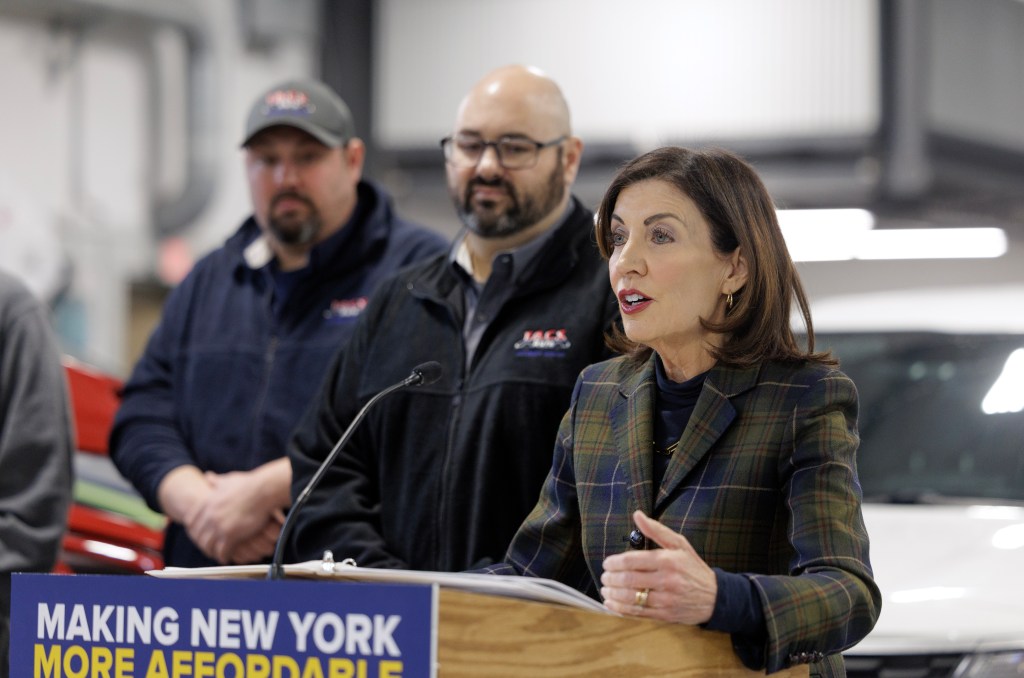
New York’s bid to trim motor insurance costs may deal a bruising blow to accident victims with less visible injuries—raising hard questions about protection and affordability in America’s largest city.
The surest way for a New York politician to rile the populace is to suggest tinkering with laws that touch everyday hardship. This month, Governor Kathy Hochul has achieved that particular distinction. Her proposed changes to the state’s automobile insurance regime—pitched as a bid to curb costs—have triggered debate in the city’s courts, classrooms, and kitchen tables alike. The quiet elimination, buried deep in her executive budget, of a long-standing legal protection known as the “90/180 rule” now looms as a test of whether affordability for the many should come at the expense of the few—but deeply affected.
The 90/180 rule may sound like legal arcana, but its reach is wide. Under New York’s current law, accident victims are allowed to sue for non-economic damages (such as pain and suffering) if they can show that they are unable to perform their usual activities for at least 90 out of 180 days following a crash. This provision, one among nine ways to meet the “serious injury” threshold, covers not only outright amputations or broken bones, but also subtler, evolving injuries: concussions, soft-tissue damage, and chronic pain that saps a worker’s ability. Governor Hochul’s proposal would excise this category entirely, narrowing access to the courts for thousands yearly—especially those, such as teachers and care workers, whose injuries emerge gradually.
For cities like New York—the country’s densest and most transit-rich—car accidents may seem a secondary concern. Yet more than 2 million residents rely on private vehicles daily, and traffic injuries remain stubbornly common. The change would ripple through the city’s claims process: plaintiffs with “hidden” injuries would face far steeper barriers, with the onus shifting firmly towards defenses and insurers.
Why fix what may appear functional? The governor contends that the changes, alongside other tweaks to no-fault provisions, would ultimately reduce insurance premiums for drivers. This argument is not without cause: New York’s mandated coverage requirements are among the costliest in America, and auto insurance inflation—up nearly 20% nationally in 2023—is squeezing those already struggling with housing and transit costs. But such relief, if it arrives, comes at a price. Removing the 90/180 standard not only shrinks legal recourse for genuine but less visible harm; it also risks emboldening insurance firms to deny or delay settlement for those whose suffering is hardest to quantify.
The data paint a subtle, not reassuring, picture. According to Weiss Ratings, nearly half of all New York auto liability claims are already denied by insurers. Consumer advocates argue the current law at least compels companies to consider cases that do not manifest as broken limbs but still devastate lives. The shift may mean more New Yorkers bear the cost of recovery alone—especially the modestly paid and self-employed, whose injuries can mean months of lost income and family disruption.
Politically, such moves rarely go unnoticed. Critics question why these broad changes are nestled within a budget proposal, rather than subject to standalone consideration and public debate. For a Democratic governor leading a state famed for worker protections, the attempt to surreptitiously shift the legal balance in favor of insurers has bred skepticism, if not outright mistrust.
All this portends a familiar, if frustrating, pattern in American governance. Pressure to nudge down insurance premiums falls most heavily on urban, transit-poor drivers—often those least able to absorb an additional $100 or $200 a year. Yet the broader cost, whether visible on a spreadsheet or not, may be measured in the diminished security afforded to anyone one misfortune away from dependency or debt.
New York’s approach is not unique, but it is out of step with several peer states. California and New Jersey continue to offer broad injury definitions, reflecting the unpredictable ways that trauma develops. Elsewhere, sustained lobbying from insurers has narrowed the scope for legal redress—often to the short-term benefit of those paying premiums, but at conspicuous cost to the injured and their dependents. Globally, nations with more robust social safety nets tend to de-emphasise tort battles like these—raising the question, yet again, of what adequate support for injury victims should look like in a society as patchworked as America’s.
Weighing affordability against justice
Where, then, ought New York to draw the line? There is a principled argument to be made for narrowing frivolous claims. Courts and insurers alike decry the costs imposed by dubious filings, and New York’s “serious injury” threshold has long triggered litigation over what counts as a “real” injury. But the 90/180 standard captures a genuinely beleaguered subset: those whose lives, though not ended, are upended for months. To assume that only those with dramatic and immediately visible injuries merit compensation is to ignore the reality of urban work, care, and struggle.
Governor Hochul’s defence—that her plan would not have excluded notable, real-world cases—rings paltry comfort to those whose injuries, like chronic back pain or post-concussion syndrome, evince themselves only after weeks of delayed diagnosis. The city’s formidable legal bar (and the boroughs’ accident-prone streets) guarantee that, if the reforms pass, a wave of new test cases and challenges will follow. For many, this means months or years without closure, or the unquantifiable anxiety of learning whether the courts deem their suffering “enough.”
New Yorkers pride themselves on resilience, but grit and fortitude are puny substitutes for systemic fairness. For a state determined to champion workers and families, the optics of shifting risk onto the already bruised are, at best, unimpressive.
What bodes for the city as the reforms advance? We suspect little in terms of headline savings for most drivers in the short term—a few dollars shaved off premium quotes, perhaps. But for those unlucky enough to suffer a slow-burning injury, the costs may be lifelong.
Paring costs is sensible, but gutting subtly effective protections to offer speculative relief is a poor bargain. In a city of eight million, the “few” affected victims are, in absolute terms, not at all few. Strong protections for those who suffer most acutely have a value not captured in standard actuarial tables. The city that never sleeps deserves laws that recognize, and account for, the variety of misfortune—especially when its residents struggle to stand, sit, or work as before.
■
Based on reporting from Streetsblog New York City; additional analysis and context by Borough Brief.