Four Immigrants Detained at Federal Plaza During Congressional Visit, Transparency Remains Elusive
The apparent arbitrariness of immigration enforcement at New York’s Federal Plaza exposes tensions between policy, legality and the lives of thousands in America’s gateway city.
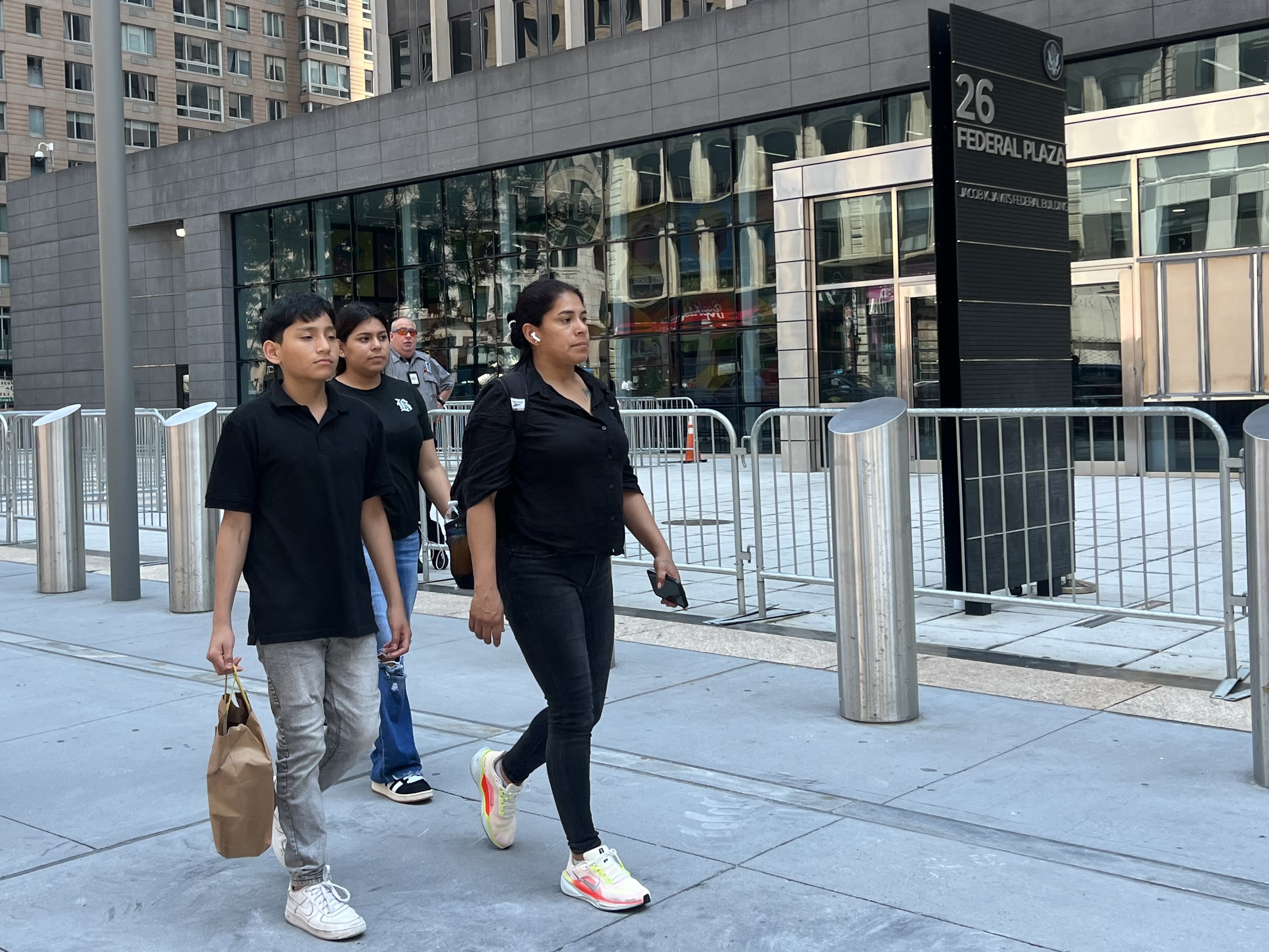
Each morning, a queue snakes around Lower Manhattan’s drab Federal Plaza as hopeful faces steel themselves to step through its glass doors. For many of New York City’s immigrants, the high-rise at 26 Federal Plaza bodes not reassurance but foreboding—a bureaucratic lottery between legal process and abrupt, unexplained arrest. Last Friday, during what was meant to be a routine oversight visit by Representatives Dan Goldman and Pete Aguilar, the building lived up to its chilling reputation: four immigrants—three men and a woman—were seized by Immigration and Customs Enforcement (ICE) while complying with court summons.
Local politicians had come to investigate longstanding complaints about opaque ICE practises and custodial conditions. Instead, they found themselves witnesses to the seeming caprice of the system. The most striking case: a young woman seeking asylum, fully documented, who dutifully appeared before an immigration judge and left with instructions to return in August, only to find herself handcuffed and swiftly detained, with no explanation proffered. Despite the interventions of those with congressional clout, neither detainees nor their representatives gained clarity about the grounds for these sudden arrests—or what would become of those whisked away.
Such events, though lamentably not rare, punctuate the anxiety that shadows any immigrant obliged to interact with federal authorities in New York. Even those acting in good faith, attending mandated check-ins or hearings, are on edge. The ordeal of being detained, unannounced and without immediate recourse to legal counsel or family communication, turns an already daunting process into an ordeal that exacts psychological and financial tolls. Since the ascension of the Trump administration, these incidents have become more pointed and more visible, underscoring a national debate over what constitutes just, effective immigration enforcement.
In practical terms, every spectacle of summary detention in Manhattan ripples outward. Advocacy groups reckon that thousands now fear that attending hearings—a civic and legal duty—may lead to the abrupt unraveling of lives built, in many cases, over years. Some immigrants, faced with this risk, skip court dates or fail to provide updated addresses. This, of course, only worsens their legal standing, but ICE’s tunnel-vision enforcement does not appear to quibble with unintended consequences.
New York, with its storied tradition as a haven for the ambitious, the desperate and the industrious, finds itself in an awkward bind. City leaders, backed by a thick tangle of “sanctuary” ordinances, maintain that cooperation with federal immigration machinery should be judicious and limited. Yet as long as ICE operates in federal spaces, and the law cedes it the ultimate say over who remains and who is expelled, the city government’s practical power is puny. The legal limbo breeds confusion and resentment both in municipal offices and on the sidewalk outside Federal Plaza.
Economically, the disruptions can scarcely be downplayed. New York’s informal sectors—restaurants, construction, caregiving—are lubricated by the steady work of migrants, many of them with unresolved status but strong ties to local communities. Each arrest, each deportation, risks depleting businesses of valued employees and leaving families splintered. Worse, the unpredictability of enforcement saps confidence in legal compliance, chilling social integration and, ultimately, tax revenues.
Politically, ICE’s hard-nosed tactics foster an air of spectacle at precisely the moment the city—or, indeed, the nation—might need calm, rules-based administration. This dynamic aggravates the polarisation of debate. Progressive lawmakers, like Messrs Goldman and Aguilar, brand ICE’s “deportation machine” arbitrary and punitive. Defenders contend that laws exist for a reason and that any disorderly retreat would encourage further border breaches. Lost in the crossfire are those who, believing in the system, wind up its casualties.
Notably, the phenomenon is not isolated to New York. From Los Angeles to Houston, immigrants nationwide encounter the Kafkaesque predicament: present oneself for legal redress—and risk immediate detention. Federal enforcement under Mr Trump’s lingering directives has centralised control, quickened the transfer of detainees to remote holding centres (avoiding local oversight and, possibly, legal representation) and wrapped its work in procedural opacity.
A question of proportion and prudence
Contrast these events with approaches elsewhere. European states with significant inflows have, with varying success, separated routine legal compliance from punitive measures, targeting only those considered an actual threat. Canada, often invoked as a model, has managed—at smaller scale—to maintain procedural regularity without broad-brush crackdowns at government offices. New York’s experience, meanwhile, reflects America’s broader ambivalence: admirable in theory, but veering into the arbitrary in execution.
There is little evidence that swooping on vulnerable people during scheduled court dates deters unauthorised immigration; data suggest most migrants simply weigh their odds and hope for procedural mercy. Meanwhile, the judiciary sees its dockets swell with cases further complicated not by the facts but by the wrenching of due process. Trust, that precious resource for any public system, ebbs as arbitrariness threatens to supplant order.
We reckon ICE’s conduct at Federal Plaza is both a symptom and a cause of the broader gridlock that afflicts US immigration. It is bureaucratic zeal untempered by proportionality, where strict obedience to policy obscures the more profound aims of justice: transparency, predictability and, above all, maintaining a system in which people who follow the rules have cause to believe the rules will in turn protect them. Efficiency is no substitute for legitimacy.
As the election cycle grinds on and immigration again pollutes the national discourse, New York’s federal courthouse has become a bellwether for the country’s tangled values. A policy that renders even lawful claims to due process a matter of chance bodes ill not only for immigrants but for any society prizing liberal order over administrative fiat.
In the end, a city built on the promise of legal refuge should demand better of itself—and of the government whose power it hosts. ■
Based on reporting from El Diario NY; additional analysis and context by Borough Brief.