Federal Judge Backs Midtown Congestion Pricing, Shrugs Off DOT's Eleventh-Hour Objection
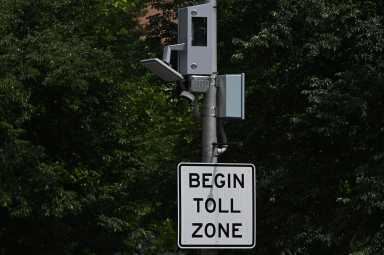
New York’s congestion pricing survives a federal challenge, testing the resilience of urban policy amid political flux and portending national implications for cities grappling with gridlock.
At 60th Street and Lexington Avenue, a familiar snarl of horns and idling engines at the weekday rush hour gives the lie to any claims that New Yorkers are eager to abandon their cars. Yet, pending policy may soon extract a price for the privilege. On March 3rd, Manhattan’s most ambitious transportation experiment in decades dodged a legal roadblock, when U.S. District Judge Lewis J. Liman upheld federal approval for New York City’s congestion pricing plan—rejecting the most potent challenge yet to a scheme that promises to alter the daily calculus of urban mobility.
The kerfuffle stems from Metropolitan Transportation Authority v. Duffy, a suit that captured Washington’s penchant for regulatory intrigue. In November 2024, days after Americans elected Donald Trump, the Federal Highway Administration (FHWA)—still armed with President Biden’s pen—hurriedly inked an agreement with New York agencies to install tolls on vehicles entering Manhattan’s commercial core. Although transparent in its timing, the agreement withstood the first volley when, in February, the incoming transportation secretary, Sean Duffy, sought to yank federal blessing with dizzying haste.
The judge’s ruling found Secretary Duffy’s attempted fiat wanting. Citing administrative procedures rather than constitutional high theory, Liman held that the Department of Transportation’s about-face ran afoul of the Administrative Procedure Act, branding it “arbitrary and capricious.” In bureaucrat-speak, that is the closest one gets to calling a decision hasty and half-baked.
For New Yorkers—and for the Metropolitan Transportation Authority (MTA), which faces a fiscal cliff—the ruling’s implications are immediate. The city’s first-in-the-nation “cordon pricing” model will, barring new appeals, charge most vehicles up to $15 to enter Manhattan below 60th Street. The toll, expected to raise more than $1bn per year, is meant both to unclog traffic and refill the MTA’s paltry coffers. Transit boosters tout the plan as a godsend; taxi drivers and trade groups, less so.
If implemented, the impact on the city’s streetscapes could be profound. Early studies reckon the number of cars entering the zone might fall by 15-20%. This would spell shorter bus journeys, more predictable commutes, and, officials hope, steadier investment in subway track work and signal upgrades. Businesses fret about foot traffic, while advocates for the city’s 120,000 for-hire vehicle drivers grumble about shifting burdens.
The second-order effects will ripple well beyond clogged roadways. Congestion pricing marks a rebuke to decades of freewheeling urban motoring, a declaration that curb space—like housing and air quality—is a finite and valuable good. The program’s legal journey both illuminates and complicates the question of regulation across the handover of presidential power, spotlighting a federal bureaucracy now caught in the crossfire of ideological whiplash.
City Hall stands to gain, though perhaps not as much as it hopes. Congestion pricing offers a slender lifeline for the cash-starved MTA, whose annual deficits have ballooned to $2bn. State law requires that net proceeds fund capital improvements, not plug operating losses. Creative bookkeeping is as much a New York tradition as gridlock at 5pm, and some lawmakers may be tempted to blur those lines.
Legal wrangling over the program’s particulars has revealed fissures within labor, business, and environmental circles. The unions representing MTA employees, for instance, see job security tied to system upgrades funded by the toll. Environmental groups argue that pricing sends an overdue signal to motorists. Still, small businesses in lower Manhattan fear customers will flee to the suburbs, while outer-borough politicians contend their constituents are unfairly penalized.
A bellwether for urban America
To the rest of America, New York’s saga is more than local theatre. Congestion pricing, tested from London to Singapore, has long been the holy grail for U.S. planners but, until now, a poison pill for politicians wary of ballot box retribution. If the city’s model survives Trump-era scrutiny—and the inevitable appellate slugfest—it could embolden officials in Boston, San Francisco, and Los Angeles to pursue their own toll cordons.
The case also underlines a peculiar feature of American governance: that an outgoing administration, racing the clock, can bind its successor with the stroke of a pen. Liman’s ruling affirms—in this instance at least—that discretion persists beyond inauguration day, so long as procedures are observed. Whether this bodes ill for regulatory stability or tempts yet more bureaucratic gamesmanship remains to be seen.
Elsewhere, careful calibration has made congestion pricing a durable success. London’s scheme, in place since 2003, slashed traffic by 15% and buoyed bus ridership. The money funds transit, and most Britons now view the charge as mundane, even necessary. American cities, wedded to cheap motoring and beset by public transit deficits, may find that political gravity is heavier on this side of the pond.
The current ruling is no final victory for the MTA. The Supreme Court, which seldom resists a separation-of-powers puzzle, may yet weigh in. Even if the legal dust settles, New Yorkers must stomach the reality that change—much like a crosstown bus on a wet morning—tends only toward the incremental.
Still, the congestion pricing decision represents a modest but real assertion of evidence-driven policy-making in a city both captive and addicted to its own frenetic pace. It will take more than a tariff on tailpipes to break the city’s dependence on the car, but at last, the law now grants the MTA the power to try. ■
Based on reporting from amNewYork; additional analysis and context by Borough Brief.