DHS Shutdown Hits Record 44 Days as TSA Walkouts Snarl JFK and LaGuardia Travel
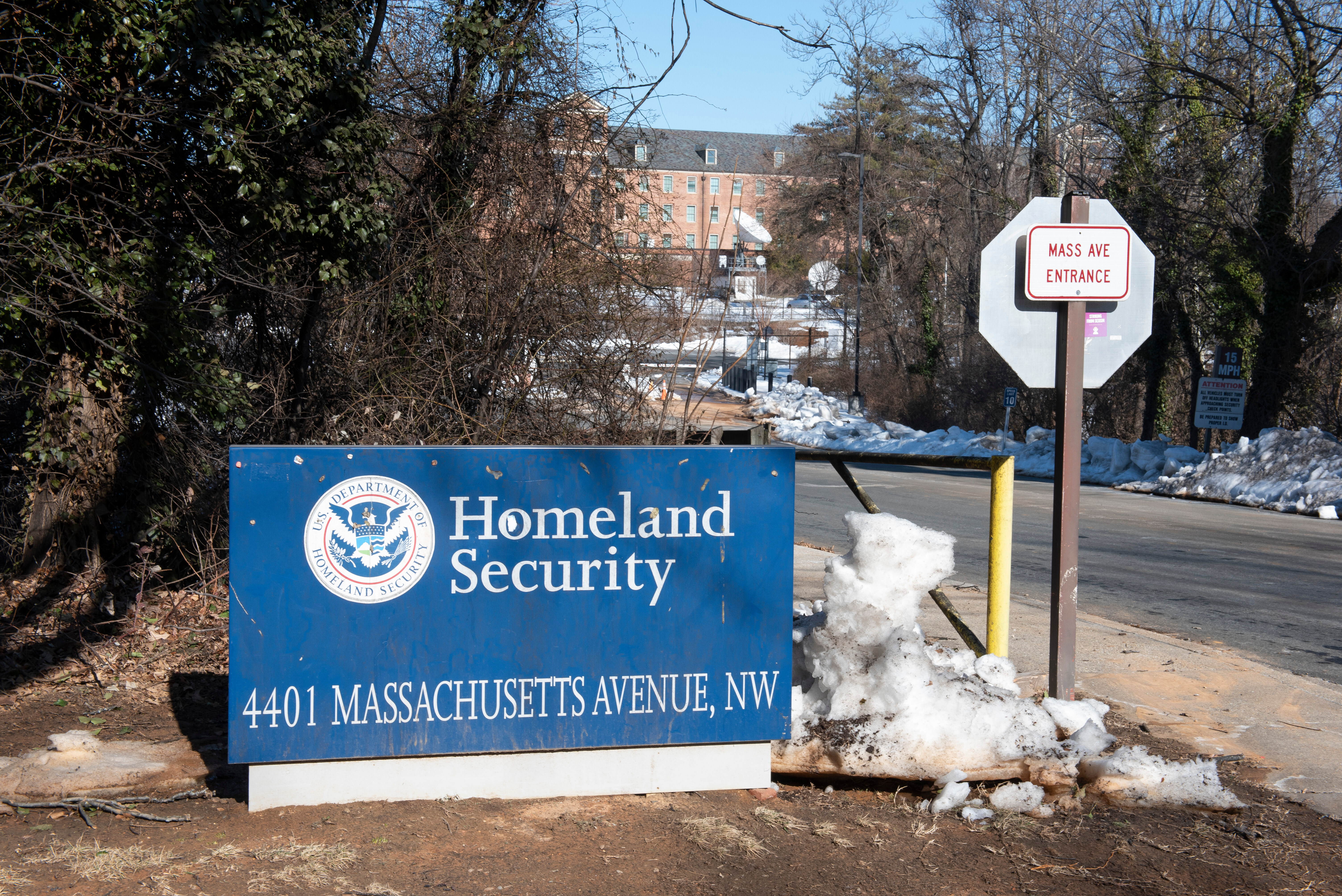
The unprecedented shutdown of America’s Department of Homeland Security is upending the business of New York—and bodes ill for managing national security through partisan gridlock.
On Sunday, the Department of Homeland Security (DHS) marked a record forty-four days in limbo, surpassing every previous government shutdown in American history. Even the now almost legendary 43-day paralysis of the previous autumn—with memories of shuttered offices and uncollected rubbish still fresh in New Yorkers’ minds—is now outdone. From JFK to LaGuardia, queues have swollen and tempers frayed, symptoms not of a natural disaster, but of legislative dysfunction in Washington.
The cause is as American as apple pie: wrangling over immigration. Since February 14th, operations at DHS have languished, collateral damage in a standoff between congressional Democrats and Republicans over constraints on the Immigration and Customs Enforcement (ICE) agency. At stake are proposed curbs such as body cameras for ICE agents, touted by Democrats as a matter of oversight, but dismissed by the Trump administration as “taking the department hostage.” Meanwhile, ordinary government workers—essential or otherwise—become unwitting hostages to this deadlock.
By the numbers, the effects are arresting. Every day, about 11% of Transportation Security Administration (TSA) agents fail to turn up for work; at certain airports, absenteeism exceeds 50%. Since the shutdown began, at least 460 employees have quit, unpaid, even as airports see passenger volumes up 5% year-on-year in the spring break crush. Many New Yorkers, seasoned in adversity but less patient in security lines, have faced waits seldom seen outside the Christmas rush—or international crises.
While the average City dweller may greet another headline about government impasse with a sigh, the ramifications are less abstract than usual. Passengers in and out of New York’s three airports risk missed weddings, funerals, or business deals as TSA agents, unpaid and despondent, abandon their posts. Flight delays ripple out across the country from this metropolitan hub, a reminder that in America’s great game of federal politics, New York is both pawn and queen.
The standoff’s reach is hardly limited to aviation. Port operations—crucial to the city’s famously resilient supply chains—lean on the same federal apparatus. Delayed cargo inspections threaten the seamless flow that keeps supermarket shelves stocked and factories ticking. Tourists, drawn by Broadway lights and museum shows, may reconsider, pinched by the unpredictability of arrival and departure. The city’s $74 billion tourism sector, already battered by COVID’s long shadow, can ill-afford further tremors.
Nor are the consequences merely economic. A demoralised DHS bodes poorly for New York’s sense of security. While the impact on counter-terrorism operations remains—one hopes—mitigated by contingency plans and unflagging professionalism, the optics are worrying. Each day the standoff drags out, would-be wrongdoers accumulate data on American vulnerabilities. Even the illusion of chaos carries its own risks.
Such spectacle is not unique to America, but the scale is. In much of Europe, public-sector strikes may snarl commutes or garbage collection for days; in France, such protest verges on sporting event. But the United States alone manages a form of fiscal brinkmanship that can bring a leviathan department like DHS to its knees. That the current episode outstrips the 2018 shutdown—then seen as a nadir—suggests a troubling tendency towards escalation, not resolution.
Elsewhere, sophisticated nations have adopted means to prevent government-by-hostage: independent spending authorities, automatic funding extensions, or strong civil service protections. America, by contrast, continues to expose its critical services to the vagaries of the appropriations process. Few New Yorkers—and indeed, few Americans—welcome being conscripted into this annual pageant of uncertainty.
American brinkmanship, New York stakes
For now, the lifeline comes not from legislative compromise, but executive fiat. Last week Donald Trump issued an order instructing Acting DHS Secretary Markwayne Mullin to resume payment to TSA agents, acknowledging what he called a “crisis” at the country’s airports. The patch—no more than a Band-Aid—may begin to flow on Monday. But as a solution it holds little promise: it does nothing to resolve the impasse over ICE, and potentially sets a precedent that may embolden shutdowns rather than forestall them.
There is little sign that the underlying quarrel—how to oversee, restrain, or unleash ICE—will yield to the homilies about unity or resolve. Tom Homan, the White House “border czar,” credits negotiations with “progress” on Democratic demands, but insists that Mr Trump will countenance nothing less than full funding for all of DHS. Democrats, for their part, sense leverage in a moment of Republican discomfort; the city’s Democratic heavyweights, acutely aware of their residents’ frustration, have not hesitated to pile on.
What is especially flummoxing for New Yorkers, steeped in the world’s most sophisticated logistics and impatient with dysfunction, is the apparatchik logic on display. Few in Queens or Yonkers would put up with a subway shutdown because MTA supervisors dispute bus camera policies. Yet federal politics continues to serve such fare as if it were a speciality.
Globally, there is cause for both concern and for schadenfreude. On the one hand, America’s experiment in democratic messiness is, by design, more cumbersome than streamlined Asian or hyper-technocratic Scandinavian models. On the other, persistent gridlock saps confidence not merely in the federal government, but in the plausibility of American leadership—a point not lost on rivals or allies.
We reckon that New York will, as ever, adapt. Airport strikes in Europe or protests in Asia do not bring trade to a standstill, and the city’s appetite for improvisation is legendary. But the cost—economic, psychological, and reputational—accumulates with each prolonged episode. A city that moves the goods, money, and people of half a continent does not prosper by being rendered an afterthought in a Beltway spat.
If there is a lesson here, it is that the machinery of government should not depend for its operation on the whims of the day, or on the tactical calculations of one party or the other. For an American metropolis that styles itself as first among world cities, New York deserves a national government that at least remains open for business. ■
Based on reporting from El Diario NY; additional analysis and context by Borough Brief.