Developer Bets on 30-Story Tower for Downtown Brooklyn as Housing Pipeline Swells
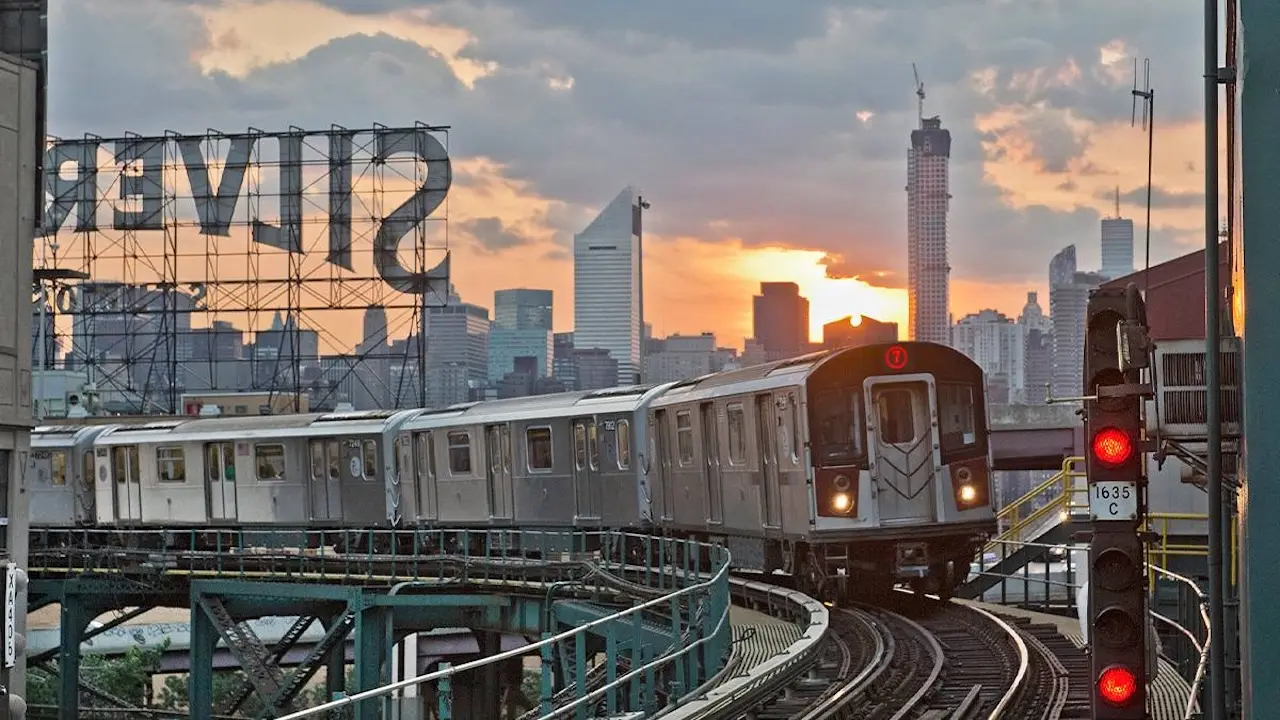
As Downtown Brooklyn’s skyline continues its brisk ascent, the city confronts both the promise and the challenge of large-scale residential development.
On a dismal stretch of Duffield Street, one empty Planet Fitness is preparing to give way to that most modern New York phenomenon: a soaring residential tower. On June 3rd, developers working for Weitao “Steven” Shi, a relative newcomer in Brooklyn but a known hand in Queens real estate circles, filed permits for a 30-story building at 245 Duffield. With the area already in the throes of its busiest housing year since the vaunted 2004 rezoning, this $31m parcel will soon bear 158 apartments and retail at street level—plus the usual amenities of today’s amenity-crazed market: golf simulator, swimming pool, sauna.
The transformation of the 2-story gym into an edifice stretching nearly 100,000 square feet is, at this point, routine for Downtown Brooklyn. Once a district best known for discount retail, courthouse bustle, and college commuters, the landscape now bristles with high-rise scaffolding. The identity of the property’s buyers—Shi’s FBL Development and Golden Stone Management—matters less than what the permits portend. The rezoning intended for “office development and academic expansion” has, over 20 years, become a magnet for vertical living.
Shi’s project, his first Brooklyn foray, faces a relatively frictionless path through the Department of Buildings. Unlike upzonings in outer-borough neighborhoods, this lot’s dense fate was sealed two decades ago. It sits within the core rezoned to accommodate new residential, commerce, and university facilities, far from the pitched battles that dog housing elsewhere in the city.
The particulars of the 245 Duffield scheme are not remarkable—certainly not compared to recent completions like the 49-story Everly at 180 Ashland, or the mammoth 1,098-unit Rocklyn nearby. Yet it glides in on a broader wave: in the first six months of this year alone, a record 3,703 new housing units were delivered in Downtown Brooklyn, with a further 1,183 set for completion before 2026, according to Crain’s. Suddenly, supply is beginning to catch up with developers’ ambitions.
For the city, the first-order implications are straightforward: more housing stock, in a district already reshaped by towers. If the apartments become condos, as acquisition paperwork hints—though Shi remains silent—another modest bolus will be injected into a city grappling with paltry homeownership rates. If they are rentals, tenants will likely be the upwardly mobile: the project’s luxury trappings all but exclude median-income New Yorkers. Either scenario means new bodies on the street, new retail custom, and a little more critical mass for public transport.
But these projects are also barometers for deeper patterns. Downtown Brooklyn, once the butt of mid-century jokes, is now living proof that long-range planning and zoning can, in theory, move the dial on housing stock. The very scale of these builds—The Brook with 591 units, The Everly just shy of 570, deal in hundreds at a time—makes a mockery of “incremental” development elsewhere. This kind of density, delivered swiftly, will determine if New York ever punctures its inflated housing costs.
Of course, construction booms are not panaceas. The new builds, almost to a unit, serve the luxury end of the market; even a record year for completions will not curb citywide rents if working-class New Yorkers must look elsewhere. The 2004 rezoning was never intended as an affordable-housing engine. Rather, it sought to rebrand Downtown as a “24/7 community”, a sort of midtown-by-the-river, buoyed by proximity to jobs and transit.
The public realm, inevitably, lags. Survey Duffield Street or Fulton Mall and one finds cracked pavements, choked buses, and public spaces straining to keep up with the population surge. The promise of “vibrancy” touted by planners two decades ago has certainly materialized, but so have all the teething troubles of a city forced to grow up—rather than out.
Gentrification at scale, New York style
Elsewhere in America, such density might generate endless lawsuits or referenda; in New York, it merely kindles grumbling about shadows and rising rents. Compared to cities like San Francisco or Boston, New York’s comparatively more permissive attitude to upzoning—and the scale it enables—distinguishes its housing politics. Yet the city’s successes are partial; across the East River, towers are rarer and the rezoning process fraught and glacial.
Globally, this sort of vertical growth is unremarkable. Cities like Seoul or Toronto have razed whole quarters to house surging populations. But the New York model, driven by private developers and minimal inclusion of “affordable” units, has its limits. The state’s ponderous budget debates and the city’s patchwork of rent regulations often scupper efforts to funnel construction where it is needed most.
Shi’s project, then, is emblematic—a shiny addition to the “luxury pipeline”, less a harbinger of housing equity than a signal that capital still fancies New York’s prospects, zoning rules permitting. The jobs and retail it spawns, the increased property-tax revenues, and the urban bustle are notable boons, but do not answer the city’s deeper anxieties about whom its new towers will serve.
There is also a cautionary tale for city planners in this boom. More supply, delivered quickly, can cool pricing at the top of the market, but rarely percolates past the gentry. Housing becomes a prestige asset; amenities like rooftop pools and golf simulators function as both status markers and paywalls. The public interest is best served when the city leverages such booms to extract social goods—be it parks, transit investment, or below-market housing.
Still, amid a tepid national housing outlook, the flurry of filings in Downtown Brooklyn is remarkable. Few American cities can muster such consistent, large-scale production in established neighborhoods. Critics carp about soulless towers and glass monotony, but cities change, sometimes with more common sense than their fiercest detractors reckon.
If New York is to remain liveable and economically vigorous, it must accommodate both growth and persistence—allowing new developments a place in communities that still remember what came before. That task grows more complicated as towers multiply, but the alternative is a brittle, unaffordable city—hostile to newcomers and soon, perhaps, to its own history. One more glassy box on Duffield Street will neither doom nor save Brooklyn, but it is proof that, in one corner of Gotham at least, the city’s housing metabolism still throbs. ■
Based on reporting from Section Page News - Crain's New York Business; additional analysis and context by Borough Brief.