Day 24: NYC Nurses Hold Line Outside NewYork-Presbyterian as Staffing Talks Stall
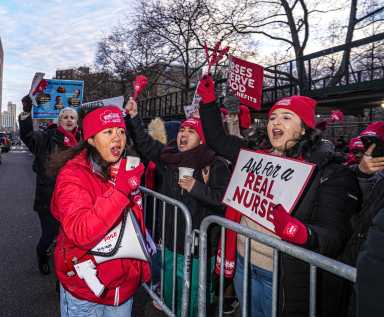
As the city’s largest nurses’ strike in decades continues, the standoff over safe staffing and working conditions may shape not only New York’s health care—but the limits of labour bargaining power more broadly.
The thrum of car horns and the low wail of sirens are staples of New York’s cityscape. Less familiar, however, is the sight of 15,000 nurses manning picket lines in the biting February air, placards in hand. At NewYork-Presbyterian, one of three major private hospital systems paralyzed by the dispute, nurses mark their 24th day off the job—a duration unseen in the city’s recent labour history, and a warning knell for a health system already under strain.
The catalyst is elementary. In late December the nurses’ contract expired, and negotiations promptly stalled. The New York State Nurses Association (NYSNA), representing the aggrieved workforce, demands more than a wage hike: they seek enforceable safe staffing standards and improved protections against workplace violence, arguing these are not perks but basic prerequisites for quality patient care and their own safety. Hospital management parries with claims of good-faith bargaining, referencing what it terms a “comprehensive proposal,” delivered by mediators on February 2nd. For the nurses, these concessions have fallen punily short.
City politicians, rarely ones to resist a public flashpoint, have descended on the picket lines. Members of the City Council’s Progressive Caucus—Tiffany Cabán, Alexa Avilés, Sandy Nurse—have offered full-throated support, casting the dispute as a battle for both fair compensation and the future of New York’s health care system. Their rhetoric, however, is no substitute for a hospital bed staffed with qualified hands, and the city’s patients have borne the brunt.
The immediate toll is as collective as it is personal. Elective procedures have been postponed; remaining staff, union and non-union alike, have been stretched thinner. Administrations at NewYork-Presbyterian, Mount Sinai, and Montefiore—the other two hospitals where walkouts have occurred—have imported costly temporary replacements and rerouted acute cases, all while anxiously monitoring emergency room backlogs. The consequences are sharpest in poorer boroughs: Montefiore in the Bronx, serving a less affluent population, can ill afford further disruptions.
Yet the resonance extends beyond immediate logistics. New York’s nurses argue that chronic understaffing has become endemic, too often tolerated as a budgetary expedient. Union president Nancy Hagans’s contention—that “every day out here on the strike line makes us stronger”—has the ring of both defiance and desperation. For rank-and-file nurses, the battle is not merely for higher wages, but for a working environment that does not portend burnout, attrition, or worse, catastrophic errors at the bedside.
For the city as a whole, the question is whether such strikes can force systemic reform, or merely deliver incremental, temporary relief. New York’s healthcare sector is both gargantuan and fragmented; private non-profit hospitals, public hospitals, and commercial clinics each face distinct pressures. A more union-friendly contract at the city’s largest institutions may embolden similar demands at others, downstream effects that management may quietly dread.
On the economic front, the strike’s costs are stacking up. Hospitals, battered by pandemic-era losses and rising inflation, now confront the double blow of agency staffing expenditures and deferred billing. The nurses, meanwhile, forfeit weeks of income and risk public sympathy fatigue. One cannot help but wonder how long either side’s resolve can hold.
Politically, the drama has invited both opportunism and genuine advocacy. For progressive councillors, the spotlight is welcome; for Mayor Eric Adams, already preoccupied by crises in housing and public safety, the standoff registers as another managerial headache he cannot fully control. Albany watches closely, for any settlement reached here may set precedents for the rest of New York State—hardly a trivial prospect in an election year.
New York’s labour tempest in national context
If New York’s nurses are emblematic of larger trends, it might bode uncertainly for health systems across America. Nurses’ strikes have multiplied nationwide over the past two years, a product of pandemic-era fatigue, rising cost of living, and a tightening labour market. National statistics from the Bureau of Labour Statistics peg overall strike activity at the highest level in two decades, with health care now second only to education in lost workdays.
Yet few cities contend with New York’s scale and complexity. Los Angeles and Chicago have seen nurse stoppages, but the density of private, unionized hospital jobs in the five boroughs is unsurpassed. Here, the nurses’ cause has mobilized not just activists but segments of the broader public, particularly after repeated reports of perilously overcrowded wards during COVID-19’s worst waves. For administrators, acquiescence to every union demand risks setting unsustainable fiscal precedents—especially if costs are passed along to already groaning public insurers and patients.
For all the palpable friction, solutions are available. Staffing ratios and workplace violence provisions are not, in theory, insurmountable; neighbouring states have enacted similar measures with some success. Wages, always a thornier matter, must be balanced against spiralling operational overheads in an era of slender federal support and tightening insurance margins. The core issue remains: how to secure a health system robust enough to weather the next crisis, without bankrupting institutions or breaking faith with those who provide the care.
As the standoff slogs forward into its fourth week—and as each side trades barbed statements via press release and megaphone—the endgame remains murky. Should city hospitals ultimately concede to the nurses’ core demands, they may win back temporary harmony at the cost of future budget headaches. If, instead, management prevails by attrition, both morale and patient safety may fray further, with outward ripples for the city’s broader reputation as a centre of medical excellence.
New Yorkers, no strangers to adversity or protest, may greet the coming settlement (or escalation) with a mixture of relief and resignation. In these matters, as ever, the city finds itself balancing between its cherished progressive ideals and the chill reality of fiscal arithmetic—a negotiation almost as perennial as the one playing out on the hospital steps. ■
Based on reporting from amNewYork; additional analysis and context by Borough Brief.