Crown Heights Stabbing Spurs Hate Crime Arrest as NYPD Logs Mixed Trends
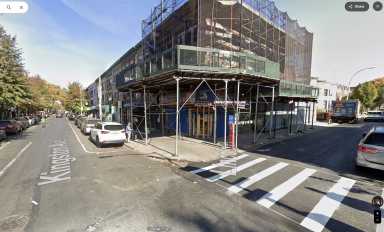
An apparently isolated attack in Crown Heights illustrates both the persistence of antisemitic violence in New York and the mounting pressures on the city’s capacity for tolerance.
In the waning light of a chilly December afternoon, a confrontation on Kingston Avenue in Crown Heights delivered a blunt reminder that New York’s reputation as a “safe city” for its many minorities remains fragile. A 35-year-old Jewish man, stabbed in the chest on December 16th after being subjected to antisemitic slurs, survived his wounds and was hospitalised in stable condition. Within the week, police arrested 23-year-old Armani Charles of Spring Creek, charging him with an array of hate-crime offences—assault, aggravated harassment, menacing, and attempted assault.
This episode, grim though it was, falls squarely within a disturbing trend. According to the NYPD, hate crimes against Jewish New Yorkers have soared since October, with 54 cases reported in November alone—a 50% jump over last year. The proliferation of such incidents has haunted the city’s law enforcement and its vast Jewish communities, who constitute roughly 13% of the city’s population and have long considered New York a global bastion of Jewish life. The NYPD’s Hate Crime Task Force now finds itself busier than ever, even as local data hint, paradoxically, at improvements: in the 77th Precinct, where Charles was apprehended, hate crimes are actually down 25% compared to the previous year.
The local incident in Crown Heights arrived on the heels of an even bloodier attack in Sydney, Australia, where at least 15 were killed at a Jewish gathering on the first night of Hanukkah. NYPD brass responded swiftly by visibly increasing patrols around synagogues and Jewish schools citywide—a move echoed from Paris to Buenos Aires during major Jewish holidays or in the shadow of global headlines. That a knife attack still unfolded in Brooklyn augurs the natural limitations of visible deterrence in America’s most densely populated city.
The reverberations for New York are finely balanced. On one hand, rapid arrests and persistent police presence bolster confidence in public order and demonstrate the city’s willingness to treat antisemitic violence as a priority. On the other, surges in hate crimes impinge upon the aspirations of New Yorkers for mutual toleration and safe movement through their own neighbourhoods. There is an urban myth that New York’s diversity inoculates it against ugly tribal politics; the data suggest a more nuanced reality. Hate may be a statistical minority sentiment, but its perpetrators wield outsized power over communal anxieties.
Second-order effects are not limited to the Jewish community. Recent months have brought an uptick in reported bias incidents against other religious and ethnic groups, suggesting that the city is not dealing simply with parochial hatreds but with a broader climate of disaffection and crime nudged by international events. Politicians from both parties, eyeing polls and street crowds, have been quick to denounce all hate crimes yet often stumble when confronting their root causes—ranging from misinformation to economic malaise and rising distrust in civic institutions.
Mayor Eric Adams, already labouring under the largest municipal budget shortfall in decades, has pledged to keep police overtime flowing for hate crime patrols, but the math is relentless. Each additional measure siphons resources from youth programmes, education and social services—a zero-sum game, particularly as federal grants next year remain uncertain. The city thus finds itself in the awkward position of warring against prejudice while relying on the very tools (visible policing, criminal prosecution) that have their own limits and critics.
A city under global scrutiny
New York’s experience is hardly unique. Since the October 7th terror attacks in Israel and the ensuing war in Gaza, cities as varied as London, Montréal, and Berlin have reported sharp escalations in antisemitic threats and on-the-ground attacks. The Anti-Defamation League, which tracks such incidents, reports that America’s tally is at its highest in decades. Cities with well-established Jewish populations—Los Angeles, Miami, Chicago—are wrestling with similar tensions, albeit with political responses that run the gamut from muscular to muddled.
What distinguishes New York is the scale of its ambition. The city aspires not only to protect minorities but to weave together a functioning civic fabric from a patchwork of backgrounds and beliefs. This latest spasm of violence saps the social capital that, at its best, allows a metropolis of 8.7 million people to coexist with remarkably little open conflict. If New York’s promise rests in its capacity to absorb demographic shocks without descending into ghettoisation or reprisal, then the rising tide of hate crimes—however small in number compared to overall crime—is an early-warning siren.
History supplies little comfort. Episodes of ethnic violence, from the Harlem riots of 1964 to Crown Heights itself in 1991, have tested and at times ruptured the city’s self-image as a tolerant meld. Yet, if the past bodes ill, it also instructs: only through layered responses—legal, educational, political—have previous surges eventually abated.
We reckon that data-driven policing, legal prosecution for hate-motivated crimes, and candid public conversation about the roots of prejudice remain imperative. Yet such interventions, on their own, are unlikely to render New Yorkers immune to the spillover effects of the world’s conflicts or the siren songs of grievance. If anything, they must be paired with civic investments in schools, mental health, and public spaces—none of which comes cheap or easy at a time when municipal coffers are strained and social trust is fraying.
Still, some optimism is warranted. The plurality of Crown Heights—where Chabad synagogues coexist with Black churches and Caribbean restaurants—has proved, over decades, to be both remarkably resilient and occasionally combustible. Arrests followed by prosecution may cool tempers but do not in themselves guarantee detente. It is the rhythms of daily coexistence—the accidental conversations on sidewalks and the endurance of public institutions—that shape the odds.
In sum, an attack like that alleged against Mr Charles bodes poorly for the city’s cherished myth of harmonious diversity, but it does not portend inevitable division. Resilience, as always, remains New York’s least glamorous but most reliable asset. ■
Based on reporting from amNewYork; additional analysis and context by Borough Brief.