Council Pushes $30 Minimum Wage by 2030, Brooklyn Backs a Bolder Paycheck
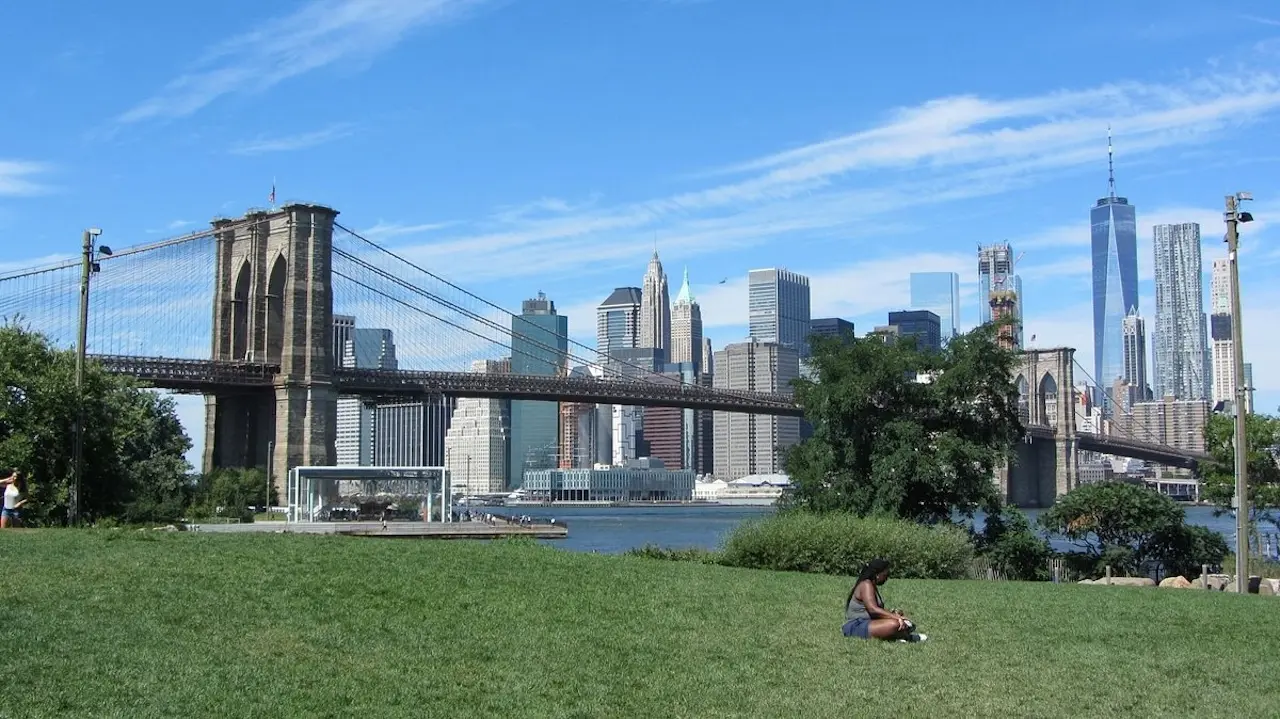
New York’s proposal to raise the minimum wage to $30 by 2030 highlights the city’s perennial balancing act between ambition, cost of living, and economic competitiveness.
A wage floor of $30 an hour—roughly $62,000 a year for full-time work—would have seemed fanciful a decade ago, even in New York City. Yet this is precisely what local councilmembers, led by Sandy Nurse, are now championing, with fervent backing from some of the city’s most potent unions. On June 11th, amid the usual clatter of city politics and swelling rents, they launched “$30 For Our City,” a campaign promising a new bill to raise statutory minimum pay far above anything currently contemplated elsewhere in America.
The legislation, unveiled with theatrical flourish outside City Hall, proposes a phased increase in the citywide minimum wage from the current $16 per hour to $30 by 2030. If enacted, New York would easily leapfrog Seattle and San Francisco, where local floors hover between $18 and $19 an hour, and set a new national benchmark—a development whose ripples would reach well beyond its borders.
The measure’s architects argue it is overdue. In their reckoning, soaring living costs have rendered existing minimum pay nearly puny. Bankrate calculates that average rents in Manhattan have breached $5,500 a month, while the city’s own Office of Management and Budget reports grocery and transit costs have risen 7% annually since 2021. Ms Nurse and her allies insist a more robust wage is necessary so that no full-time worker lingers beneath the poverty line.
Opponents, as ever, warn of gathering clouds. Business associations, particularly those representing restaurants, bodegas, and smaller retailers, contend such a steep hike would portend layoffs and swelling automation. They cite a study by the Partnership for New York City suggesting that a previous round of minimum-wage hikes cost tens of thousands of jobs, particularly for young and less skilled workers. State law requires minimum wage reviews, but this latest move, they claim, is as much political signalling as economic planning.
Unions, naturally, are bullish. Leaders from SEIU 32BJ and RWDSU, whose members mop floors, staff hotels, and ferry groceries, invoke New York’s tradition of labour activism. They point to the pandemic, when many “essential” workers learned just how disposable their employment could be. For them, $30 is not an abstract figure, but rather a bulwark against precarity, a move they insist would steer thousands of families out of the city’s ever-widening affordability chasm.
That chasm is not merely rhetorical. Recent census data show that a quarter of city residents are severely rent-burdened, spending more than half their income on housing alone. Food insecurity, too, has reared its head among working adults, not just the indigent. In that context, the campaign offers more than political theatre; it is a litmus test for what New York believes constitutes a “living wage.”
The bill’s implications, however, are both immediate and more circuitous. A sudden jump in pay could buoy some 900,000 adult New Yorkers, according to a quick estimate by the Fiscal Policy Institute. It would lift wages for swathes of those in care work, building services, food preparation, and retail—a boon for unions’ ranks. Conversely, small businesses accustomed to razor-thin margins may pivot to gig labour, pared-down staffing, or in some cases, closure.
Reality-check: what New York can—and cannot—sustain
The debate thus pivots on a familiar New York conundrum: Can the city, with its high productivity and deep inequality, set a wage floor that is both generous and sustainable? Federal politicians in Washington, content to let inflation erode the real value of the national minimum ($7.25 since 2009), will watch closely, as will mayors from Boston to Los Angeles. Seattle, an early experimenter with high minimum wages, has endured some hiring setbacks alongside precipitous wage gains.
Though some economists fret that such a prodigious jump may stoke inflation or spur clandestine hiring, others—chiefly those at the Economic Policy Institute—counter that wage-driven consumption can stimulate sluggish neighbourhood economies. If New Yorkers earning $30 an hour spend locally, the effect could redound through struggling commercial corridors from the Bronx to Sunset Park.
The spectre of automation, ever the wet blanket, cannot be dismissed. Rising wage bills may accelerate the adoption of self-checkouts and app-based kiosks, particularly in fast food and retail. Yet this shift, our city’s technophiles aver, was likely inevitable, merely hastened (not caused) by wage policy. Such creative destruction has, historically, given rise to new sectors and higher-skill jobs—a faintly optimistic, if uncomfortable, prospect for those dislodged.
Nationally, the campaign injects fresh urgency into debates about whether minimum wages should keep pace with productivity and the cost of living. By global standards, New York’s proposal is not altogether outlandish—Australia’s minimum hovers near $15 (in U.S. dollars) but covers a more comprehensive basket of social supports, making direct comparison tricky. In the UK or Canada’s priciest cities, wage floors remain nearer $13-15, limiting migration as well as the scope for economic churn.
The wisdom of a $30 minimum, in short, is as much philosophical as practical: a wager on New York’s future. Much depends on whether businesses can adapt, whether worker productivity climbs in tandem, and whether voters are willing to tolerate higher prices for their coffee, cab rides, and childcare—in exchange, perhaps, for a city with fewer working poor.
Still, we reckon that the city’s repeated embrace of progressive wages, though not without pitfalls, speaks to its singular confidence. Unlike in many American metropolises, the churn of wealth and poverty here renders economic experiments both higher-stakes and more instructive. Either way, New York’s next move will be closely watched—and, no doubt, hotly disputed.
If the “$30 For Our City” campaign succeeds, it will be because its architects have convinced a critical mass of New Yorkers that ambition, not mere survival, is now the city’s baseline. For better or worse, the minimum wage debate has become a mirror for how the city sees itself: resilient, brash, and just affluent enough to attempt what others still deem impossible. ■
Based on reporting from Brooklyn Eagle; additional analysis and context by Borough Brief.