Albany Lawmakers Push Tax Hikes for Wealthy New Yorkers as Hochul Stands Firm
New York’s Democratic legislators want to hike taxes on the rich to plug city and state budget holes—despite resistance from Governor Hochul and the uncertainty of an election year.
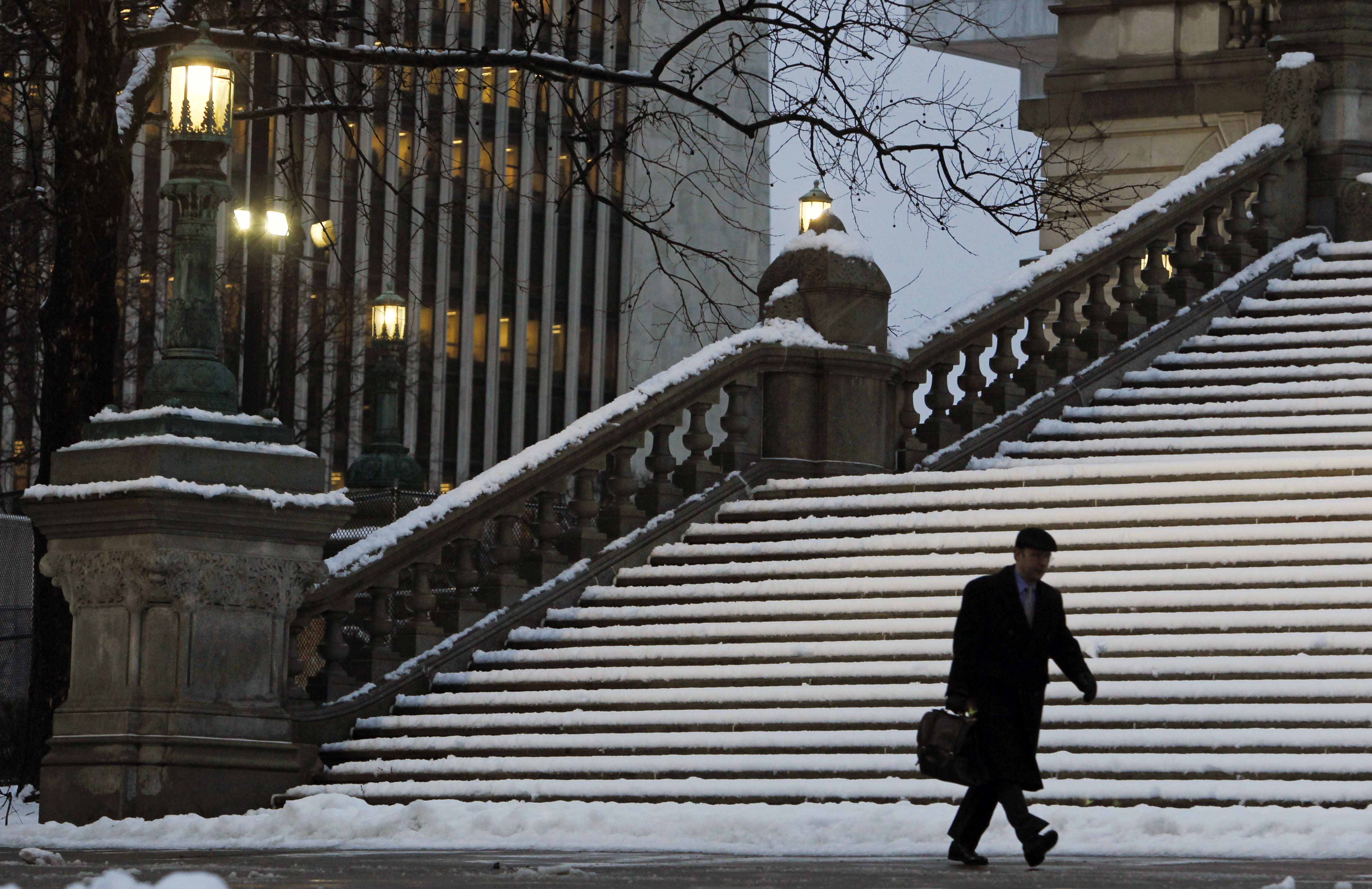
Outside Albany’s sandstone Capitol, the March drizzle does little to quell the heated talks inside. Not for the first time, the city’s fortunes hang on how much to extract from its gilded class—and how fiercely its guardians will fight over the sum. This week, as lawmakers jostle in the run-up to the state’s March 31st budget deadline, both chambers of New York’s legislature signalled support for a suite of tax increases that could net over $5bn, targeting the state’s wealthiest individuals and corporations.
The initiative comes with the energetic backing of Zohran Mamdani, a city-based progressive who has made higher taxes on millionaires a totemic cause. The new proposals would widen already-broad shoulders: the Assembly Democrats want $2bn extra from those earning over $5m a year, $1.9bn from an uptick in corporate taxes, and a relatively puny $95m from a levy on crypto-mining facilities. The Senate’s plan goes further, with $5.2bn in new revenue, mostly from ratcheting up income taxes on the top earners and trimming tax breaks from polluters.
Yet the path ahead is not smooth. Governor Kathy Hochul, mindful of electoral headwinds, has declared her opposition to new taxes, and would prefer more state aid and select budget tweaks instead. Her proposed $260bn executive budget, tabled in January, attempted a delicate balancing act: preserving key city services while sidestepping the ire of both wealthy donors and the restive left. In February, she sought to placate city Democrats by promising more cash infusions without explicit tax rises—an approach that, for now, finds little favour with her party’s legislative wings.
If enacted, the legislators’ tax plan would have immediate—and not just symbolic—effects for New York City. An extra $5bn could soothe budget shortfalls that have hampered everything from public schools to aid for homeless families. Crucially, both chambers would direct new funds toward districts educating large numbers of unhoused children or English-language learners, giving the city room to tackle its twin crises of housing and migration. Rate-hike moratoria and $500 rebates for utility-payers, floated in the Assembly, betray a sensitivity to the cost-of-living squeeze facing middle- and working-class New Yorkers.
Loftier tax rates for Manhattan’s bankers and Brooklyn’s tech moguls hold a certain populist appeal. That appeal intensifies in a year when the city, still struggling to plug pandemic-era gaps, faces a thicket of fiscal constraints. And few would dispute the city’s need for resources: costs for shelter, healthcare, and schooling continue to swell, driven by a confluence of inflation, migration waves, and the belated return of tourists and white-collar workers.
Still, there are second-order consequences. New York has long depended on its cohort of high earners to prop up municipal and state coffers: the top 1% of taxpayers yield around 40% of state income-tax revenues, according to the state’s Department of Taxation and Finance. Critics fret that each fresh turn of the tax screw risks nudging these big contributors toward Miami or Greenwich, sapping both revenue and dynamism. Corporations, wary of higher rates and regulatory uncertainty, may reconsider expansions or re-domiciliation, with knock-on effects for job creation and investment.
Politically, the schism between the legislature’s Democratic leaders—Andrea Stewart-Cousins in the Senate, Carl Heastie in the Assembly—and Ms Hochul could sow further discord in a party rocked by national malaise. The negotiations now beginning will test not just their mettle as fiscal stewards, but the broader rift between New York’s left-leaning city and its more centrist state leadership. Ms Hochul’s insistence on moderation reflects a perennial calculus: New York governs left-of-centre, but its tax base—and many swing voters—show little affection for soak-the-rich policies, especially when crime and cost-of-living gripes remain unresolved.
National comparisons show New York is far from alone in eyeing wealth—or at least affluence—as the solution to budget headaches. California has repeatedly raised or extended its millionaire’s tax, while Illinois, New Jersey, and Massachusetts have toyed with similar schemes. Invariably, such measures promise a short-term salve for social programmes, but come tethered to longer-term concerns about flight, fiscal volatility, and the whims of an elite few whose fortunes can plummet as fast as they soar (just ask Silicon Valley’s newly-minted crypto has-beens).
Internationally, meanwhile, countries with high personal and corporate tax rates—Sweden, Norway, France—have learned the awkward lesson that top earners are both indispensable and mobile. Despite layers of social compact, these polities periodically trim their highest rates, acknowledging the delicate task of taxing golden geese without strangling them. New York, much like London or Paris, must balance its reputation as a haven for ambition against the temptation to bleed its tycoons.
A test of fiscal nerve and political brinksmanship
What may matter as much as raw numbers is the policy architecture around the hikes. The Assembly’s bid for a two-year moratorium on utility rate increases and one-off consumer rebates may briefly cheer household budgets, but also risks masking the structural nature of energy and housing inflation. Targeted relief for school districts and vulnerable children is admirable, but will require sustained investment long after the new revenues are spent. The Senate’s attempts to tweak social-media regulations and end climate polluter exemptions point to a broader shift: a legislature uneasy not just about dollars, but about the rules that shepherd them.
As ever in New York, the whole process is shrouded in intrigue. Negotiations will play out behind closed doors, with Mr Heastie, Ms Stewart-Cousins, and Ms Hochul angling for last-minute concessions and handshakes. The realpolitik is undeniable: none wishes to be blamed for service cuts or fiscal black eyes, yet each faces constituencies with conflicting appetites for redistribution.
In sum, the latest tax-the-rich push is less a revolution than an incremental step along a well-trodden path. Should a deal emerge, New Yorkers may enjoy temporary relief and a sense that their government shares their worries—at least for now. Yet the perennial questions remain unanswered: how much can New York squeeze from its plutocrats before the city’s fabled resilience turns brittle, and how will it forge a sustainable social contract with dollars that can so easily vanish?
We reckon that caution and candour, not grandstanding, will be the qualities most needed in the coming weeks. If lawmakers can deliver prudent investments while resisting the urge to rely wholly on wealthy scapegoats, the city may yet escape its fiscal doldrums. Should political opportunism win out, familiar cycles of feast and famine will persist, undermining trust just when New Yorkers need it most. ■
Based on reporting from El Diario NY; additional analysis and context by Borough Brief.