Albany Eyes Speed Limiters for City’s Worst Drivers, Details and Data Still in Overtime
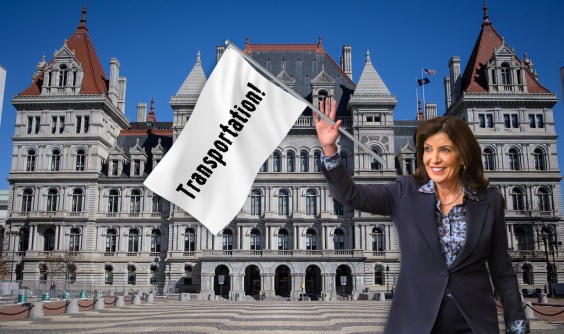
New York’s latest move to curb “super speeders” portends changes for urban road safety, legal enforcement—and a perennial conflict over who should rule the roads.
In a city where reckless driving is practically a competitive sport, New York’s Department of Transportation (DOT) recently reported that 3,147 vehicles accumulated more than 16 speed-camera tickets apiece last year. The data are sobering: drivers in this cohort are twice as likely to be involved in severe crashes as their less recidivistic peers. For the first time, Albany legislators have decided to tackle persistent speeders not with warnings or fines but with engineering—by proposing mandatory “speed-limiting” devices for the city’s most notorious offenders.
Governor Kathy Hochul has included the measure in her 2026 budget proposal, teeing up a lively legislative debate. The plan’s central premise is as pragmatic as it is provocative: force drivers who rack up large numbers of speed-camera violations to install hardware that blocks their vehicles from exceeding the legal limit. If passed, the measure would mark the city’s most assertive use of technology to stem the tide of traffic violence—a growing problem across the United States, but especially in New York, where road deaths and injuries have risen even as vehicular volume has fallen since the pandemic.
On its face, the policy sounds simple: catch those repeat speeders, modify their cars, and drive down crash rates. But this being New York, the mechanics are anything but. The legislation leaves key questions unresolved: How many tickets must a driver accrue before qualifying for the device? Which tribunal would order its installation? How would the NYPD actually verify compliance? And, not least, what of the thousands whose speed-camera tickets never touch the state’s official driving records?
For everyday New Yorkers, the promise is clear. Persistent “super speeders” have been a thorn in the side of the Vision Zero road-safety effort ever since speed cameras were installed citywide. If the new technology is implemented effectively—and enforced—city streets could be measurably safer for pedestrians, cyclists, and drivers alike. The city’s DOT estimates that targeting just this small pool of egregious offenders could prevent numerous crashes and save public dollars in emergency response and health care.
Yet the devil, as so often, dwells in the bureaucracy. In its current draft, the law would put the city’s Department of Transportation in charge of specifying thresholds and rollout logistics, a marked departure from the more centralised state-run approaches previously championed by advocates. That would leave New York’s traffic courts and the notoriously siloed state Department of Motor Vehicles (DMV) frustratingly out of the primary enforcement loop—an arrangement that has prompted scepticism from legislators and public safety experts alike.
There are good reasons for their concern. At present, most speed-camera violations do not appear on drivers’ DMV records or result in points that could trigger license suspension. Thus, if the police were to stop a repeat offender, there would be scant evidence—short of a court order and meticulous cross-agency data exchange—that the driver was flouting a city-mandated speed cap. Moreover, nearly half of all speed-camera tickets are issued to non-residents, many of whom have no meaningful engagement with New York’s enforcement mechanisms at all.
The city’s pivot toward “engineering out” illegal speeds reflects both frustration and innovation. Traditional enforcement tools—fines, points, periodic crackdowns—have failed to deter the most stubborn lawbreakers, who seem to view summonses as a cost of doing business. Proponents of speed-limiting technology, like Brooklyn’s Senator Andrew Gounardes, argue that only the certainty of technological restraint can reliably check these offenders’ behaviour.
A patchwork patch for a national problem
New York’s experiment is being watched closely by cities elsewhere, where similar technologies have been piloted but not yet made compulsory. London, Paris, and Stockholm have long mandated “governors” for certain commercial fleets or high-risk vehicles, with promising data on crash reduction but enduring grumbling from drivers who chafe at enforced conformity. Unlike Europe, however, America’s car culture prizes untrammelled autonomy; any curb on speed is seen as an affront to vehicular freedom.
The measure also exposes perennial governance fissures. While street safety is undeniably a local concern, the city’s relative inability to access or synchronise data with state-level authorities severely hampers enforcement. A statewide rollout, as originally imagined, might have produced a less leaky sieve, capturing upstaters and out-of-towners as well as city dwellers. The risk now is that New York will duplicate the patchwork enforcement regimes that have bedevilled everything from taxi regulations to Airbnb, where city intent is continually frustrated by jurisdictional friction.
Economically, the proposal carries both promise and peril. If successful, reduced injuries could lower insurance premiums—a goal Hochul has paired with the measure in her budget—and increase business productivity by limiting time lost to traffic jams and street closures after collisions. Conversely, if implementation falters, the city risks wasting millions on a complex enforcement architecture with little to show for it except driver resentment and a spate of “governor hacks” sold online.
Politically, the proposal nudges the debate over the city’s right to set its own transportation agenda. For New Yorkers weary of daily headlines featuring yet another avoidable crash, a successful deployment would bolster claims for more local control. Should the apparatus sag under its procedural burdens, critics in Albany will no doubt relish the chance to pounce.
We reckon that, in principle, requiring speed governors for repeat offenders is a rational application of twenty-first-century technology to an age-old problem—and would bolster both public safety and civic confidence, if rolled out competently. Yet, as with all technical solutions to social vices, the true test is in the dour details: streamlined databases, robust appeals processes, and coordinated cross-jurisdictional enforcement. Without these, the city risks building yet another well-intentioned regulatory edifice undermined by the very “super speeders” it seeks to stop.
For now, the Big Apple’s approach embodies equal parts promise and peril: a test case for data-driven governance and a cautionary tale about the limits of municipal muscle. Whether New York’s digital clampdown on speed will actually stick—or become another victim of bureaucratic inertia—remains to be seen. ■
Based on reporting from Streetsblog New York City; additional analysis and context by Borough Brief.