Albany Braces for Federal Cuts and Primary Jitters as Hochul Eyes 2026 Reelection
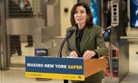
As New York faces a thicket of fiscal and political perils in its 2026 legislative session, tough choices over taxes, social spending, and federal funding threaten to reshape both city and state life.
It requires a special kind of political acrobatics to balance a statehouse while the financial floor shifts beneath your feet. In 2026, Albany faces a projected $3 billion fiscal hole from federal Medicaid cuts alone—enough to cover the operating budgets of New York City’s entire public library system three times over. On top of this, Governor Kathy Hochul must keep restless progressives at bay while bracing for a Trumpite resurgence in the general election. In New York State’s capital, election years tend to prod leaders toward the cautious—but this one could require daring, even as certain bets seem perilous.
The central legislative drama will be the search for ways to close the looming budget gap without tipping the fragile economic balance of the Empire State. The source of the squeeze is clear: President Donald Trump’s One Big Beautiful Bill Act (never knowingly oversold) has stripped $750 million out of current fiscal allocations, with a further $3 billion reduction anticipated as Medicaid changes take effect. Hochul’s attempt to backtrack from a 2022 expansion of the state’s Essential Plan for health insurance could keep the legal machinery humming, as coverage for roughly 450,000 New Yorkers hangs in the balance—many low-income, most unprepared for a sudden loss of insurance.
If these individuals join the ranks of the uninsured, the state’s safety-net hospitals—already teetering—will surely bang at Albany’s door for additional funds. Politicking aside, nobody imagines these vital facilities will simply absorb new costs. Score one more burden for a legislature whose Republican and left-wing factions will watch every negotiation with daggers sharpened.
Complicating matters is Mayor-elect Zohran Mamdani, an unabashed progressive who seems unlikely to let tradition or price tags dim his ambitions. He may be tempted to demand sizable new investments in housing and transit—two perpetual sinkholes of city expenditure—which could force even fiscally conservative state leaders onto uncertain terrain. Add to this a welter of left- and right-wing primary challenges, and the legislative atmosphere promises as much drama as clarity.
For New York City, no policy reverberates in splendid isolation. Federal funding curbs land hardest where the city’s need is greatest—low-income boroughs already beset by creaking infrastructure and rising inflows of new arrivals. Medicaid squeezes threaten not just hospitals but the broader health ecosystem, from clinics to shelters. If hospitals cut services, the costs will not vaporize; they will ooze through the city’s social fabric, increasing dependency on emergency rooms and nudging up insolvency rates across providers.
Second-order effects abound, none more obvious than the economic threat posed by tax tinkering. If Hochul keeps her vow not to raise income taxes, attention may swivel toward corporations. New York already sits near the top of the nation’s table for business taxes—raising them further risks reversing recent progress in post-pandemic job growth. Corporate decisions on headquarters, hiring, and investment remain acutely sensitive to marginal rate changes, as last decade’s migration to Florida and Texas attests. Should Albany crank rates higher, expect accountants—and headquarters—to migrate with alacrity.
The political landscape further muddies the fiscal waters. State legislative leaders must simultaneously placate progressive challengers banging the “tax the rich” drum and defend vulnerable suburban Democrats from Republican broadsides about profligate government. Election-year skittishness can breed policy inertia or, worse, half-measures—rarely a recipe for fiscal rectitude.
This narrowing field of options is not unique to New York. States across America, from California to Illinois, are adjusting to stingier federal largesse and shifting the burden downward. Albany’s budget-by-lawsuit tradition—witness the legal maneuvering over coverage for noncitizens—adds another layer of complexity. Federal rules restrict the use of funds to insure legal immigrants, even as New York’s courts demand their coverage. Such legal arcana may guarantee continuity for some, but to the newly uninsured, it is a distinction with paltry comfort.
Red ink, political blues
The wider national context points to an era of scarcity and, perhaps, necessary recalibration. As Washington returns to austerity, big blue states face pressure to rein in ambitions—or innovate to find new revenue. States that try to “go it alone” with social safety nets find such initiatives alarmingly costly when federal support dries up. If Albany’s solution is to raise corporate taxes, it will test the persistent bravado of New York’s business community, which has traditionally tolerated hefty rates—up to a point.
New Yorkers, famous for their resilience, may find their patience eroding. Mid-level earners, already squeezed by living costs that are the nation’s highest, may see fewer services and more taxes. Urban voters, particularly those mobilized by Mayor Mamdani’s progressive mandate, will not take kindly to benefit cuts, forcing a difficult conversation about the limits of even Gotham’s fiscal imagination.
In the end, Albany faces a triple squeeze: fiscal shortfalls, electoral cross-currents, and the threat of waning federal support. Some see in this a chance for creativity—perhaps long-overdue reform to dated budget formulas or a push for more effective spending. Others worry the city and state will do what they have done before: patch holes, buy time, and hope for a friendlier administration in Washington.
There is little doubt that the 2026 session will test the mettle of New York’s political class. The state’s capacity for deft compromise has, at its best, delivered sturdy infrastructure and model social programs. At its worst, it has delivered gridlock and debt. The outcome will chart not only the state’s fiscal future but also whether its progressive ambitions will measurably improve the lives of ordinary New Yorkers or merely paper over their perennial woes.
Albany’s leaders, perched between a restive electorate and a shrinking federal subsidy, will discover soon enough whether pragmatism or panic wins the day. Either way, the rest of America will watch. For the City That Never Sleeps and its sprawling state, the price of inertia may be sleep—lost, for many, to anxiety about what safety nets will remain. ■
Based on reporting from City & State New York - All Content; additional analysis and context by Borough Brief.