Albany Advances Pied-à-Terre Tax on Second Homes as Budget Gap Looms, Tension Rises
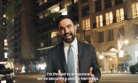
New York’s contentious new pied-à-terre tax targets absentee owners, seeking to shore up the city budget while testing the limits of its global allure.
When Mayor Zohran Mamdani filmed his recent video announcement outside 220 Central Park South—a condo better known for stratospheric sales to the global ultra-rich—the setting was as symbolic as the policy it unveiled. New York is embarking on a social experiment that aims to mop up some of the city’s fiscal woes by imposing a new tax on pied-à-terre owners: a select group who enjoy plush second homes, but rarely, if ever, reside within them.
The measure, championed by Governor Kathy Hochul and set for likely adoption by the state government, targets residential properties worth at least $5 million that are not primary residences. These owners, an estimated 13,000 of them, will see new surcharges layered atop their property tax bills—revenues intended to chip away at the city’s looming $5.4 billion budget gap. City Hall has cast the tax as both prudent fiscal policy and a modest correction for those who rely on municipal services without really contributing to the civic life of New York.
The tax’s backers argue that absentee owners, hailing from Moscow to Miami, have treated New York real estate less as shelter than as a safety deposit box with a doorman. Punitively taxing these empty aeries, so the rationale goes, is meant to be a victimless crime. The city’s regular denizens shoulder city income taxes atop their property levies, while out-of-towners pay only the latter—yet stand to benefit from first-rate public services that remain at their beck and call.
For the city, the first-order implications are straightforward: a new revenue stream that, at least on paper, sidesteps the political minefield of raising taxes on everyday New Yorkers. In the past, similar moves—most recently floated during the Cuomo years—died quietly under pressure from the city’s potent real estate lobby. This time, a budget shortfall and populist tailwinds have shifted the political calculus.
The second-order consequences are more opaque. Real estate grandees, led by Jim Whelan of the Real Estate Board of New York and Steve Fulop at the Partnership for New York City, warn that the tax spells trouble for the luxury property market. They point to London, where a raft of new levies on foreign and high-end buyers in the last decade cooled demand and nudged valuations downward, shrinking the tax take instead of growing it. Should New York follow suit, the city could find itself with more empty flats and less incoming revenue—ironically exacerbating the very budget crunch the tax was meant to address.
Politically, the legislation telegraphs a leftward shift in municipal priorities, one that goes beyond symbolism. The Mamdani administration’s rhetorical posture—filming in front of Citadel CEO Ken Griffin’s $238 million not-so-humble abode—risks alienating the city’s wealthiest, who, however peripatetic, do at times spend and invest here. Griffin alone employs thousands of New Yorkers and, by all accounts, is scouting the city for a new office project. While no tears need be shed for billionaire second-homers, neither does alienating big-pocketed economic actors bode well for a metropolis that relies on them not just for property taxes, but for jobs and philanthropic largesse.
The concern is more than theoretical. In an era when remote work has loosened the spatial bonds of finance and tech, the city’s premium allure relative to Miami, Dubai, or Singapore may seem a little less unassailable than it once did. Unlike central London or the Bay Area, New York still offers a relatively light property-tax regime; to some, that is a sign of market resilience, to others, vulnerability.
Comparisons abroad and American exceptionalism
A glance across the Atlantic provides ample caution. London’s experiment with surcharges, stamp duties, and anti-money laundering rules in the 2010s eventually contributed to a tepid super-prime market, making the capital less attractive for precisely the foreign owners New York now proposes to tax. Some argue that falling property prices, attendant construction slowdowns, and the flight of high earners ended up costing London’s exchequer more than it gained. Still, others point to cleaner ownership registers and a degree of social calm that comes from fewer darkened luxury flats.
In the United States, few cities can genuinely imitate Manhattan’s gravitational pull; even so, New York is not immune to global currents. Miami has courted Wall Street transferees with sun, low taxes, and a “business-friendly” posture. Should the city’s luxury market wilt, there is little guarantee that local buyers will step into the breach—least of all at $20 million a unit.
The measure’s populist optics are clear. It is easier, and politically far more palatable, to tax absent billionaires than to ask middle-class New Yorkers for more. Yet blurring the distinction between a technocratic revenue fix and rhetorical scapegoating can be costly. Campaigning outside a hedge-fund titan’s front door may win applause, but it also signals to global investors that New York’s welcome mat is a little less plush these days.
We reckon the real question is whether the tax’s proceeds—neither paltry nor gargantuan—will be enough to offset the risks to investment and confidence. Modest surcharges on luxury pieds-à-terre may seem a small price to pay for the city’s unmatched dynamism and services. But cascading levies or increasingly punitive gestures could tip the balance away from New York’s unique combination of grit and glamour.
In the end, no city can—or should—be run for the convenience of occasional visitors who pay little and partake less. Yet the lesson of global cities everywhere is that success rests on courting, not repelling, capital and talent. A judicious approach is warranted, one that treats absentee owners not as cows to be milked, nor as villains to be banished, but as participants in a complex local ecosystem whose health matters to all New Yorkers.
The true test of the pied-à-terre tax will not be in the headlines, nor in the populist applause at budget time, but in whether the city remains the place the world’s lucky few most wish to buy—or merely a cautionary tale for mayors yet to come. ■
Based on reporting from City & State New York - All Content; additional analysis and context by Borough Brief.